

A path towards privatizing Hydro?
Advertisement
Read this article for free:
or
Already have an account? Log in here »
To continue reading, please subscribe:

Digital Subscription
One year of digital access for only $205*
- Enjoy unlimited reading on winnipegfreepress.com
- Read the E-Edition, our digital replica newspaper
- Access News Break, our award-winning app
- Play interactive puzzles
*First annual payment billed as $205.00 + GST for one year. This annual subscription will automatically renew at $233.00 + GST every 52 weeks (10% off the regular annual price of $259.35). Offer available to new and qualified returning subscribers only. Cancel any time.
To continue reading, please subscribe:
Add Free Press access to your Brandon Sun subscription for only an additional
$1 for the first 4 weeks*
- Enjoy unlimited reading on winnipegfreepress.com
- Read the E-Edition, our digital replica newspaper
- Access News Break, our award-winning app
- Play interactive puzzles
*Your next Brandon Sun subscription payment will increase by $1.00 and you will be charged $17.95 plus GST for four weeks. After four weeks, your payment will increase to $24.95 plus GST every four weeks.
Read unlimited articles for free today:
or
Already have an account? Log in here »
Hey there, time traveller!
This article was published 08/08/2023 (1137 days ago), so information in it may no longer be current.
It could be a creative scheme to privatize electricity generation in Manitoba, but the Stefanson government won’t admit it and the opposition New Democrats and Liberals haven’t figured it out.
On July 28, the province issued a news release that says “The Manitoba government has launched a new clean energy roadmap that will deliver on a commitment to ensure a secure supply of affordable, reliable, and sustainable power for people and businesses today and into the future.”
That sounds sensible, but nowhere in the document were Manitobans told that before the end of this decade, we will likely need more electricity than Manitoba Hydro is currently capable of producing. To discern that startling possibility, you would have to click on one of the links buried at the bottom of the news release, read the PowerPoint presentation (Manitoba’s Energy Roadmap) found at that link, and then extrapolate from the information contained in it.
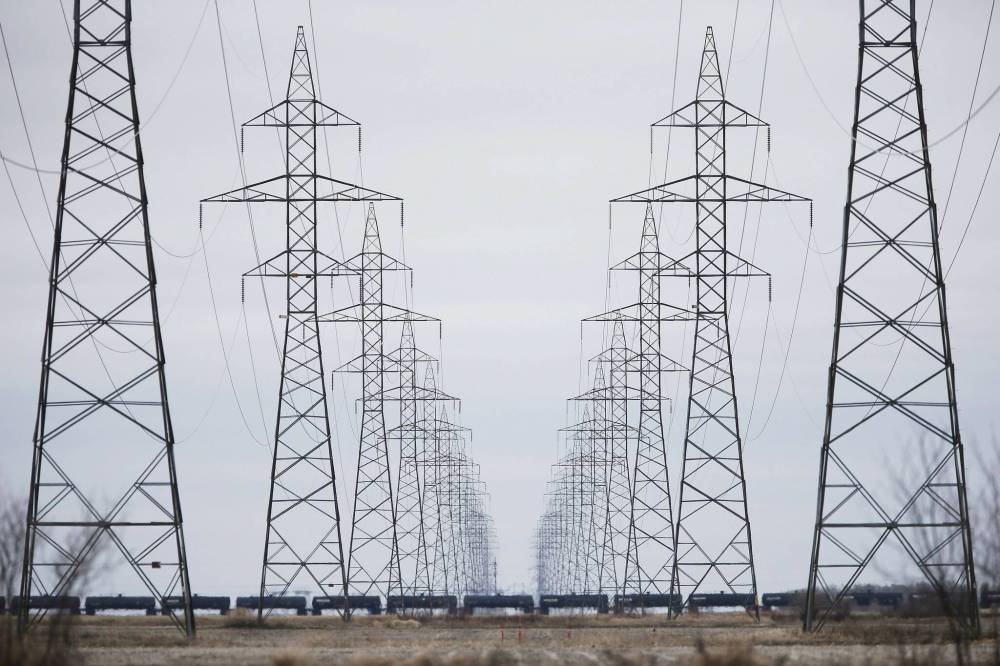
John Woods / Canadian Press Files
Manitoba Hydro is going to need much more power. Where it’s going to come from could offer signs about the Crown corporation’s future.
In other words, the government buried the lede in the news release, and then buried the lede again in a document referred to in the release. You can decide if this was an accident.
For decades, Manitobans have been led to believe that Manitoba Hydro would always generate more electricity than we needed, and that surplus power would always be sold to other jurisdictions. After all the northern dam projects and the billions of dollars spent to build them, however, it’s a 10-megawatt jolt to learn we will soon be unable to generate enough electricity to meet our own needs.
The Energy Roadmap document never explicitly says that, but it reveals (buried on page nine of its 19 pages) that “Manitoba currently has an installed generating capacity of 6,600 MW” and “by the early 2040s growing demand for electricity in MB could require 10,000 MW to 16,000 MW of generating capacity.” It adds that there are currently “4,400 MW in new requests from 18 energy-intensive industrial projects.”
In short, we don’t have enough generating capacity to service the projects waiting to come to Manitoba, let alone the anticipated demand as we transition away from carbon-based energy.
Hydro would need at least ten more Keeyask generating stations to provide all that extra electricity, at more than $20 billion apiece. It’s a moot point, though, because the Roadmap says Manitoba Hydro has no plans to build more generating stations. Instead, Hydro board chair Edward Kennedy says that “It’s going to be renewables, likely wind, with duration storage.”
That also sounds reasonable, but the Roadmap document says that “a more complex energy system will be required,” including a “role for independent power producers to provide new energy supply to the grid”, along with “microgrids and self-supply.”
Chew on that for a moment. Manitoba Hydro won’t be adding new generating facilities, but the government will be encouraging “independent power producers” to do so. Given the massive amount of additional electricity that will be needed, this is way beyond a couple of solar panels on our homes. It will require huge facilities that will cost millions, if not billions, of dollars to construct and operate.
Under the government’s plan, private power producers could be generating more electricity than Manitoba Hydro before 2050. Surprisingly, the proposed role of those producers is barely mentioned in the integrated resource plan released by the utility last week.
Does that signal a disagreement between the government and Hydro management, or is it a case of election year editing?

It could be both, but if we reach the point when the majority of our electricity is privately-produced and Manitoba Hydro is no longer able to act as a mechanism to keep rates low, the need for a taxpayer-owned utility could become less compelling.
At that point, a majority of Manitobans may be persuaded that it makes sense to sell Hydro and pay off the debt.
This isn’t the Manitoba Hydro privatization strategy we have been warned about in the past, but it appears to share the same objective. It resembles the incremental “long game” privatization approach the Stefanson government is taking with P3 schools, private health services, private nursing companies and liquor sales, and it would be almost impossible to reverse.
Two months ago, the possibility of Manitoba Hydro privatization was not regarded as a serious election issue. It is now.
Deveryn Ross is a political commentator living in Brandon. deverynrossletters@gmail.com Twitter: @deverynross
History
Updated on Tuesday, August 8, 2023 7:06 AM CDT: Adds photo