

Income inequality and violent crime
Advertisement
Read this article for free:
or
Already have an account? Log in here »
To continue reading, please subscribe:

Digital Subscription
One year of digital access for only $205*
- Enjoy unlimited reading on winnipegfreepress.com
- Read the E-Edition, our digital replica newspaper
- Access News Break, our award-winning app
- Play interactive puzzles
*First annual payment billed as $205.00 + GST for one year. This annual subscription will automatically renew at $233.00 + GST every 52 weeks (10% off the regular annual price of $259.35). Offer available to new and qualified returning subscribers only. Cancel any time.
To continue reading, please subscribe:
Add Free Press access to your Brandon Sun subscription for only an additional
$1 for the first 4 weeks*
- Enjoy unlimited reading on winnipegfreepress.com
- Read the E-Edition, our digital replica newspaper
- Access News Break, our award-winning app
- Play interactive puzzles
*Your next Brandon Sun subscription payment will increase by $1.00 and you will be charged $17.95 plus GST for four weeks. After four weeks, your payment will increase to $24.95 plus GST every four weeks.
Read unlimited articles for free today:
or
Already have an account? Log in here »
Hey there, time traveller!
This article was published 22/09/2023 (1100 days ago), so information in it may no longer be current.
A machete attack at Polo Park last May left two 14-year-olds in hospital with serious injuries. The 16-year-old attacker wanted the shoes of one of the victims. An inexplicable example of random violence? No.
It’s the kind of crime that becomes commonplace in highly unequal societies.
Income inequality is a well-studied phenomenon in the social sciences and lies at the root of most social ills. As the gap between the rich and poor grows, so too do rates of crime, drug use, homelessness and violence. And the problems created by income inequality afflict not just the poor, but everyone at all income levels.
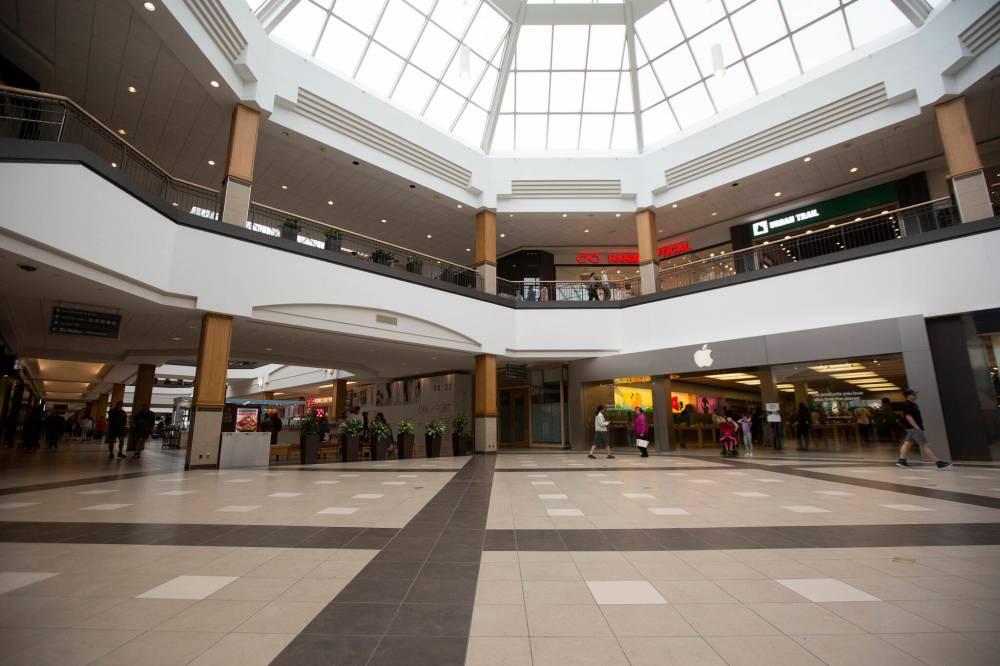
BROOK JONES / WINNIPEG FREE PRESS FILES
According to witnesses, multiple teenagers were stabbed by a stranger wielding a machete at CF Polo Park, May 5.
Even the rich do not escape its pernicious effects.
More unequal societies are less safe and more dysfunctional.
The obvious question is “why?” The link between inequality and antisocial behaviour stems from how the human psyche is built. Humans have a built-in aversion to inequity. Think zipper merges or someone cutting in the grocery store line. And people compete for social rank, especially so in more unequal societies.
Psychologists have found this leads to paradoxical behaviour.
A simple experiment asked people whether they preferred: 1) a lower income but one above average for society or 2) a higher income that was lower than average for society. A surprising fraction opted for 1). Preference for social rank trumped the preference for actual wealth. And real-world examples abound. The machete attack at Polo Park was over a pair of sneakers, a conspicuous sign of social rank and status. The more unequal a society, the more conspicuous wealth makes you a target.
The effect is especially strong for the relationship with violent crime.
Canadian psychologist Martin Daly (along with wife Margo Wilson, now deceased) has studied the link between income inequality and murder for decades. Across North America, three-quarters of homicides involve men killing men and a large fraction of these arise from disputes over social status.
Daly’s work, detailed in his 2016 book Killing the Competition: Economic Inequality and Homicide (Transaction Publishers), shows that homicide rates grow dramatically as income inequality widens. And it is inequality per se that is a much stronger predictor than even rates of poverty. This holds true for states and provinces in North America, and countries across the globe.
Homicides are vanishing rare in Sweden, Norway and Japan, where income inequality is low, and staggeringly high in the most unequal societies such as South Africa, Russia and the U.S.
Growing income inequality takes us down a dark path. We start by normalizing higher rates of crime and violence. What appear to be sensible ideas, such as an NDP proposal to rebate home security systems, does exactly that.
As the problem worsens, the wealthy may flock to gated communities often with armed guards, now commonplace in America. The less well-off may defend their houses with tall perimeter fences topped with razor wire and broken glass, as in many second and third-world countries.
A government truly serious about reducing rates of violent crime needs to be truly serious about reducing income inequality.
In Scandinavia, among the most egalitarian (and safe) societies in the world, inequality is tackled through a system of steeply progressive taxation. In Japan, where greater equality seems a cultural norm, incomes are relatively equal before taxes. They too enjoy the benefits of an equal, safe society.
Access to high quality health care and education is also key to reducing income inequality and its antisocial consequences. Education enables greater social mobility, far less likely in more unequal societies, which among the world’s wealthiest nations include the U.S., UK and Portugal. Canada is middle of the pack here. Higher minimum wages, and strong unions that negotiate higher wages and benefits for members further reduce income inequality.
In the current election campaign, one party is conspicuous in proposing policies that almost appear purpose-built to increase income inequality: the Manitoba PCs.

Big tax cuts that disproportionately benefit the wealthy increase income inequality. Aggressive austerity in social services increases income inequality. Legislation to weaken unions increases income inequality. Keeping minimum wages low increases income inequality.
Unfortunately, even the opposition NDP has embraced some of the terrible tax-cut policies of the PCs. Inevitably, that will make our streets less safe with growing inequality.
Ironically, governments that pursue policies increasing income inequality, by kneecapping unions, keeping minimum wages obscenely low, cutting taxes for the wealthy and promoting austerity in social services, find they need to spend ever more on police and prisons as crime rates soar.
And then they wonder why.
Scott Forbes is a professor of biology at the University of Winnipeg. He studies inequality in families.