

Workers should be part of PC coalition
Advertisement
Read this article for free:
or
Already have an account? Log in here »
To continue reading, please subscribe:
Digital Subscription
One year of digital access for only $1.44 a week*
- Enjoy unlimited reading on winnipegfreepress.com
- Read the E-Edition, our digital replica newspaper
- Access News Break, our award-winning app
- Play interactive puzzles
*Billed as $5.77 plus GST every four weeks. After 52 weeks, price increases to the regular rate of $19.95 plus GST every four weeks. Offer available to new and qualified returning subscribers only. Cancel any time.
To continue reading, please subscribe:
Add Free Press access to your Brandon Sun subscription for only an additional
$1 for the first 4 weeks*
- Enjoy unlimited reading on winnipegfreepress.com
- Read the E-Edition, our digital replica newspaper
- Access News Break, our award-winning app
- Play interactive puzzles
*Your next Brandon Sun subscription payment will increase by $1.00 and you will be charged $17.95 plus GST for four weeks. After four weeks, your payment will increase to $24.95 plus GST every four weeks.
Read unlimited articles for free today:
or
Already have an account? Log in here »
Hey there, time traveller!
This article was published 08/12/2023 (903 days ago), so information in it may no longer be current.
In Canada, support for federal and provincial conservative parties has shifted over time. Following the creation of the Conservative Party in 2004, political scientists Jim Farney and David Rayside argued that the new party could be understood as a tripartite coalition between family-oriented social conservatives, populists, and free market economic conservatives.
I think this is broadly correct. But, increasingly, we are seeing a new segment of conservative coalitions emerge: workers.
While Conservatives have always had some support from working-class Canadians (especially in rural areas), the extent to which Conservatives are pursuing the support of workers explicitly on the basis of their working-class status is new.
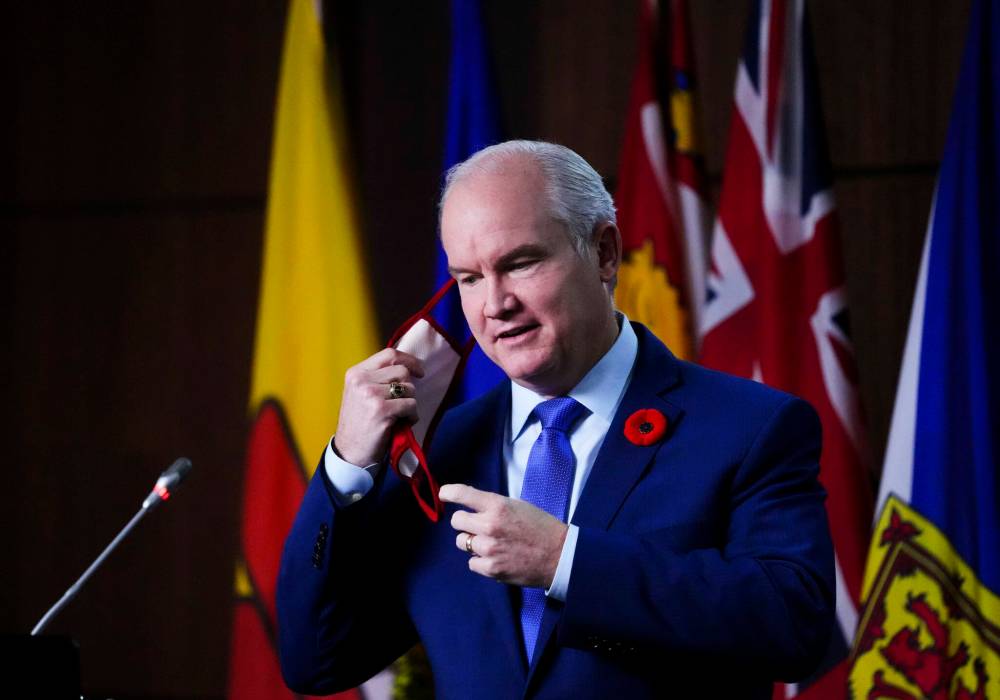
Sean Kilpatrick / The Canadian Press Files
When he was Conservative leader, Erin O’Toole made a concerted effort to reach out to Canadian workers. The Manitoba PCs should be looking along the same lines.
Canadians are laggards in this respect. For some time, connections between workers and their traditional political home in parties of the left has been crumbling, as these parties have become less attentive to the needs of workers and more interested in speaking on behalf of the concerns of socially progressive urban professionals.
Many of the policies that have had long-term negative consequences for working people — trade deals, offshoring of jobs — have been brought about or enabled by parties that, traditionally, represented the interests of workers but have since moved on. Think of the U.K. Labour Party or the U.S. Democratic Party.
The result has been that politicians of the right have sensed opportunities to capitalize on this abandonment of workers. Workers, it turns out, can fit naturally within a broader conservative agenda that emphasizes the importance of the family. But they can also come into conflict with free market conservatives, and this tension will animate the internal existence of conservative parties in Canada in the years to come.
In his book Right Here, Right Now, former prime minister and Conservative leader Stephen Harper made the case for why Canada’s conservative parties should actively reach out to workers.
Noting that workers had increasingly been left behind by decades of free market reforms implemented in Canada and across the developed world, Harper urged conservatives to engage with the experiences of working people and offer real solutions to their problems.
After Harper’s leadership, subsequent leaders of the federal and provincial conservative parties seemed to take his advice. In the 2021 federal election campaign, Conservative leader Erin O’Toole raised eyebrows with his unorthodox appeals to workers in general and union members in particular. O’Toole, for example, bemoaned the decline in union membership in Canada, arguing that strong unions had been “an essential part of the balance between what was good for business and what was good for employees.”
In reaching out to union members, O’Toole contrasted the values of “corporate elites” who prioritize unchecked globalization at workers’ expense with the values of regular Canadians which, he argued, are rooted in “family, home and nation.”
At the provincial level, Ontario premier Doug Ford and his former minister of labour, Monte McNaughton, similarly staged an outreach campaign to workers. McNaughton introduced a slew of bills aimed at addressing workers’ concerns, including several “Working for Workers” acts which, among other measures, contained protections for gig economy workers, restricted how employers could monitor workers, and boosted fines for occupational health and safety violations.
Whereas O’Toole’s efforts did not lead to a clear electoral payoff, McNaughton’s outreach efforts paid dividends as the PC Party in the subsequent re-election campaign scored several endorsements from private sector unions that had previously opposed the party.
Conservative leader Pierre Poilievre hails from a free market conservative background, but his time as leader has been flecked by both broad populist appeals and specific outreach to workers and union members. Like O’Toole, Poilievre is not afraid to lay into corporate executives and multi-national corporations over mistreatment of workers or obscene executive bonuses.
One positive result of all this is that the votes of Canadian workers are much more hotly contested than was the case in the past. Parties can no longer take the support of workers for granted.
What does this mean for the Manitoba PC Party as it enters a period of reflection following its loss in the recent provincial election?

The PC coalition has also shifted over time, and is now one in which the free market economic conservative segment seems dominant. While the party was in power, free market conservative thinking led to an overriding concern with tax cuts and other policies designed to shrink the scope of government.
After seven years in power, there was also the perception that the party was hostile to workers, who turned out in droves to support the NDP.
In the years to come, PC members should consider following the party’s counterparts in federal politics and other provinces in crafting policies designed to appeal to workers and actively working to include working-class Manitobans in their coalition.
In doing so they might find, like conservative parties elsewhere, that a politics of the right which is informed by the interests of workers and families is more popular than the old model of free market conservatism.
Royce Koop is a professor of political studies at the University of Manitoba and academic director of the Centre for Social Science Research and Policy.