

Examining anarcho-capitalism
Advertisement
Read this article for free:
or
Already have an account? Log in here »
To continue reading, please subscribe:

Digital Subscription
One year of digital access for only $205*
- Enjoy unlimited reading on winnipegfreepress.com
- Read the E-Edition, our digital replica newspaper
- Access News Break, our award-winning app
- Play interactive puzzles
*First annual payment billed as $205.00 + GST for one year. This annual subscription will automatically renew at $233.00 + GST every 52 weeks (10% off the regular annual price of $259.35). Offer available to new and qualified returning subscribers only. Cancel any time.
To continue reading, please subscribe:
Add Free Press access to your Brandon Sun subscription for only an additional
$1 for the first 4 weeks*
- Enjoy unlimited reading on winnipegfreepress.com
- Read the E-Edition, our digital replica newspaper
- Access News Break, our award-winning app
- Play interactive puzzles
*Your next Brandon Sun subscription payment will increase by $1.00 and you will be charged $17.95 plus GST for four weeks. After four weeks, your payment will increase to $24.95 plus GST every four weeks.
Read unlimited articles for free today:
or
Already have an account? Log in here »
Hey there, time traveller!
This article was published 18/12/2023 (1033 days ago), so information in it may no longer be current.
Recently Argentina held its presidential election. This mostly passed without much note from our political leaders, doubtlessly in large part because there was no danger of a socialist candidate seizing power, and so multinational corporate interests can continue exploiting the region unabated. However, the man who won the election, self-declared anarcho-capitalist Javier Milei, is one whose success we ought to take note of.
We are already awash in the lazy media takes that this is another example of electing the (insert name of foreign country here) version of Trump. But even were that not so cliché at this point, it isn’t accurate either. Sure, it’s true that Milei is both crude and charismatic like Trump. And he is arguably even quirkier, from his blunt employment of chainsaw symbolism to his five cloned dogs bearing the names of infamous libertarians.
But unlike Trump, whose political endeavours are entirely an exercise in stroking his own ego, Milei has an ideology. And if you haven’t waded into the dank corners of the internet, perhaps you are unfamiliar with what exactly anarcho-capitalism is. Like all strains of anarchism, it is a system that operates without institutional government. But in this type of anarchy, the economic sector remains entirely privatized and allowed to operate without encumbrance by any sort of regulation. This philosophy hinges on the premise that the invisible hand of the free market is the only guiding force that a society needs, and that profit motive alone will ensure that all of societies resources will be allocated in a manner where they are most deserved, and with maximum efficiency.
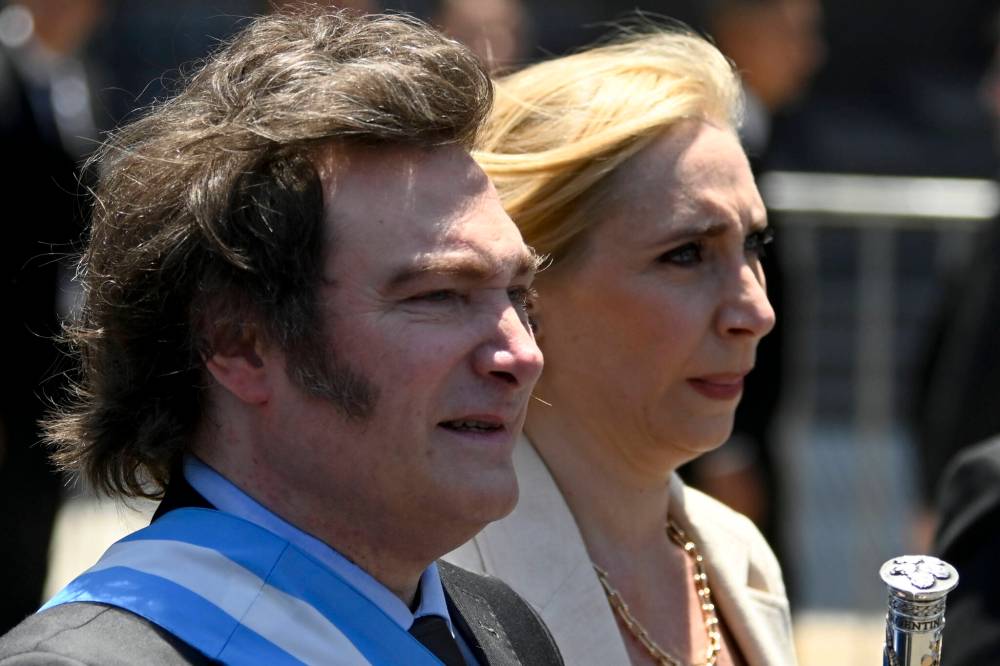
Admittedly there are many divergent views between those who operate under the philosophical umbrella. For example, despite ostensibly identifying as someone who opposes the existence of a state, Milei is also a staunch nationalist who finds himself at the head of one – And one with a robust organized labour force, as well as a welfare state that he seems to plan on maintaining. This dynamic might make some anarcho-capitalists writhe, whereas others might find some of his stances too extreme, like his suggestion of opening up the sale of human organs to the open market.
So let’s focus on the anarcho-capitalist conception of the free market. Because when moral philosopher Adam Smith, widely considered to be the progenitor of modern capitalism, coined the term “invisible hand,” even he was not so caught up in dogma that he framed it as the be all, end all arbiter of social discourse. Smith, and even those reputedly more hardline products of the Austrian School of Economics like Friedrich Hayak, have always acknowledged that there is a place for government regulation. That the hand needs guidance. But when these thinkers are represented by anarcho-capitalists, it is often as free-market purists.
If you ever find yourself in an anarcho-capitalist forum online, you will find that many of the proponents can be adept at diagnosing society’s problems. They’ll accept that slavery being utilized by multinational corporations is bad, or that environmental degradation should be avoided. Not all, of course. President Milei being one of them, who is on the record as calling climate change a socialist hoax. But some of the more reasonable ancaps, as they are colloquially known, will admit to these problems. However, they will pin the blame solely on the government. Even if private corporations are directly carrying out these acts, it is government actors facilitating their capacity to do so. And while this is correct, it is only diagnosing half the problem. Absent from their analysis is what mechanism would force the corporations to act any better if the government were removed. How does less regulation solve the problems brought on by private actors cravenly exploiting people and the planet for their own self interest?
And where ancaps seem like a potential ally in social progress, they are often silent. For example, our government maintains laws that can be utilized in favour of corporate interest against organized labour. See the back-to-work legislation the Biden government weaponized against striking rail workers, and also the Trudeau Liberals against postal workers a few years back. Never mind the possibility of organizing something like a general strike. But to most ancaps, the removal of government intervention is never framed as the possibility for more effective labour action. Terms like “collective action” or “class consciousness” are anathema to them, at least among the working class. One can’t help but feel the entire philosophy is so rooted in reactionary opposition to anything vaguely leftist that they can’t be bothered by the problems of unleashing the corporate sector in all its malignant glory.

Most other anarchist schools of thought do not take ancaps very seriously due to such inconsistencies. Because anarchism is rooted in decentralizing power, and to not include economic power in that deconstruction simply moves the centre of power from the government and into the private sector. And yet such far-right belligerences continue to gain in popularity, in large part due to the failures of our current political landscape. People are increasingly seeing through the false promise of neoliberalism, of this toxic marriage between political and corporate power. But as they refuse to disentangle, we need to be vigilant and educate ourselves properly. For the in the wake of the collapse is the opportunity to build something better, but also maybe something worse.
Alex Passey is a Winnipeg author.
Related Articles
Why Argentina's shock measures may be the best hope for its ailing economy


Advertisement Advertise With Us
Advertisement Advertise With Us