

Female politicians and public abuse
Advertisement
Read this article for free:
or
Already have an account? Log in here »
To continue reading, please subscribe:

Digital Subscription
One year of digital access for only $205*
- Enjoy unlimited reading on winnipegfreepress.com
- Read the E-Edition, our digital replica newspaper
- Access News Break, our award-winning app
- Play interactive puzzles
*First annual payment billed as $205.00 + GST for one year. This annual subscription will automatically renew at $233.00 + GST every 52 weeks (10% off the regular annual price of $259.35). Offer available to new and qualified returning subscribers only. Cancel any time.
To continue reading, please subscribe:
Add Free Press access to your Brandon Sun subscription for only an additional
$1 for the first 4 weeks*
- Enjoy unlimited reading on winnipegfreepress.com
- Read the E-Edition, our digital replica newspaper
- Access News Break, our award-winning app
- Play interactive puzzles
*Your next Brandon Sun subscription payment will increase by $1.00 and you will be charged $17.95 plus GST for four weeks. After four weeks, your payment will increase to $24.95 plus GST every four weeks.
Read unlimited articles for free today:
or
Already have an account? Log in here »
Hey there, time traveller!
This article was published 23/01/2024 (953 days ago), so information in it may no longer be current.
Five years before Barbie came out as a blockbuster movie with enough feminist themes and patriarchal commentary to ignite a firestorm, a different kind of Barbie talk was playing out in Canadian political circles.
Catherine McKenna, a Liberal federal member of parliament and minister of the environment, was being called ‘climate Barbie’ in cruel memes that became shorthand for a derogatory dismissal of her climate policies and for her as a female politician.
It was the fall of 2017, and I was witness to some of the abuse and unhinged commentary being hurled her way while attending the federal-provincial-territorial environment ministers’ conference in downtown Vancouver. I was there as Manitoba’s representative, and while the talks were mostly dominated by the new carbon pricing scheme, a different kind of controversy erupted during the media question-and-answer session.
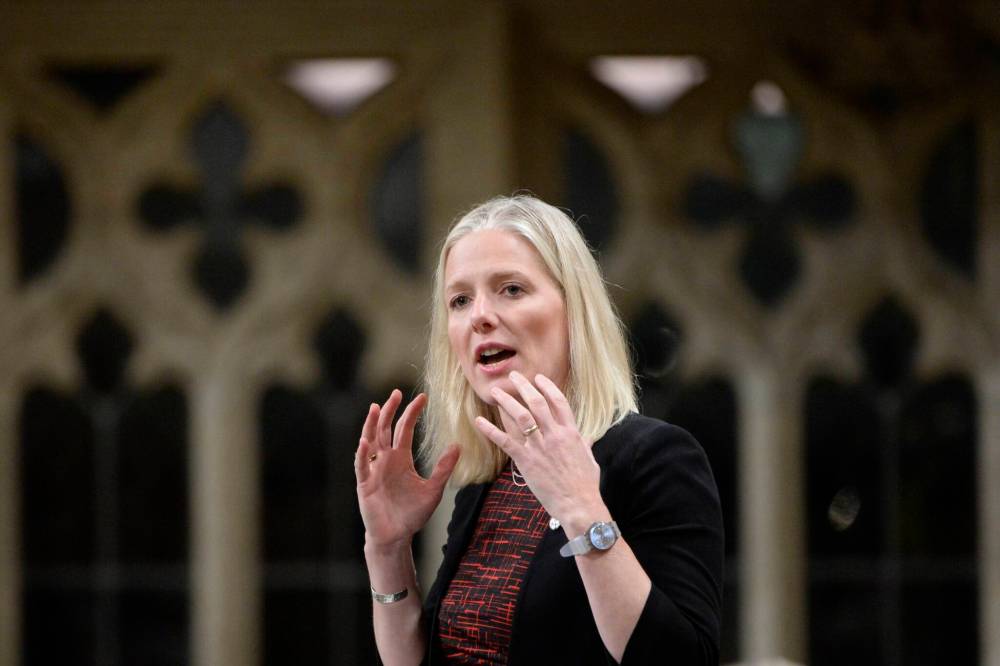
Adrian Wyld / Canadian Press Files
Catherine McKenna was derided by the sexist term ‘climate Barbie’ when she served as federal environment minister.
“Are you the one calling me climate Barbie,” McKenna had asked in response to a question from a cocksure reporter slouching behind media lines. “The reason I’m asking you not to do this is because… there are a lot of girls that want to get into politics, and it is completely unacceptable that you do this.”
The reporter smirked and said it wasn’t him, even in the face of hard evidence. We’d all seen his and his colleagues’ posts online. McKenna then refused to answer any more of his questions unless he recognized the inherent misogyny in the hashtag and committed to stop using it.
“It’s not me,” the reporter finally stated, taking on the tone of a boy in detention, “but I can’t speak for others. I can’t promise they won’t use it.”
He then slinked away, defeated, yet it was painfully obvious there’d be a doubling down of online retaliation once he’d returned to safety behind a screen.
Sadly, McKenna continued to receive much online hate until leaving politics altogether, confirming what many observers already knew: hate levelled at women politicians is usually gendered, personal and fuelled by sexism. Yes, male politicians also receive an intolerable amount of abuse — just glance back at some online comments regarding former premier Brian Pallister, or look at those despicable “F—k Trudeau” bumper stickers — but I would argue it doesn’t cut as deep as being called a “c–t” or accused of performing sexual favours for your job, things both McKenna and I experienced, along with countless other women politicians.
I’ve since spent a lot of time thinking about the premise of McKenna’s central concern of how to attract women in politics in the face of a stark reality that all but guarantees abuse for those who dare to enter.
As a mentor to many women who have pondered a career in politics, I’ve been asked the same question countless times and answered it all the same: Yes, if you’re a woman in the public eye, you will be subjected to cringe-worthy comments at best, possibly worse.
And there’s no doubt things have gotten worse. The pandemic, intensified global conflict and a proliferation of online abuse have turned many social media platforms into cesspools of hate.

While it’s impossible to legislate civility, there are measures government can take to combat harassment and abuse online. In fact, the Trudeau government, in its 2021 re-election platform, had promised Canadians it would introduce such legislation within its first 100 days to tackle the proliferation of hate and ensure social media platforms are held accountable for the content they host.
More than two years have since passed and still no legislation. A committee of sorts has been studying the issue of finding ways of curbing the hate, harassment and abuse while protecting freedom of speech. And just last month, Justice Minister Arif Virani hinted the legislation may be forthcoming and assured that it would balance the need for freedom of expression while offering important protections against online hate and harassment.
Certainly not a panacea against all harm, this legislation could be an important step in taking a stand against vile and unacceptable behaviour, holding people accountable for the hate they give, and reversing the growing trend of online harms. It may even help make politics a more acceptable and attractive career for women and marginalized individuals.
For now, despite a blockbuster movie with its pink-themed Barbie mantras that girls can do anything boys can, we’re left with a make-believe world that politics offers a level playing field while holding out hope that it too will someday become a triumph of feminism.
Rochelle Squires is a recovering politician after serving 7 1/2 years in the Manitoba legislature. She is a political and social commentator whose column appears Tuesdays.rochelle@rochellesquires.ca