

Pharmacare finally taking shape
Advertisement
Read this article for free:
or
Already have an account? Log in here »
To continue reading, please subscribe:
Monthly Digital Subscription
$0 for the first 4 weeks*
- Enjoy unlimited reading on winnipegfreepress.com
- Read the E-Edition, our digital replica newspaper
- Access News Break, our award-winning app
- Play interactive puzzles
*No charge for 4 weeks then price increases to the regular rate of $19.00 plus GST every four weeks. Offer available to new and qualified returning subscribers only. Cancel any time.
Monthly Digital Subscription
$4.75/week*
- Enjoy unlimited reading on winnipegfreepress.com
- Read the E-Edition, our digital replica newspaper
- Access News Break, our award-winning app
- Play interactive puzzles
*Billed as $19 plus GST every four weeks. Cancel any time.
To continue reading, please subscribe:
Add Free Press access to your Brandon Sun subscription for only an additional
$1 for the first 4 weeks*
*Your next subscription payment will increase by $1.00 and you will be charged $16.99 plus GST for four weeks. After four weeks, your payment will increase to $23.99 plus GST every four weeks.
Read unlimited articles for free today:
or
Already have an account? Log in here »
Hey there, time traveller!
This article was published 27/02/2024 (655 days ago), so information in it may no longer be current.
Federal NDP Leader Jagmeet Singh let the cat out of the bag on Friday, announcing that the Liberals and NDP had reached an agreement to launch a national pharmacare program.
Coverage for contraceptives and diabetes products are first on the agenda, in part because the products are regular prescriptions that individuals may try and ration or not use (in the case of contraceptives). Unwanted pregnancies and poorly treated diabetes result in clear and obvious additional costs to the medical system, so it’s easy to see why those areas would be some of the first things a national pharmacare program would address.
(Diabetes, for example, affects one in 10 Canadians, and improper treatment can lead to circulatory problems, heart attacks and kidney complications.)
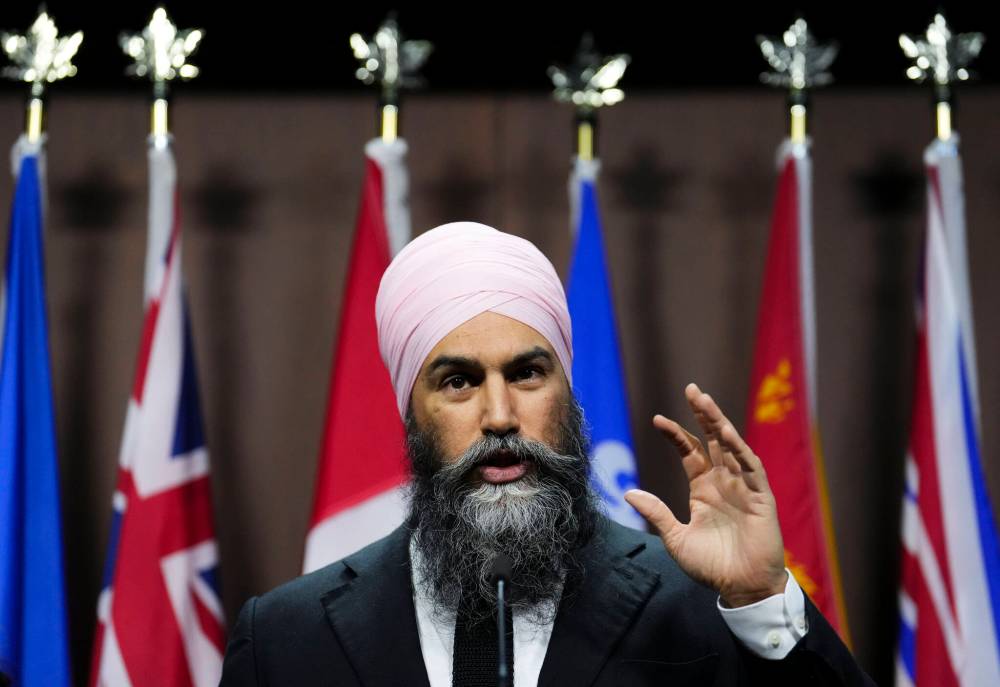
THE CANADIAN PRESS/Sean Kilpatrick
NDP leader Jagmeet Singh
Pushed by the NDP as a requirement for its continuing support of the federal Liberal minority government, the support for contraceptive and diabetes drugs is seen as establishing a framework of a universal national pharmacare program. In other words, it’s a start.
There aren’t many more details about the program: the legislation that would establish the program hasn’t made its way to the House of Commons yet.
Despite what some critics have said about the plan already, workplace plans don’t necessarily already cover such prescriptions.
Why? Because plans are different, can have limitations on total coverage, and, especially for those in low-wage situations, can be unaffordable.
Sometimes, as a result, workers are forced to weigh the costs versus the benefits, and opt out of the coverage.
Consider this, from the Parliamentary Budget Office, on non-hospital drug spending in Canada in 2021-22: “About 46 per cent ($16.9 billion) of total prescription drug expenditure was covered by public sources; 40 per cent ($14.7 billion) by private insurance; and the remaining 14 per cent ($4.9 billion) was paid for out-of-pocket.”
In 2021, Statistics Canada research found that 21 per cent of Canadians didn’t have any insurance coverage for prescription medications — and that almost two out of every 10 Canadians reported skipping or delaying doses of prescription medication.
That experience may be something completely foreign to our legislators — especially those whose entire recent work experience is as elected politicians — primarily because they are so well covered already.
But for ordinary Canadians, a suddenly-needed long-term prescription regime can overturn the financial apple cart. Stop and think about that 14 per cent figure from the Parliamentary Budget Office. Imagine how staggering it is for Canadians to dig into their personal pockets to find almost $5 billion, simply because they happened to find themselves sick. The irony is that the PBO suggests the costs of prescription drugs would actually come down with a single-pay federal pharmacare system.

So, here’s to a start in covering some Canadians for some of their prescriptions — and let’s hope that the model is something that can continue to grow so that the sheer cost of prescriptions will no longer be backbreaking for individuals.
It’s hard to think that our current model for pharmaceuticals even makes sense: you can be prescribed a drug in hospital, where it’s fully paid for as part of your health care. Get sent home from the hospital and need that drug again, and you pay.
In fact, it’s hard to even class a system as universal health care when such a key element of medical treatment happens to be drugs. (Or, for that matter, that a broken bone is covered for treatment, but a broken tooth is not. But that’s an argument for another day.)
The devil, as always, is in the details.
And political promises are flighty things. But it’s a beginning.
Related Articles
'Not consulted': Alberta health minister questions Ottawa's national pharmacare plan
Advertisement Advertise With Us
Advertisement Advertise With Us