

The U.S. Supreme Court — changes and controversy
Advertisement
Read this article for free:
or
Already have an account? Log in here »
To continue reading, please subscribe:

Digital Subscription
One year of digital access for only $205*
- Enjoy unlimited reading on winnipegfreepress.com
- Read the E-Edition, our digital replica newspaper
- Access News Break, our award-winning app
- Play interactive puzzles
*First annual payment billed as $205.00 + GST for one year. This annual subscription will automatically renew at $233.00 + GST every 52 weeks (10% off the regular annual price of $259.35). Offer available to new and qualified returning subscribers only. Cancel any time.
To continue reading, please subscribe:
Add Free Press access to your Brandon Sun subscription for only an additional
$1 for the first 4 weeks*
- Enjoy unlimited reading on winnipegfreepress.com
- Read the E-Edition, our digital replica newspaper
- Access News Break, our award-winning app
- Play interactive puzzles
*Your next Brandon Sun subscription payment will increase by $1.00 and you will be charged $17.95 plus GST for four weeks. After four weeks, your payment will increase to $24.95 plus GST every four weeks.
Read unlimited articles for free today:
or
Already have an account? Log in here »
Hey there, time traveller!
This article was published 19/08/2024 (725 days ago), so information in it may no longer be current.
The July 30th Free Press contained two major articles on U.S. Supreme Court “reform”: a news story, and Allan Levine’s historical analysis of “Bad decisions by U.S. Supreme Court.”
Both pieces need balancing perspectives to be useful.
The Associated Press piece, “Biden decries ‘extremism’ on Supreme Court,” has a kicker: “U.S. president details plan for term limits, ethics code for justices.” Biden hardly detailed a plan but echoed calls to limit — unconstitutionally — Supreme Court rulings on issues in ways that some find objectionable.
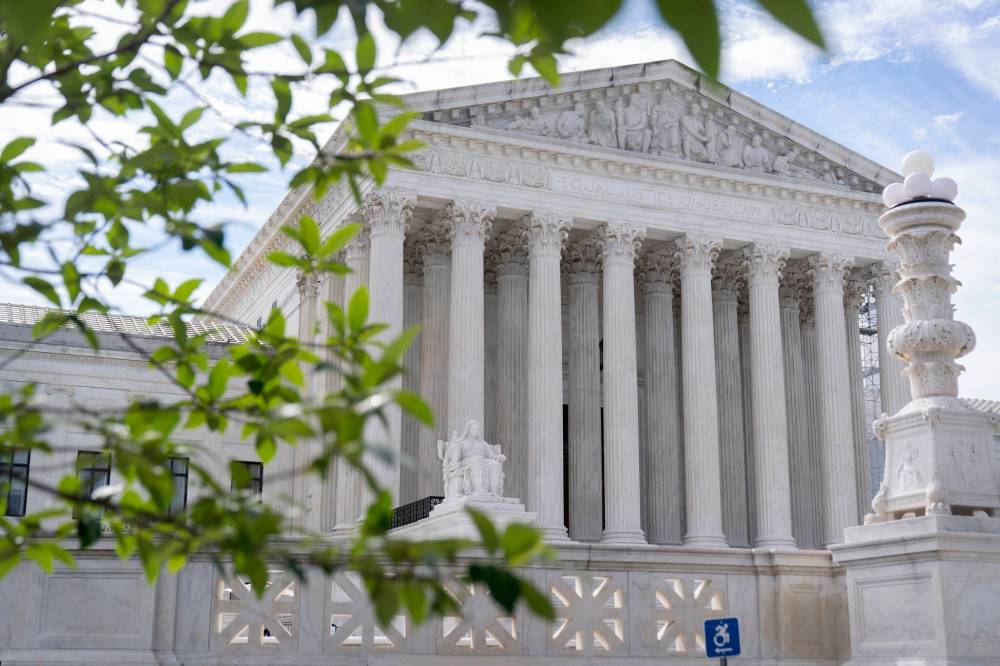
Mark Schiefelbein / Associated Press Files
U.S. President Joe Biden has promised sweeping — and controversial — changes to the U.S. Supreme Court.
Biden’s “plan” decries court rulings on abortion rights, regulatory authority and presidential immunity. These decisions result not from “extremism,” but by from application of the U.S. Constitution to laws and issues in each case.
So-called “extreme” members of the Supreme Court are actually textualists, or originalists: they appeal to the Constitution as it was intended, passed, and amended. A law’s desirability is not the court’s responsibility.
For many decades, the court has “found” Constitutional rights, often in cases where legislative action might be precluded by public opposition or ambivalence.
The right (and even some legal scholars on the left) have long objected to such judicial activism. Presidents appointed judges, and the Senate confirmed them, and now the court has more originalists than activists.
This is the source of much slander and innuendo about “extremist” judges, Trump’s “packing” of the court, and now, administrative bully pulpit support for limitations on justices’ terms and ethics.
The Supreme Court, the pinnacle of the judicial branch, was established by Article III of the Constitution. The legislature is given power “To constitute Tribunals inferior to the supreme Court.” (Article I) Obviously, Congress has no power over Supreme Court makeup, proceedings, or decisions, after confirming its members, except using impeachment.
Federal justices “both of the supreme and inferior Courts, shall hold their Offices during good Behaviour.” (Article III)
This has always been interpreted as lifetime tenure.
Removing the powers of the justices otherwise amounts to stripping them of their “offices.” Judiciary restrictions are unconstitutional control of the court.
Reforming the judicial system requires amending the Constitution: far more complicated and difficult than implied by U.S. President Biden’s promise to “figure out a way to get it done.”
Allan Levine’s editorial describes two of the worst decisions by the Supreme Court.
The Dred Scott decision ruled, in 1857, “that…a slave, was in fact not a citizen and had no right to sue.” Fortunately, within barely a decade, the 13th Amendment abolished slavery and the 14th Amendment defined citizenship and limited states’ rights to abrogate their rights. In 1896, Plessy v. Ferguson “established the doctrine of ‘separate but equal’” which lasted almost half a century until the Supreme Court overturned that fundamentally unjust “precedent.”
However, after this valuable history lesson, Levine associates these bad decisions with the recent decision in Trump v. United States. Levine calls the Trump decision “controversial, if not absurd.” He quotes no legal scholars, diving headlong into the kind of ludicrous “interpretations” which say now the president cannot be held accountable for anything.
He does quote Justice Ketanji Brown Jackson’s dissent, which likewise assumes that the ruling “declared…that the most powerful official in the United States can…become a law unto himself.”
Levine fleshes out that misinterpretation of the decision as if it would allow Trump to commit murder, or “take bribes for pardons, and all other types of corruption Trump is capable of; the list is endless.”
Actually, it’s not even very long. It is limited to official acts a president must perform, after vowing “I will faithfully execute the Office of President of the United States, and will to the best of my Ability, preserve, protect and defend the Constitution of the United States.” (Article II)
Of course, Trump, and many followers, have also bought into the sweeping nonsense and fear mongering about immunity.
Military members swear to “preserve, protect, and defend the Constitution of the United States against all enemies, foreign and domestic.” A president trying to violate the Constitution, as Trump vainly did after Biden was elected, is clearly a domestic enemy of the Constitution.

In fact, the current groundswell of “controversial, if not absurd” efforts to “reform” the Supreme Court likewise tries to bypass the Constitution’s unwelcome limitations.
Levine refers to Trump’s ridiculous boast that he could “stand in the middle of Fifth Avenue and shoot somebody,” and then claim that the person was a terrorist. But such summary execution is manifestly not a presidential duty.
Levine notes the immunity decision made it difficult to prosecute former U.S. President Trump for the serious offence of mishandling classified documents after his term ended. However a president whose term has ended is no longer accomplishing official duties.
The immunity decision has indeed delayed Trump’s sentencing in the New York case, which added “convicted felon” to myriad epithets describing the former president. However, that case was quite “controversial, if not absurd” as conducted and decided, without any help from the Supreme Court.
Bill Rambo writes from Landmark, Man.
Related Articles
Immunity’s threats to democracy
Advertisement Advertise With Us
Advertisement Advertise With Us
History
Updated on Monday, August 19, 2024 11:28 AM CDT: Fixes typo