

Magic when music unlocks memory

Advertisement
Read this article for free:
or
Already have an account? Log in here »
To continue reading, please subscribe:
Monthly Digital Subscription
$1 per week for 24 weeks*
- Enjoy unlimited reading on winnipegfreepress.com
- Read the E-Edition, our digital replica newspaper
- Access News Break, our award-winning app
- Play interactive puzzles
*Billed as $4.00 plus GST every four weeks. After 24 weeks, price increases to the regular rate of $19.95 plus GST every four weeks. Offer available to new and qualified returning subscribers only. Cancel any time.
Monthly Digital Subscription
$4.99/week*
- Enjoy unlimited reading on winnipegfreepress.com
- Read the E-Edition, our digital replica newspaper
- Access News Break, our award-winning app
- Play interactive puzzles
*Billed as $19.95 plus GST every four weeks. Cancel any time.
To continue reading, please subscribe:
Add Free Press access to your Brandon Sun subscription for only an additional
$1 for the first 4 weeks*
*Your next subscription payment will increase by $1.00 and you will be charged $16.99 plus GST for four weeks. After four weeks, your payment will increase to $23.99 plus GST every four weeks.
Read unlimited articles for free today:
or
Already have an account? Log in here »
Hey there, time traveller!
This article was published 04/09/2024 (568 days ago), so information in it may no longer be current.
Mom is nowhere to be found when I visit her nursing home.
Not asleep in the lobby or napping in her room.
Not having a cup of tea in the dining room. Not playing Scrabble in the library.
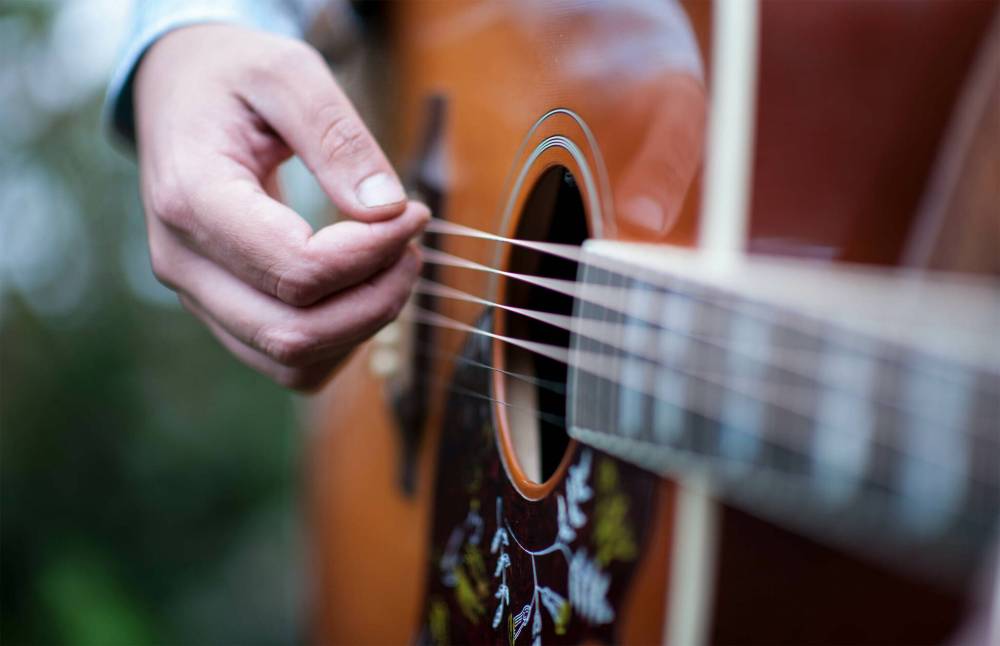
And then I hear the music.
I take the stairs to the second-floor games room, where there’s a band playing — two guitars and an accordion — cranking out a playlist of traditional Newfoundland music and old-time country songs.
Walkers are scattered between the rows of chairs.
I spot an empty place next to my mother.
“Oh hi!” she says.
There is recognition in her eyes, almost as if she had been expecting me.
“What did you say your name is?”
“Pam.”
“Right, and I’m…?”
“Vera,” I say.
She squeezes my hand and laughs. “I’m glad we’ve got that all straightened out.”
I see residents I recognize from the lobby who often seem lost in their own thoughts who are now animated — smiling, swaying, clapping and tapping their feet.
The music resonates with them, clearly.
My mother holds my hand throughout the concert, smiling and sometimes humming along.
At one point she looks around the room and can’t control her outburst: “They’re all going grey!” she says, laughing at her own observation.
It is the first time in a long time that I’ve seen my mother experience joy.
When Alzheimer’s has taken virtually everything from you, I imagine there is precious little joy to be found, day to day.
I worry about her quality of life at this stage, when a fair bit of her day is spent asleep or staring into space.
At Northwestern Medicine, a non-profit research-focused health-care system based in Chicago, Ill., academics are studying how music intervention can improve communication for people with Alzheimer’s and other dementias.
Dr. Borna Bonakdarpour is a neurologist at Northwestern. He’s also a musician who is interested in how music stimulates our brains.
“When we use musical intervention, we’re looking for areas and networks in the brain that are intact to serve as bridges and help the areas that are not working well,” Bonakdarpour says in an article on Northwestern’s website. “Singing, for example, can be a bridge to communicating better through language. The rhythmic nature of music can help people walk better.”
I’ve always known that Alzheimer’s progresses through the brain, beginning in areas where memories are stored and ending in the brain stem, which controls a person’s ability to swallow.
What I did not know, but have now learned from Northwestern Medicine, is that, “The long-term memory of music remains intact until the very late stages of disease progression, right before the disease attacks the brainstem. It is currently unknown why Alzheimer’s disease affects this area last.”
This explains why, even though my mother’s capacity for conversation is diminishing, she still sings regularly, albeit sometimes with “found” lyrics.
But let’s get back to the concert.
There is a poignant moment when the trio plays Darling Say You’ll Love Me When I’m Old.
The lyrics have more meaning in this audience, where there is not a couple to be seen. I imagine most of the residents here are nursing grief, silently wishing that the love they shared their life with would walk into this room and sweep them onto the dance floor one more time.
When dark clouds gather round and nights are cold
And say you’ll never trade our love for gold
Oh darling say you’ll love me when I’m old
The sadness is shattered with the next song, a lively jig.
A bespectacled frail-looking man I had been watching — because he reminded me of my dad in his later years — suddenly jumped out of his chair and started dancing.
Wearing a red-and-black checked shirt and jeans, he danced out his love of the music, performing the high-stepping fancy footwork of a Newfoundland jig that I had not seen the like of for years. Halfway through the song, he collapsed into a nearby loveseat — done in, but laughing and beaming.
For a time, he had been himself again.
“People with Alzheimer’s may come alive again when they hear music,” Bonakdarpour explained in the Northwestern article. “Some start dancing alone or with their caregivers, which is a very big deal. Caregivers find the person lost to them in the context of music.”
And so, for a time, I have found my mother again, until the music stops and people claim their walkers and shuffle back to their rooms.

“I’m tired now and I want to lie down,” Mom said, taking my hand and smiling.
“But I was so glad you came.”
Pam Frampton is a freelance writer and editor who lives in St. John’s.
X: pam_frampton
Pam Frampton is a columnist for the Free Press. She has worked in print media since 1990 and has been offering up her opinions for more than 20 years. Read more about Pam.
Pam’s columns are built on facts, but offer her personal views through arguments and analysis. Every column Pam produces is reviewed by an editing team before it is posted online or published in print — part of the Free Press‘s tradition, since 1872, of producing reliable independent journalism. Read more about Free Press’s history and mandate, and learn how our newsroom operates.
Our newsroom depends on a growing audience of readers to power our journalism. If you are not a paid reader, please consider becoming a subscriber.
Our newsroom depends on its audience of readers to power our journalism. Thank you for your support.
Pam Frampton is a columnist for the Free Press. She has worked in print media since 1990 and has been offering up her opinions for more than 20 years. Read more about Pam.
Pam’s columns are built on facts, but offer her personal views through arguments and analysis. Every column Pam produces is reviewed by an editing team before it is posted online or published in print — part of the Free Press‘s tradition, since 1872, of producing reliable independent journalism. Read more about Free Press’s history and mandate, and learn how our newsroom operates.
Our newsroom depends on a growing audience of readers to power our journalism. If you are not a paid reader, please consider becoming a subscriber.
Our newsroom depends on its audience of readers to power our journalism. Thank you for your support.
Advertisement Advertise With Us
Advertisement Advertise With Us
History
Updated on Wednesday, September 4, 2024 6:33 AM CDT: Removes photo cutline from lede paragraph