

Mongolia flouts warrant for Putin’s arrest
Advertisement
Read this article for free:
or
Already have an account? Log in here »
To continue reading, please subscribe:

Digital Subscription
One year of digital access for only $205*
- Enjoy unlimited reading on winnipegfreepress.com
- Read the E-Edition, our digital replica newspaper
- Access News Break, our award-winning app
- Play interactive puzzles
*First annual payment billed as $205.00 + GST for one year. This annual subscription will automatically renew at $233.00 + GST every 52 weeks (10% off the regular annual price of $259.35). Offer available to new and qualified returning subscribers only. Cancel any time.
To continue reading, please subscribe:
Add Free Press access to your Brandon Sun subscription for only an additional
$1 for the first 4 weeks*
- Enjoy unlimited reading on winnipegfreepress.com
- Read the E-Edition, our digital replica newspaper
- Access News Break, our award-winning app
- Play interactive puzzles
*Your next Brandon Sun subscription payment will increase by $1.00 and you will be charged $17.95 plus GST for four weeks. After four weeks, your payment will increase to $24.95 plus GST every four weeks.
Read unlimited articles for free today:
or
Already have an account? Log in here »
Hey there, time traveller!
This article was published 19/09/2024 (695 days ago), so information in it may no longer be current.
Earlier this month, Russia’s President Vladimir Putin freely visited Mongolia, a member state of the International Criminal Court (ICC). This, despite Putin facing an ICC arrest warrant for alleged war crimes and a Mongolian judge sitting on the court’s judiciary panel.
But rather than detain the Russian leader as per their obligations to the ICC, Mongolian authorities gave Putin advanced notice he wouldn’t be touched. They then rolled out the red carpet and pageantry for his arrival.
The realist view is that Mongolia was simply protecting its national interests. Nearly all its energy supply, for example, is imported from Russia. Putin’s visit also facilitated the signing of a raft of new bilateral deals related to infrastructure development and natural resources.
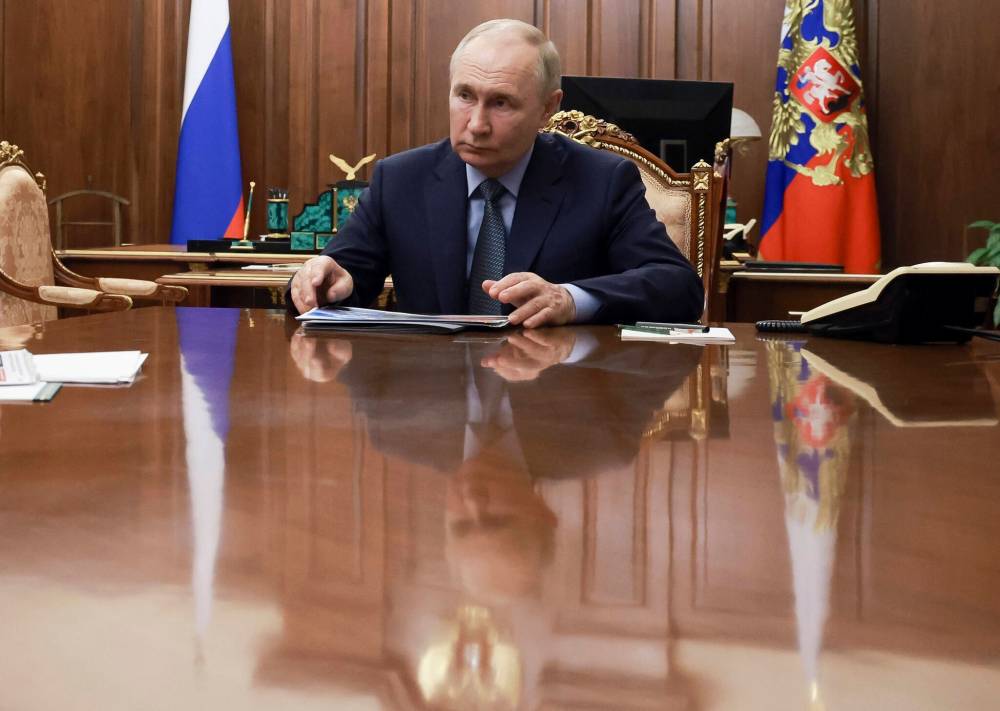
Sputnik
Russian President Vladimir Putin speaks with Promsvyazbank chairman and CEO Pyotr Fradkov at the Kremlin in Moscow, Russia, after the Kremlin announced Putin would travel to Mongolia, a member of the International Criminal Court, despite a warrant for his arrest.
Mongolia’s government “cannot endanger its own population by poking the bear to its north,” wrote one expert for the Foreign Policy Research Institute, a U.S.-based think tank.
The broader view: the episode underscores, again, how respect for multilateral institutions is withering — symptomatic of a fragmenting international system.
The ICC was established in 2002, four years after the United Nations General Assembly adopted the court’s founding charter, the Rome Statute. It’s tasked with investigating and prosecuting individuals responsible for genocide, war crimes and crimes against humanity in jurisdictions that lack the means, will or resources to do so.
However, the ICC has been mired in controversy for much of its existence. Powerful countries such as China, India, Israel, Russia, Saudi Arabia and the U.S. are not among the 124 nations that recognize the court. And it has no enforcement mechanism to compel compliance from member states.
Many African governments insist the court is biased against the continent, where most of its efforts have focused. This has prompted some critics and propagandists to label it a neo-imperialist tool of the West. As evidence, they point to how the ICC essentially ignored the torrent of abuses widely reported during the American-led Global War on Terror.
It has also not been particularly productive. Despite an annual budget now approaching US$190 million, the court has managed to secure only 10 convictions in the past two decades.
Nonetheless, the ICC’s supporters argue it still plays a constructive role in upholding international norms and key tenets of humanitarian law. A statement from Amnesty International after Russia in 2022 launched its attempt to annihilate Ukraine’s sovereignty celebrated what the organization says was a groundswell of renewed support for the ICC. “We still believe the ICC can play a unique role in the realization of universal rights,” said secretary general Agnès Callamard.
The court’s activities do indeed shape media coverage, public opinion and national reputations — even in the absence of arrests or convictions. ICC decisions also influence diplomatic initiatives and trade considerations.
But for the ICC to realize its true promise requires member states to execute warrants issued by the court — something Mongolia had no intention of doing on Putin’s visit. “The overriding reason for this trip will have been to show that Putin can travel right now,” one analyst told the Associated Press.
Indeed, as the war in Ukraine approaches its fourth year, Russia’s president seems to be ever less isolated on the world stage. Putin in recent months has held two dozen meetings with other world leaders, ranging from the presidents of China and Turkey to the prime ministers of Hungary and India. In October, Russia will also play host to the next BRICS summit.

“For those who believe that might should not make right, the world today seems to offer little hope,” reads an essay from political scientist Tanisha M. Fazal in the summer issue of Foreign Affairs magazine. “Norms can have intrinsic strength,” Fazal writes. “But the power of norms is never guaranteed, and the world’s current normative architecture is under threat.”
Calls from liberal democracies to preserve the rules-based international order are also losing credibility, given the inability of Western capitals to rein in Israel’s devastating war on Gaza.
Swift and severe retaliation against Hamas was justified following the terror group’s murderous rampage through southern Israel last October that claimed some 1,100 Jewish lives. But the indefinite military campaign ordered by Israel’s political leaders now appears to most of the world as cruel and uncalculated. Nearly 42,000 Palestinians have been killed and at least 100,000 others are injured or missing according to local health authorities — the vast majority of them innocent civilians.
The continued dismantling of a rules-based international order invites profound global instability. But for rules to actually be meaningful, everyone must follow them.
Kyle Hiebert is a Winnipeg-based political risk analyst, and the former deputy editor of the Africa Conflict Monitor