

What we do for the birds, we do for us all
Advertisement
Read this article for free:
or
Already have an account? Log in here »
To continue reading, please subscribe:

Digital Subscription
One year of digital access for only $205*
- Enjoy unlimited reading on winnipegfreepress.com
- Read the E-Edition, our digital replica newspaper
- Access News Break, our award-winning app
- Play interactive puzzles
*First annual payment billed as $205.00 + GST for one year. This annual subscription will automatically renew at $233.00 + GST every 52 weeks (10% off the regular annual price of $259.35). Offer available to new and qualified returning subscribers only. Cancel any time.
To continue reading, please subscribe:
Add Free Press access to your Brandon Sun subscription for only an additional
$1 for the first 4 weeks*
- Enjoy unlimited reading on winnipegfreepress.com
- Read the E-Edition, our digital replica newspaper
- Access News Break, our award-winning app
- Play interactive puzzles
*Your next Brandon Sun subscription payment will increase by $1.00 and you will be charged $17.95 plus GST for four weeks. After four weeks, your payment will increase to $24.95 plus GST every four weeks.
Read unlimited articles for free today:
or
Already have an account? Log in here »
Hey there, time traveller!
This article was published 08/10/2024 (710 days ago), so information in it may no longer be current.
As Canada’s politicians, diplomats, and conservationists fly south later this month to join global colleagues at the UN Biodiversity Conference of the Parties (COP16) in Colombia, they will be in crowded skies.
Billions of birds — from the Seal River Watershed of Manitoba’s north and from across Canada’s boreal forest and Arctic — will join them, embarking on epic migratory journeys to winter homes in the U.S., Central and South America and the Caribbean.
The birds, of course, are oblivious to COP16 and its work, but have much at stake in its outcomes.
Birds face myriad challenges during the nesting season in Canada’s far north, and during their long annual return journeys to the far south.
The biggest threat is habitat loss caused by development, resource extraction, and fires, drought, and other growing impacts of climate change.
Far fewer birds make the migratory journeys these days. A 2019 study found North America has lost 2.9 billion breeding birds since 1970. Also in 2019, Audubon scientists found two-thirds of the continent’s bird species are at risk of extinction due to climate change.
As birds share the skies with COP16 attendees heading to Colombia, they are a symbol of the biodiversity challenges we face and can help point the way to nature-based solutions.
At the 2022 COP15 in Montreal, Canada provided leadership in addressing the biodiversity crisis, in large part by prioritizing and drawing global attention to the critical importance of working with Indigenous Nations and organizations to protect land, water, and the life they sustain.
That conference ended with a commitment to reverse biodiversity loss by 2050.
This year in Colombia, Canada can again take center stage.
Collaborations between Indigenous governments and organizations, environmental NGOs, and provincial, territorial, and federal governments are demonstrating an effective strategy in the drive to fulfill Montreal’s COP15 commitment.
Places in Manitoba like the Seal River Watershed, Pimachiowin Aki, and Hudson and James Bay lowlands, and many other vibrant, vast spaces across Canada, like Thaidene Nëné and Dene K’éh Kusān, are being well-stewarded, with Indigenous-led initiatives in place or underway to provide permanent protection.
These are prime summer nesting grounds for numerous species of migratory birds, and ongoing support and collaboration between federal, provincial, and territorial governments and Indigenous Nations is imperative to their survival.
The importance of Indigenous knowledge in conservation cannot be overstated.
For example, a new co-produced report that has found the Seal River Watershed is home to far more bird species than previously documented could only have been done as a collaboration between Indigenous knowledge and Western science. These kinds of projects and many others underway across Canada can offer COP16 a template for ways to be allies with Indigenous governments and organizations to protect nature around the world.
The fact that millions of migratory birds from Canada will be in the skies of Colombia during COP16 can help emphasize this point.
Take the bright yellow and slate blue Canada Warblers whose sweet songs could be heard ringing out all summer from the rich boreal forests of Pimachiowin Aki on the east side of Lake Winnipeg and other places across Manitoba. Scores of them will have just arrived for the winter in the foothills of the Andes in Colombia.
Canada Warblers and other birds are such effective biodiversity ambassadors because we do not need to go to remote faraway places in the boreal or Arctic to see or hear them — they come to us.
Twice a year, they embark on incredible journeys covering thousands of miles across international borders. Each spring, they make their way north into the boreal forest to breed in the safety of Canada’s vast wilderness. They are so numerous and varied, the boreal forest is often called the continent’s bird nursery.
Then, each fall, these birds — Lesser Yellowlegs, Common Terns, Blackpoll Warblers, Gray-cheeked Thrush, and so many others adored by people from the Yukon to Newfoundland and Labrador — head south to faraway places such as Panama, Colombia, and even the southern tip of Chile.
Along the way, they rely on biodiversity-rich stopover locations to rest, feed, and recharge.
Protecting landscapes and marine areas that are teeming with life is essential — and not only for the birds and other wildlife they sustain. Biodiversity supports health and food security for humans.
Healthy ecosystems yield clean air for us to breathe and water to drink.
It is not just for the birds, but for all of us.
Dr. Jeff Wells is a leading bird expert, conservation biologist, and author. He is vice president of Boreal Conservation for the National Audubon Society and a Fellow of the Cornell Lab of Ornithology.
Related Articles
Canada, Manitoba lagging behind promise to meet 2030 target of protecting more land and water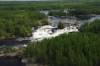
Advertisement Advertise With Us
Advertisement Advertise With Us