

A step in the right direction for biodiversity
Advertisement
Read this article for free:
or
Already have an account? Log in here »
To continue reading, please subscribe:

Digital Subscription
One year of digital access for only $205*
- Enjoy unlimited reading on winnipegfreepress.com
- Read the E-Edition, our digital replica newspaper
- Access News Break, our award-winning app
- Play interactive puzzles
*First annual payment billed as $205.00 + GST for one year. This annual subscription will automatically renew at $233.00 + GST every 52 weeks (10% off the regular annual price of $259.35). Offer available to new and qualified returning subscribers only. Cancel any time.
To continue reading, please subscribe:
Add Free Press access to your Brandon Sun subscription for only an additional
$1 for the first 4 weeks*
- Enjoy unlimited reading on winnipegfreepress.com
- Read the E-Edition, our digital replica newspaper
- Access News Break, our award-winning app
- Play interactive puzzles
*Your next Brandon Sun subscription payment will increase by $1.00 and you will be charged $17.95 plus GST for four weeks. After four weeks, your payment will increase to $24.95 plus GST every four weeks.
Read unlimited articles for free today:
or
Already have an account? Log in here »
Hey there, time traveller!
This article was published 11/10/2024 (667 days ago), so information in it may no longer be current.
Last week an historic piece of legislation was tabled in parliament which you may know nothing about, largely because only a handful of 5th estate members deemed it worthy of comment in print or broadcast.
Yet this bill could have a more significant impact on the natural world, and our place within it, than any other legislation enacted to date.
Called “The Nature Strategy and Accountability Act,” the bill is among the first of its kind in the world aimed at reversing biodiversity loss, one of the most urgent issues facing not only our nation but countries worldwide.
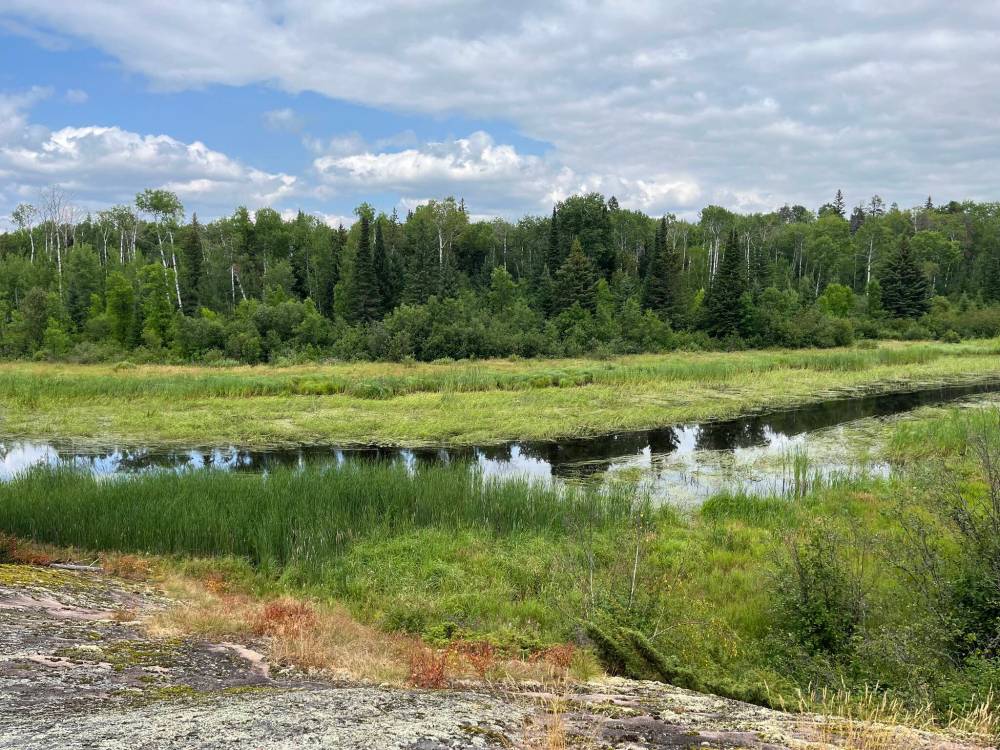
Russell Wangersky / Free Press
The federal government is moving to legislate a larger space for nature.
To get a sense of the problem consider this: in Canada, mammal populations have dropped by half, migratory birds have decreased by 30 per cent and some 2,000 species are at risk of extinction.
Worldwide, those numbers are even more alarming, with an estimated 68 per cent decline in mammal, bird, reptile and amphibian populations.
Those numbers worsen each and every year.
So, why is this slow but steady mass extinction occurring? Well, there are a number of factors at play, but one the most significant is the destruction of the habitats that protect and sustain all species, including ours. The forest, wetland and ocean homes that also happen to absorb the lion’s share of the carbon dioxide we release via the burning of fossil fuels.
Which is why slowing climate change and preventing biodiversity loss are so intimately linked. Because the entire web of life on this planet is dependent on the protection and preservation of its dynamic land and waterscapes, the ones that shield us, sustain us and make our lives possible.
That’s why a bill that outlines the concrete steps toward protecting 30 per cent of our nation’s lands and oceans by 2030 is so essential and so exciting. It gives us, as a society — communities, governments, businesses and Indigenous peoples — a running chance at working to reverse the ongoing destruction of key habitats and reversing biodiversity loss.
The act can also be seen as an act of reconciliation, given that it already includes what Climate and Environment Minister Stephen Guilbeault describes as “the largest conservation effort, led by Indigenous people, on the planet.”
And yes, it will cost money, but the economic returns derived from nature protection combined with other climate initiatives, like carbon pricing, far outweigh the immediate costs. In fact, experts estimate that those actions will provide some $15 to $25 billion in benefits and save Canadians an additional $23 billion, by mitigating climate change impacts between now and 2030.
Is the act perfect? No, it’s not. There are no legislated and binding targets with legal repercussions if they’re not met. Instead, as one environmentalist noted, it relies on naming and shaming those provincial and territorial governments that refuse to participate.
But being the second country in the world to put its money where its mouth is on reversing nature loss is still a hugely significant accomplishment that deserves to be celebrated.
That said, I wouldn’t plan on holding a celebratory party just yet.
The bill hasn’t passed, and even if it does, should Conservative Leader Pierre Poilievre win the next federal election, the goals of the Nature Strategy and Accountability Act will likely never be achieved, given that he’s promised to lay waste to every climate initiative the Liberal-NDP minority government has put in place.
In fact, despite promises to fast track green energy projects — including largely failed tidal power and carbon storage schemes — Poilievre has promised to cancel the carbon tax, speed up oil and gas production, lift limits on logging and, like BC Conservative Leader John Rustad, will probably kill any effort to protect 30 per cent of our lands and waters by 2030.
Which I find immeasurably depressing.

Add to that the potential loss of one of the most environmentally and climate smart cabinet ministers we’ve ever had, and the despair only deepens. In fact, work on climate and the environment has dominated Minister Stephen Guilbeault’s career, first as director of Greenpeace Quebec, then as founding member of Equiterre, which encourages communities and governments to make ecologically sound and equitable choices.
So, where does that leave us? Well, personally, I plan to work past my anxiety and celebrate the fact that my country, at least for the moment, is now leading the world in legislative efforts to stop biodiversity loss.
I’ll also do everything in my power to pressure our provincial government to meet 30 by 30 targets and do my best to ensure that Pierre Poilievre gets nowhere near 24 Sussex Drive.
For the sake of future generations — among them, your kids and grandkids — I hope you do the same.
Erna Buffie is a writer and filmmaker. Read more at https://www.ernabuffie.com/