

Seeking signs of hope for the future
Advertisement
Read this article for free:
or
Already have an account? Log in here »
To continue reading, please subscribe:

Digital Subscription
One year of digital access for only $205*
- Enjoy unlimited reading on winnipegfreepress.com
- Read the E-Edition, our digital replica newspaper
- Access News Break, our award-winning app
- Play interactive puzzles
*First annual payment billed as $205.00 + GST for one year. This annual subscription will automatically renew at $233.00 + GST every 52 weeks (10% off the regular annual price of $259.35). Offer available to new and qualified returning subscribers only. Cancel any time.
To continue reading, please subscribe:
Add Free Press access to your Brandon Sun subscription for only an additional
$1 for the first 4 weeks*
- Enjoy unlimited reading on winnipegfreepress.com
- Read the E-Edition, our digital replica newspaper
- Access News Break, our award-winning app
- Play interactive puzzles
*Your next Brandon Sun subscription payment will increase by $1.00 and you will be charged $17.95 plus GST for four weeks. After four weeks, your payment will increase to $24.95 plus GST every four weeks.
Read unlimited articles for free today:
or
Already have an account? Log in here »
Hey there, time traveller!
This article was published 29/10/2024 (697 days ago), so information in it may no longer be current.
In exactly one week, the world will teeter on the cusp of finding out if America is ready to elect its first woman president.
As polls open, voting lineups form, and ballots are cast, I can only imagine the pin cushion much of the country will be seated upon while awaiting results. Will Kamala Harris make history and become the most influential and powerful leader of the free world? Or will it be 2016 all over again?
Time will tell.
But unlike 2016, many of us are probably heading into the day with expectations that are much more tempered. At least that’s how it feels for me. I’m less optimistic today than I was back then, less certain that equality as a global issue will continually march forward, and less hopeful that women will achieve true equality in my lifetime.
I know I’m not alone when I say it’s hard to feel optimistic these days. And I’m not just referring to what’s been happening south of the border. Sure, we can take a dim view of the way the United States rolled back equality by restricting access to reproductive health services, or the way in which women in that country are offered fewer opportunities to succeed in the workplace, or that they haven’t come anywhere close to eliminating the gendered pay gap. But are we any better off in Canada?
Rates of intimate-partner violence continue to escalate to epidemic proportions in all provinces and territories, and yet, apart from a few leaders, no one is calling it an epidemic. It rarely receives the attention, funding, and public policy considerations it deserves. Sexual assault is the only crime in Canada not on the decline, which is especially startling when you consider that it is also the most under-reported crime. A sliver of good news is that there have been some recent changes to the way in which police agencies investigate sexual assault. Thanks to a damning exposé by Robyn Doolittle in the Globe & Mail about the number of ‘unfounded’ cases in police agencies across the country, there are now protocols and standards in place at municipal and federal policing agencies to ensure cases are not indiscriminately closed and dismissed as unfounded. Creating a more trauma-informed approach for victims to come forward and report sexual violence is a step in the right direction, but it’s hard to say if things are getting any better.
According to Statistics Canada, 30 per cent of all women aged 15 and older report having been sexually assaulted at least once in their lifetime since their 15th birthday.
Let that number sink in— 30 per cent! When you’re driving home tonight and pulling onto the street, take a look at your neighbourhood and know that in three out of every 10 household on the block lives a sexual assault survivor.
It’s mind blowing how quiet this epidemic remains.
On the job front, the evolution of women’s equality is moving at a glacial pace. Consider this: women are 30 per cent less likely than men to get promoted out of entry-level jobs, and only four per cent of Canada’s largest publicly traded companies have a woman CEO.
At the managerial level, some women are faring a little bit better with 35 per cent of mid-level managerial positions occupied by white women. But for marginalized and minority women, that number shrinks to a dismal 1 per cent. You’ll be hard-pressed to find a woman leader who is also Black or Indigenous, has a disability, or is from the LGBTTQ+ community.

In Parliament, women occupy only 30 per cent of the seats. According to a May 2022 global ranking of gender equality in parliaments around the world, Canada is ranked at 59, behind places like Rwanda, Ecuador, and Armenia. Provincial and municipal jurisdictions fare even worse.
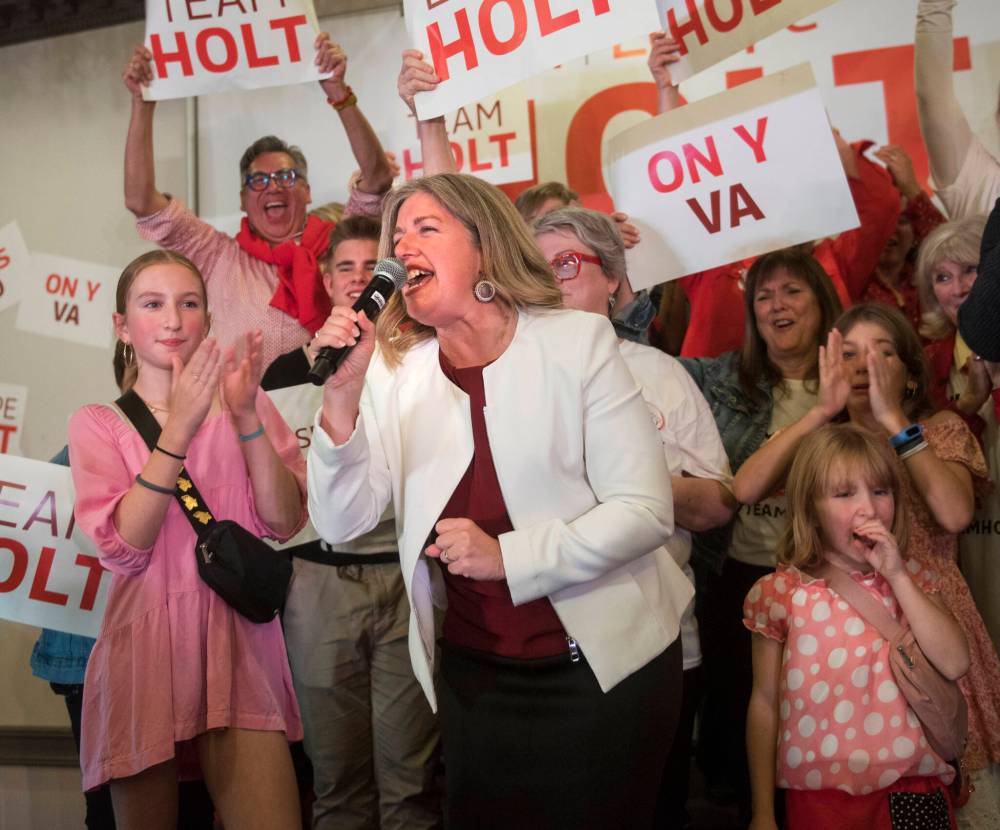
And yet, a bright spot. Last week saw another province elect its first woman premier. New Brunswick Liberal Leader Susan Holt won the election and broke the glass ceiling by becoming the first woman in that province to do so.
When asked by reporters about her historic victory, she thanked the woman pioneers who came before her and remarked how unfortunate it was to have taken so long for a woman to move into the top job. Now, with her three daughters at her side, ages 12, 10 and 7, she committed to demonstrating to all young girls the possibilities of achieving their dreams and breaking down barriers.
Let’s hope this victory is a harbinger of more to come for women in leadership.
Rochelle Squires is a recovering politician after serving 7½ years in the Manitoba legislature. She is a political and social commentator whose column appears Tuesdays.
History
Updated on Tuesday, October 29, 2024 9:49 AM CDT: Fixes CP Style