

Kamala Harris’s lessons for Justin Trudeau

Advertisement
Read this article for free:
or
Already have an account? Log in here »
To continue reading, please subscribe:

Digital Subscription
One year of digital access for only $205*
- Enjoy unlimited reading on winnipegfreepress.com
- Read the E-Edition, our digital replica newspaper
- Access News Break, our award-winning app
- Play interactive puzzles
*First annual payment billed as $205.00 + GST for one year. This annual subscription will automatically renew at $233.00 + GST every 52 weeks (10% off the regular annual price of $259.35). Offer available to new and qualified returning subscribers only. Cancel any time.
To continue reading, please subscribe:
Add Free Press access to your Brandon Sun subscription for only an additional
$1 for the first 4 weeks*
- Enjoy unlimited reading on winnipegfreepress.com
- Read the E-Edition, our digital replica newspaper
- Access News Break, our award-winning app
- Play interactive puzzles
*Your next Brandon Sun subscription payment will increase by $1.00 and you will be charged $17.95 plus GST for four weeks. After four weeks, your payment will increase to $24.95 plus GST every four weeks.
Read unlimited articles for free today:
or
Already have an account? Log in here »
Hey there, time traveller!
This article was published 08/11/2024 (663 days ago), so information in it may no longer be current.
U.S. Vice-President Kamala Harris’ decisive loss to former president (now president-elect) Donald Trump holds three valuable lessons for Prime Minister Justin Trudeau’s own re-election campaign prospects next year.
If he heeds them.
Lesson one, focus on fixing the daily economic hurt and anxiety people are experiencing now.
The Canadian Press
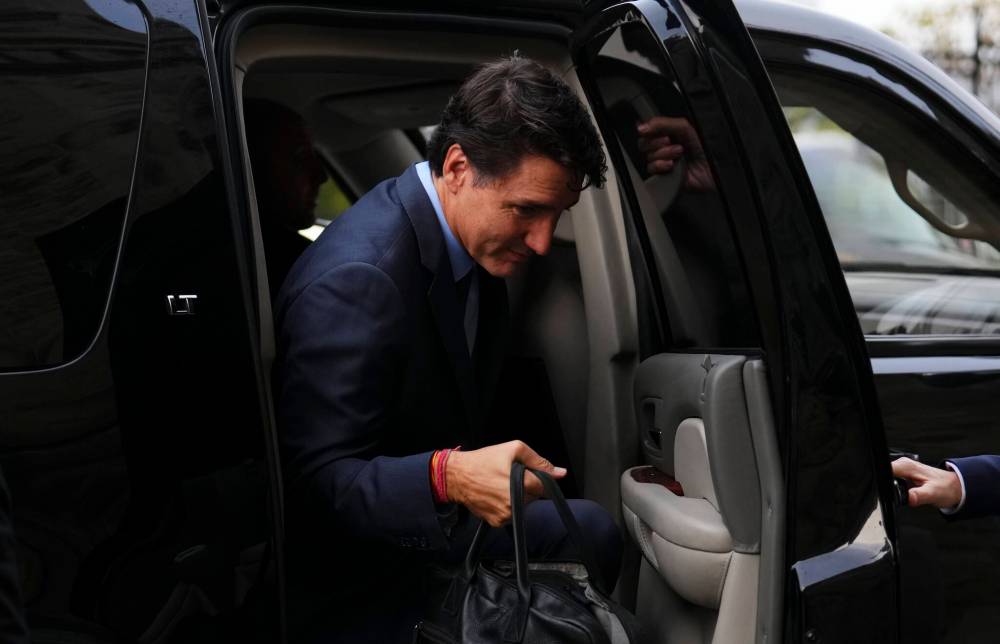
There are lessons to be learned by Prime Minister Justin Trudeau from Kamala Harris’s loss in the U.S. election. But he has to learn them fast.
Lesson two, resurrect the measured, competent PM who successfully negotiated NAFTA.
Lesson three, build back trust with Canadians on how their government works and who it works for.
Here’s what this means.
Economic angst at all-time high
First, Harris’s pitch to the past — “We’re not going back” — enthused partisans but failed to connect with voters worried about today and what they were going through.
It made the campaign about her opponent and not about voters’ concerns today about who and what was going to make their lives better. Economic angst is at all-time highs in the U.S., as in Canada, and voters are demanding their leaders and parties speak about what they will do to fix things.
That means the cost of living (overall inflation may be down but high prices and costs are not and won’t be any time soon); the cost and availability of housing (distinct issues that Pierre Poilievre has neatly tied together with his proposed GST elimination on new homes under $1 million); job security (Trump’s tariffs speak to protecting existing jobs, now); and controlling immigration (which is really access to jobs, housing, health care and public safety for voters).
Trudeau needs to actively side with “the strivers,” those who want life to be better for themselves and their families and expect to succeed without having the deck stacked against them by their government.
Concomitant with this is for the Liberal government to drop the incessant identity politics, culture wedges, and self-righteous ‘wokist’ language that roils and repels many Canadians. This preoccupation may animate Liberal and leftist partisans but screams “out of touch” to uncommitted voters who see this as a distraction from their real concerns.
As Kamala Harris just found out, even democracy takes a back seat to paying the rent or buying groceries.
Resurrect prime ministerial chops
Second, Justin Trudeau was arguably at his prime ministerial best during the delicate NAFTA renegotiations instigated by Trump in their respective first terms.
Trudeau successfully navigated his way through the uncertainty and erraticism of that first Trump administration to land an existential deal for Canada. There was no guidebook to Trump World back then, and it took a very measured combination of confidence, determination and realism to see it through. He manifested the national interest in the seriousness of his approach to an issue of manifest importance to the country. Time for a re-run.
Two contentious elections and a pandemic have banished that prime ministerial Justin Trudeau from memory today.
Resurrecting it in the wake of Trump’s re-election would mark a welcome break from more recent cloying Liberal offerings. It would give Trudeau a chance to showcase his not unformidable prime ministerial chops and the competence he brought to the role at that time.
Embrace ‘government that works better’
Third, Harris’s loss frees Trump to challenge and corrode America’s long-standing public institutions and norms from the highest office down. She framed her candidacy as institutional governance guardrails against lies and corruption. He framed his as “draining the swamp,” making the institutions of government work for average Americans instead of themselves.

Trump’s re-election puts the role of institutions and good governance firmly onto the Canadian political agenda.
Democrats said democracy was on the ballot.
That’s not the case in Canada.
Our institutional threat is an underperforming and overpopulated public service and its sclerotic, self-satisfying way of doing business. Disappearing accountability and declining service delivery to Canadians are contributing to an erosion in public trust.
The federal government’s institutions, governance and public service are all in clear need of reform to bring back that trust.
It’s not too late for the Liberal government to take this on.

Embrace public service reform that is relentless in its focus on greater accountability to citizens, better service delivery and clear, measurable results. This would remind Canadians that their government is focused on them, not themselves. “Government that works better for you,” is a pretty obvious slogan.
The most important lesson though for this Liberal government is that Kamala Harris lost not because of what she did, but what she didn’t do.
She did not break soon enough or clearly enough with her own unpopular administration, policies, and language to focus on the preoccupations of voters.
Hard as it is, Justin Trudeau needs to heed this lesson above all.
David McLaughlin was chief of staff to prime minister Brian Mulroney and has been a deputy minister in both the Manitoba and New Brunswick governments.
Our newsroom depends on a growing audience of readers to power our journalism. If you are not a paid reader, please consider becoming a subscriber.
Our newsroom depends on its audience of readers to power our journalism. Thank you for your support.
Our newsroom depends on a growing audience of readers to power our journalism. If you are not a paid reader, please consider becoming a subscriber.
Our newsroom depends on its audience of readers to power our journalism. Thank you for your support.
Advertisement Advertise With Us
Advertisement Advertise With Us