

Sexual assault: a crime downplayed and dismissed
Advertisement
Read this article for free:
or
Already have an account? Log in here »
To continue reading, please subscribe:

Digital Subscription
One year of digital access for only $205*
- Enjoy unlimited reading on winnipegfreepress.com
- Read the E-Edition, our digital replica newspaper
- Access News Break, our award-winning app
- Play interactive puzzles
*First annual payment billed as $205.00 + GST for one year. This annual subscription will automatically renew at $233.00 + GST every 52 weeks (10% off the regular annual price of $259.35). Offer available to new and qualified returning subscribers only. Cancel any time.
To continue reading, please subscribe:
Add Free Press access to your Brandon Sun subscription for only an additional
$1 for the first 4 weeks*
- Enjoy unlimited reading on winnipegfreepress.com
- Read the E-Edition, our digital replica newspaper
- Access News Break, our award-winning app
- Play interactive puzzles
*Your next Brandon Sun subscription payment will increase by $1.00 and you will be charged $17.95 plus GST for four weeks. After four weeks, your payment will increase to $24.95 plus GST every four weeks.
Read unlimited articles for free today:
or
Already have an account? Log in here »
Hey there, time traveller!
This article was published 12/11/2024 (675 days ago), so information in it may no longer be current.
You are not at fault.
We believe you.
Don’t blame yourself.
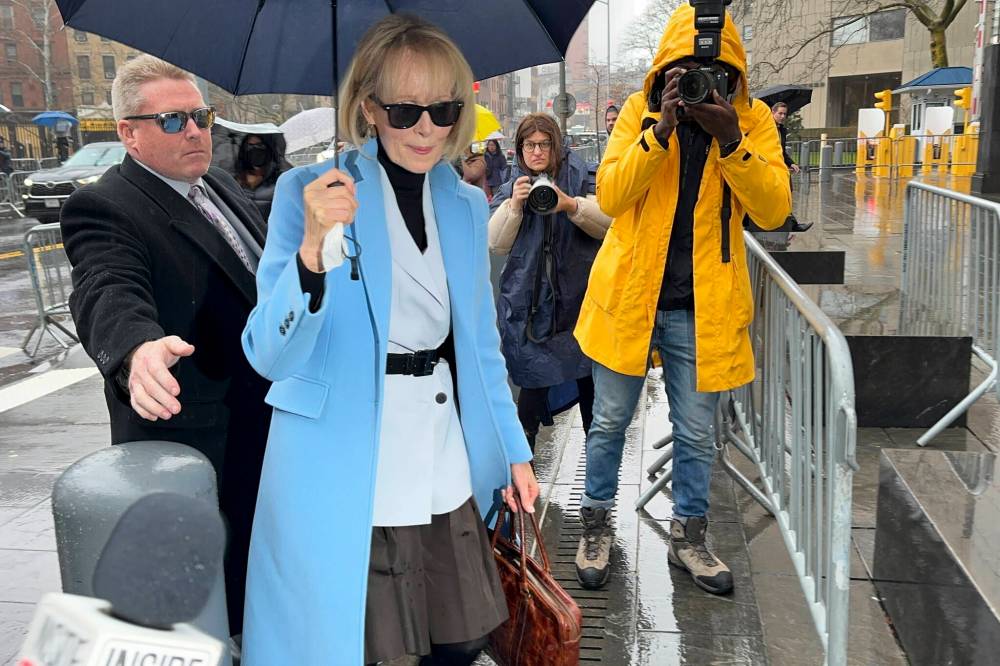
Ted Shaffrey / Associated Press Files
E. Jean Carroll is the best known example of a woman watching her sexual abuser elevated to a position of power — in her case, Donald Trump was elevated to the U.S. presidency.
These are the messages we tell sexual assault survivors all the time. Best intentioned, these words are meant as solace to help someone find their way toward re-establishing bodily autonomy while relinquishing self-blame in the aftermath of assault or rape. Yet other unspoken messages often boom louder, making these well-intentioned platitudes seem like lip service against a larger truth blasting at high volume every day.
The underlying (mis)truth goes like this: of course survivors are not to blame — their perpetrators are — yet not so much that we are going to hold them accountable in any meaningful way. Unless they’ve committed another crime in the process of the assault, like kidnapping or holding the victim at knifepoint, what they did really wasn’t all that bad, and we shouldn’t ruin a perpetrator’s life just for making one careless mistake, right?
That’s the message that gets reinforced almost every day in our society.
Don’t believe me? Consider the latest data coming from Statistics Canada.
Only one in 19 sexual assaults reported to police led to an accused person being sentenced to custody. It’s even grimmer when you consider that only six per cent of sexual assaults ever get reported to police.
A further breakdown of the data show that out of 1,000 sexual assaults reported to police, 640 did not lead to charges and were dismissed, 141 led to charges but did not go to court, 114 went to court but did not lead to a guilty finding, 52 led to a guilty finding but not to a sentence of custody, and a paltry 52 out of 1,000 led to a guilty finding and a sentencing of custody.
Put another way, of the roughly 16,666 sexual assaults that occur in Canada every six months, only 52 of the perpetrators ever see the inside of a jail cell.
It’s no wonder so many survivors live with persistent feelings of self-blame and worthlessness when no one is held to account for the worst moment of their lives.
It’s hard to believe the justice system is on our side.
Perhaps that’s why I don’t regret not going to the police in 1984 when it happened to me. Instead, I sloughed it off. I told myself it wasn’t that bad. Besides, there was no kidnapping, or knifepoint involved.
Back then there weren’t even the words ‘acquaintance rape’ to define what had happened, as if that should have mattered. Instead, the blame went inward, filling me with self-doubt, depression, anger, and other symptoms of complex trauma that lasted decades.
Even today, I sometimes struggle.
Absolving myself of blame becomes even harder when I look around and see evidence that society writ large doesn’t hold sexual offenders to account in meaningful ways, either.
When known offenders refuse to acknowledge their crimes or hold themselves to account yet get elevated in society nonetheless — becoming leaders, judges, and hell, even presidents — it sends a message that they are worth more than us. Their contributions are of greater value than anything they ever took from the women and girls they assaulted or raped.
While my perpetrator remains in the shadows, I can only imagine what goes through the mind of victims who watch their perpetrators rise to high acclaim.
E. Jean Carroll comes to mind, the woman who took Donald Trump to court for sexually abusing her in a civil trial — and won.
“I am so sorry, E. Jean, America failed you,” wrote a supporter on social media.
Another writer expressed heartbreak for all the other women who came forward about sexual assaults they say they experienced at the hands of the president-elect, acknowledging how difficult it must be to see millions of people vote for someone who allegedly abused them.
They know that it’s impossible to be both: you can’t believe survivors while failing to hold perpetrators to account.
So where do we go from here?
The simple truth is — I don’t know. It feels as though the fight for women’s rights and respect over our bodies is a losing battle. But it’s not.

It can’t be, because we won’t let it.
As an aside, sexual assault is a gendered crime, with women and girls making up 89 per cent of the victims, and 97 per cent of the accused being men and boys. So if it sounds like I’m talking to women and girls when I talk about sexual violence, I mostly am.
But as one survivor to another — male or female — let me say this: You are not at fault, and I believe you.
Rochelle Squires is a recovering politician after 71/2 years in the Manitoba legislature. She is a political and social commentator whose column appears Tuesdays.
rochelle@rochellesquires.ca