

Saying we care about children vs. putting care into action
Advertisement
Read this article for free:
or
Already have an account? Log in here »
To continue reading, please subscribe:

Digital Subscription
One year of digital access for only $205*
- Enjoy unlimited reading on winnipegfreepress.com
- Read the E-Edition, our digital replica newspaper
- Access News Break, our award-winning app
- Play interactive puzzles
*First annual payment billed as $205.00 + GST for one year. This annual subscription will automatically renew at $233.00 + GST every 52 weeks (10% off the regular annual price of $259.35). Offer available to new and qualified returning subscribers only. Cancel any time.
To continue reading, please subscribe:
Add Free Press access to your Brandon Sun subscription for only an additional
$1 for the first 4 weeks*
- Enjoy unlimited reading on winnipegfreepress.com
- Read the E-Edition, our digital replica newspaper
- Access News Break, our award-winning app
- Play interactive puzzles
*Your next Brandon Sun subscription payment will increase by $1.00 and you will be charged $17.95 plus GST for four weeks. After four weeks, your payment will increase to $24.95 plus GST every four weeks.
Read unlimited articles for free today:
or
Already have an account? Log in here »
Hey there, time traveller!
This article was published 09/12/2024 (662 days ago), so information in it may no longer be current.
We hear these words everywhere in society — from friends, family, from neighbours and community and certainly in the public narrative. Children are our most valuable resource. Children are our future. If you ask anyone, they will speak strongly about children’s rights to safety, security and healthy childhoods. Few would sit on the fence on the issue. We say it without question and we mean it.
Or do we? If you look around and really examine the experiences of children in today’s world, the evidence doesn’t always back it up.
Take recent media coverage on a trial surrounding a nine-year-old victim of abuse. While I cannot speak directly to that investigation, I don’t have to. What concerned people about the story happens every day across Canada, within our criminal justice system, a system that clearly has never deeply examined how child victims are treated, how they fair or whether or not there might be better ways.
Daniel Crump / The Canadian Press files
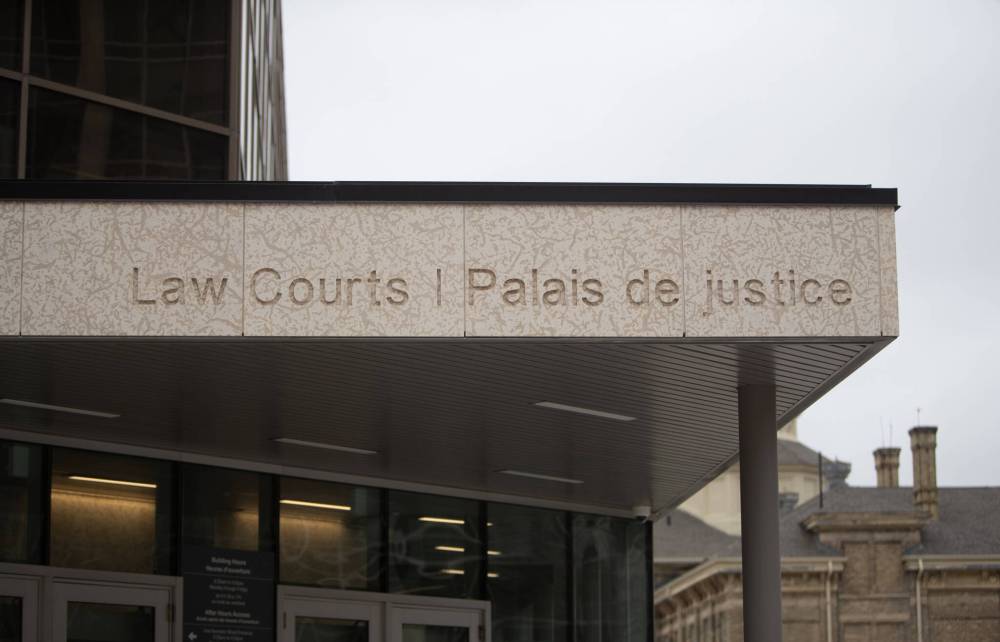
The court system is intimidating for adult witnesses, let alone for children. Children need exceptional treatment in the court system, Christy Dzikowicz writes.
No, instead we continue to abuse children through a systemic process that’s inherently stacked against them. It is difficult to imagine how anyone who really looks at the process through a child’s eyes would think it reasonable.
The need for a criminal justice process that is fair, and for due process that provides accused with the right to defend themselves, is absolute. Judicial process is critical and that is not in question. What ought to be questioned is whether we, as a society, are comfortable knowingly causing harm to children in pursuit of justice. There are so many layers to the mishandling of children in our courts. If it’s the truth we are after, our courts are not set up to find it.
Let’s talk about the steps involved before a child ever gets to a courtroom. First, there has to be an outcry and it is well documented how few child victims actually take that step. Then, the child needs to provide a statement in the investigation. If they are lucky, they are interviewed in a child advocacy centre — a child-friendly, trauma-informed environment, by a trained child forensic interviewer.
Many aren’t.
Either way, the child has to be brave enough, trusting enough and have the language required to share details about their trauma.
In order for cases to move forward in the criminal justice system, there has to be a reasonable probability of prosecution — meaning police and prosecutors must agree that the allegations have merit. They have to believe the child. Only then will the matter move forward. While I am not suggesting that we forgo the criminal justice process in any way, I am suggesting that in a good majority of cases, these child victims providing testimony are, in fact, victims of horrendous acts of abuse on their young bodies and minds. That is who we are talking about.
So, what does the court process look like?
While we have all seen it play out with relative accuracy on television, it’s not usually with children on the stand. I speculate that we don’t see that in our TV shows because viewers would actually find it too disturbing. A small child, sitting in a big courtroom, staring across the room at an individual that violated their body.
In some circumstances there is a screen placed in between the child and the accused. But the child knows they are there. The child can hear them cough. The child can see the accused’s family members. The child can feel their presence. How would that not be terrifying, confusing, traumatizing for a child? If they trusted or cared for the accused, there might also be guilt, shame, fear — so many feelings for a hurt child.
Now on the stand in front of their own loved ones, they have to relive their worst memories in vivid and precise detail, in front of the accused, their family and a room full of strangers. Let’s stop there for a moment. What reasonable person feels it’s a good idea or a humane expectation to ask a child to come back a year or more after a significant trauma and relive it? Relive it with a more developed brain, one that might understand shame, fear and consequence in more detail. If this was our child, grandchild, would we not be doing everything in our power to have them move past the experience and “forget”?
No, we demand the opposite.
Back to their testimony. So the child is on the stand, their statement is played and they are asked questions to clarify. Then the defence takes over. An adult, where there’s no expectation of understanding child development and no particular incentive to be kind, trauma informed or culturally sensitive, gets to interrogate the child. A stranger gets to ask them deeply personal and hurtful questions. To confuse them, cast doubt, and provoke inconsistent answers is easy in this context.
A child, particularly a deeply hurt child, has no chance.
Psychologist Rachel Zajac has published a great deal of research outlining the failures of the courts to meet the needs of children. She wrote: “Recent research has made it clear that cross-examination is unlikely to be the truth-finding technique that many believe it to be. Instead, the style of questioning typically used during this process directly contravenes almost every principle scientifically established over the past 30 years for obtaining complete and accurate evidence from any witness, particularly a child.”
Children who experience abuse often have their voices stolen from them in the process. They are told that no one will believe them. Their experience often makes them feel that they cannot be protected.
Our courts are playing right into the abusers’ hands.
It’s a disaster. But there are so many opportunities to do better, if we want to. If we value children, we will consider ways to make our Canadian justice system humane for them, even caring. Conveniently, such changes would also serve the courts and judicial process by creating a platform to find truth. It’s a win-win.
By allowing children to testify remotely, from comfortable environments, free of distractions and safe from the intimidation of strangers and alleged offenders, they will be more focused and confident witnesses. The use of CCTV is happening, there are no meaningful barriers to this being the norm — we just haven’t decided that children deserve access to this by rule and not exception. Beyond this there are models across the world where children are not questioned by prosecutors or cross-examined by defence lawyers. Instead, intermediaries — like child forensic interviewers, pose questions to children in ways that they can understand, taking into account child development, impacts of trauma and cultural considerations.
Everyone gets to ask their questions, but in a way that is reasonable for a child.

Beyond this, we also need to look at the length of time we will allow children to be a tool in our criminal justice process (at the expense of their mental health and well-being). If childhood is so important to us and if we believe every child is deserving of one, why do we continue to allow them to be abused?
First by the act that brings them before the courts, and then by putting them in holding as “the victim” until we can get to it. Children are exceptional and desperately need exceptional treatment in our system.
We have two choices. Either embrace change to ensure the well-being of children or stop saying they matter so much. Change is hard but change is always possible.
We just have to decide it matters and walk the walk.
Christy Dzikowicz is the chief executive officer of the TOBA Centre for Children and Youth.