

Finding antidotes to loneliness

Advertisement
Read this article for free:
or
Already have an account? Log in here »
To continue reading, please subscribe:

Digital Subscription
One year of digital access for only $205*
- Enjoy unlimited reading on winnipegfreepress.com
- Read the E-Edition, our digital replica newspaper
- Access News Break, our award-winning app
- Play interactive puzzles
*First annual payment billed as $205.00 + GST for one year. This annual subscription will automatically renew at $233.00 + GST every 52 weeks (10% off the regular annual price of $259.35). Offer available to new and qualified returning subscribers only. Cancel any time.
To continue reading, please subscribe:
Add Free Press access to your Brandon Sun subscription for only an additional
$1 for the first 4 weeks*
- Enjoy unlimited reading on winnipegfreepress.com
- Read the E-Edition, our digital replica newspaper
- Access News Break, our award-winning app
- Play interactive puzzles
*Your next Brandon Sun subscription payment will increase by $1.00 and you will be charged $17.95 plus GST for four weeks. After four weeks, your payment will increase to $24.95 plus GST every four weeks.
Read unlimited articles for free today:
or
Already have an account? Log in here »
Hey there, time traveller!
This article was published 11/12/2024 (609 days ago), so information in it may no longer be current.
Most of us have been lonely at one time or another.
For some it’s a short-term feeling that can be dispelled by calling a friend.
For others it’s an aching emptiness like a bottomless well. Every day is something to be got through; every song sounds like the blues.
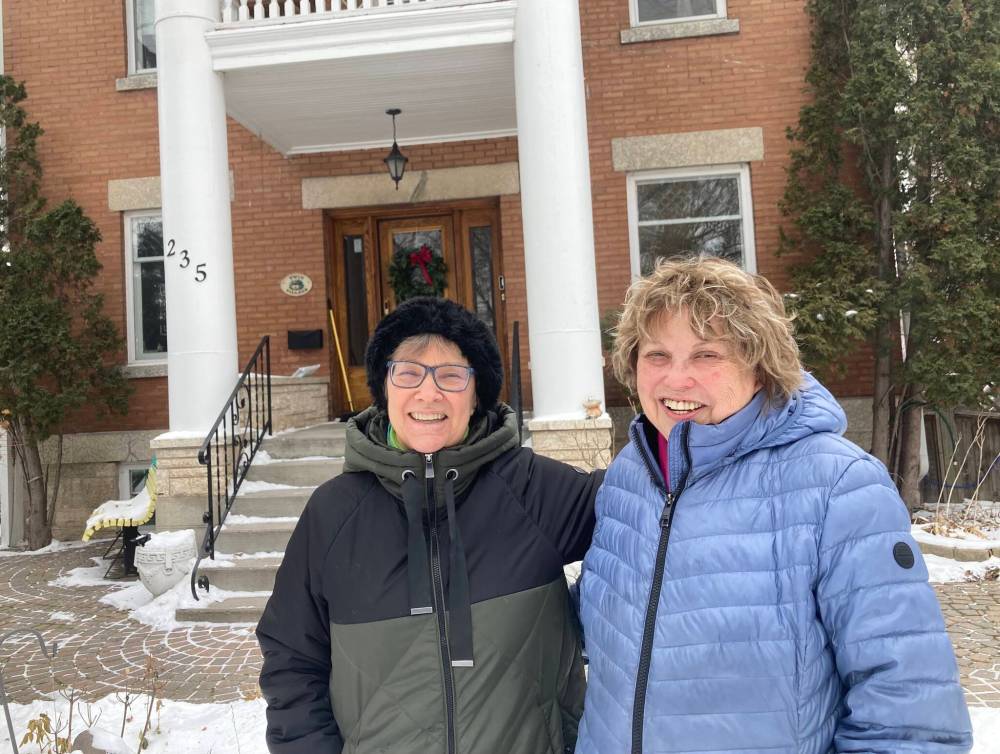
Supplied
Lynda Trono (left) and Beverly Suek love living in Winnipeg’s Riverview neighbourhood, where they share a house with four other women.
I’ve been writing about loneliness in the Free Press recently, and I’ve been hearing from readers who know it all too well.
Nearly 30 per cent of Canadians live alone, according to Statistics Canada, and one-person homes have been the predominant household type since 2016.
Of course, not everyone who lives alone is lonely. Some people enjoy the freedom that solitude can bring.
Others, like “Celia” — who I profiled in my Nov. 27 column, Breaking the silence about being lonely — feel isolated, and grapple with an existential question: does a lonely life have worth?
Beverly Suek lived with loneliness after her husband died 24 years ago.
“It’s such a hard thing to come into a cold house,” she says. “All of a sudden there’s silence.”
For Lynda Trono, marital separation made her yearn for a different way of life.
Frances Woolison saw what happened to her mother and older sister when each one’s determination to live on her own was thwarted by aging, falls and injuries.
It was not something she wanted for her husband Jim or herself.
Suek, Trono and the Woolisons all saw how devastating a solitary life could be, and set out to find a different way.
They’ve all chosen cohabitation in Winnipeg, and in doing so, have made meaningful connections.
Suek and Trono are housemates in the Women’s Housing Initiative Manitoba (WHIM) co-operative.
They live with four other women in a Riverview house, each with her own space and common areas like the sunroom, TV room and kitchen. Shared values and clear house rules keep things running smoothly.
You can have as much privacy or company as you want, Suek says.
Each housemate invests $30,000 towards the down payment on the property, which they get back when they leave. Monthly expenses per person are between $750 and $1,025 (which includes the mortgage payment, utilities, weekly house cleaner, lawn care, snow removal and Wi-Fi — much less than an average one-bedroom apartment in Winnipeg) and $70 a week for groceries. In addition, everyone puts $100 per month into a contingency fund (which covers repairs and other miscellaneous expenses).
“I lived with a friend for a while, lived by myself for a year,” says Trono. “Then I saw an advertisement (for WHIM) and I said, ‘Yes! I want in.’ I have no regrets. I’m happy every day that I’m in this situation.”
Suek says she’s met many women who are living unhappily on their own.
In a joint telephone interview, Trono and Suek both said they love coming home to people who care.
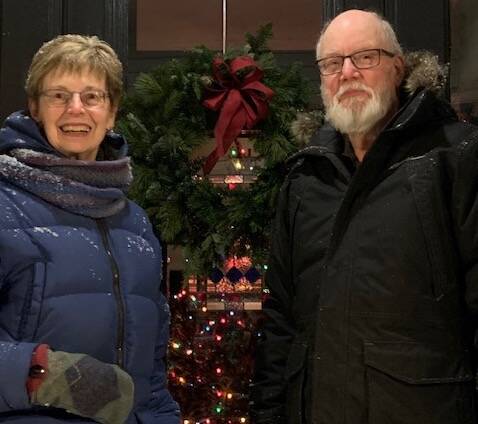
Supplied
Frances and Jim Woolison are passionate advocates of co-living. They share a lovely old house in Crescentwood with five others, and there’s room for more.
“You walk in the door, someone’s in the kitchen cooking up something. Someone’s always happy to see me,” Suek says.
● ● ●
Jim and Frances Woolison are two of the driving forces behind Prairie Rivers Coliving Cooperative.
In a telephone interview from the 6,000-square-foot, 1912 Crescentwood home the Woolisons currently share with five other people, Frances takes me on a descriptive tour of the house, from the spacious bedrooms, to the third-floor balcony where you can relax under a canopy of trees, to the large, main-floor room with open fireplace and plenty of natural light where they can eat breakfast or work on a jigsaw puzzle.
They’ve got room for two more couples or singles, and the house functions as a sociocracy, where everyone has an equal say in how things are run. Prospective housemates are screened for compatible values and can come by for a meal and a tour.
“We each bring different talents to the house,” Frances says, saying they’ve all found their niche in terms of cooking, gardening, doing repairs and tracking finances.
“We’re all getting older. Everybody’s got some kind of health issue, but it doesn’t seem like such a big deal when you’re living with other people,” she said. “We really all hope this is our last move. It’s a really nice feeling to know if someone wasn’t well, or fell, there are other people here who care.”
Each Prairie Rivers household pays $200,000 for a share in the co-op, with expenses and food costs shared equally among housemates based on collaborative decision-making.
Frances said she remembers how isolated her mother became as she advanced in years, and is glad she and Jim have found a way of living where there are always friends around.
“We’ve sort of just built the whole concept on respecting and trusting each other,” she said.

“Does it feel like a kind of family?” I ask.
“It really is,” says Frances.
Pam Frampton is a freelance writer and editor who lives in St. John’s.
Email: pamelajframpton@gmail.com
X: pam_frampton | Bluesky: @pamframpton.bsky.social
Pam Frampton is a columnist for the Free Press. She has worked in print media since 1990 and has been offering up her opinions for more than 20 years. Read more about Pam.
Pam’s columns are built on facts, but offer her personal views through arguments and analysis. Every column Pam produces is reviewed by an editing team before it is posted online or published in print — part of the Free Press‘s tradition, since 1872, of producing reliable independent journalism. Read more about Free Press’s history and mandate, and learn how our newsroom operates.
Our newsroom depends on a growing audience of readers to power our journalism. If you are not a paid reader, please consider becoming a subscriber.
Our newsroom depends on its audience of readers to power our journalism. Thank you for your support.
Pam Frampton is a columnist for the Free Press. She has worked in print media since 1990 and has been offering up her opinions for more than 20 years. Read more about Pam.
Pam’s columns are built on facts, but offer her personal views through arguments and analysis. Every column Pam produces is reviewed by an editing team before it is posted online or published in print — part of the Free Press‘s tradition, since 1872, of producing reliable independent journalism. Read more about Free Press’s history and mandate, and learn how our newsroom operates.
Our newsroom depends on a growing audience of readers to power our journalism. If you are not a paid reader, please consider becoming a subscriber.
Our newsroom depends on its audience of readers to power our journalism. Thank you for your support.
Advertisement Advertise With Us
Advertisement Advertise With Us