

The year’s newsmaker — on her own terms
Advertisement
Read this article for free:
or
Already have an account? Log in here »
To continue reading, please subscribe:
Digital Subscription
One year of digital access for only $75*
- Enjoy unlimited reading on winnipegfreepress.com
- Read the E-Edition, our digital replica newspaper
- Access News Break, our award-winning app
- Play interactive puzzles
*Billed as $5.77 plus GST every four weeks. After 52 weeks, price increases to the regular rate of $19.95 plus GST every four weeks. Offer available to new and qualified returning subscribers only. Cancel any time.
Monthly Digital Subscription
$4.99/week*
- Enjoy unlimited reading on winnipegfreepress.com
- Read the E-Edition, our digital replica newspaper
- Access News Break, our award-winning app
- Play interactive puzzles
*Billed as $19.95 plus GST every four weeks. Cancel any time.
To continue reading, please subscribe:
Add Free Press access to your Brandon Sun subscription for only an additional
$1 for the first 4 weeks*
- Enjoy unlimited reading on winnipegfreepress.com
- Read the E-Edition, our digital replica newspaper
- Access News Break, our award-winning app
- Play interactive puzzles
*Your next Brandon Sun subscription payment will increase by $1.00 and you will be charged $17.95 plus GST for four weeks. After four weeks, your payment will increase to $24.95 plus GST every four weeks.
Read unlimited articles for free today:
or
Already have an account? Log in here »
Hey there, time traveller!
This article was published 26/12/2024 (516 days ago), so information in it may no longer be current.
IT’S an annual tradition for newsrooms to create lists of the most important newsmakers for the year, largely as a way to fill space during the slow days between Christmas and Jan. 1. Time magazine has already named U.S. president-elect Donald Trump its person of the year in its Dec. 12 edition, proclaiming his “political rebirth… unparalleled in American history.”
Feminists around the globe have responded with memes on social media replacing Trump’s face with the face of French rape survivor Gisèle Pelicot. Perhaps other media outlets will take notice.
Ms. Pelicot fought back against age-old rape myths and in the process became this year’s feminist icon.
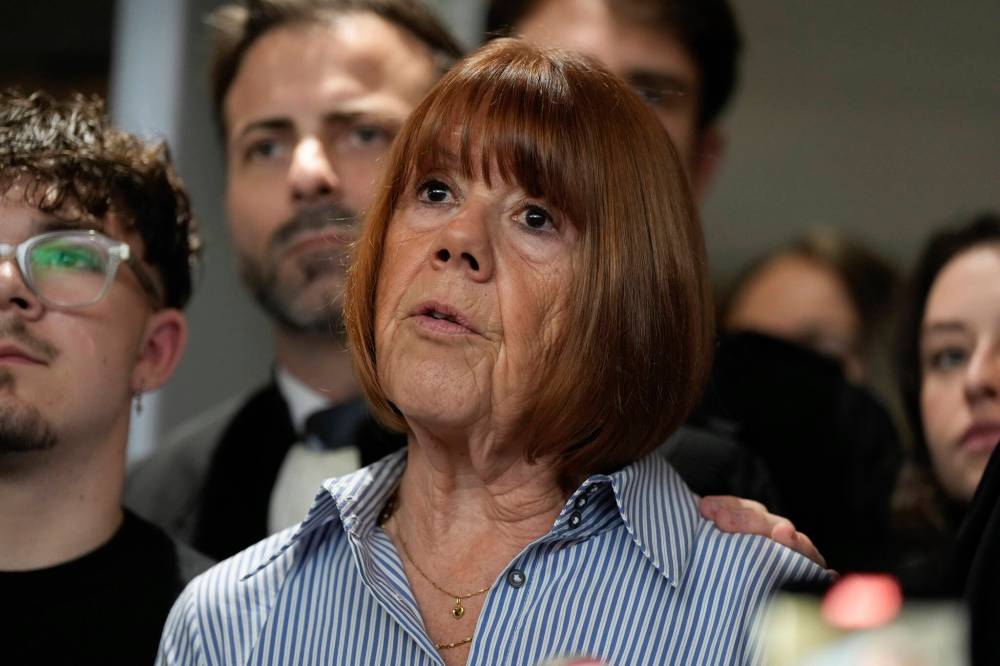
Gisele Pelicot speaks to the press as she leaves the courtroom, in the Avignon courthouse, southern France, on Dec. 19. (Lewis Joly / The Associated Press files)
For the last three months, the largest rape trial in France’s history heard shocking testimony. Earlier this month, 51 men, including Ms. Pelicot’s ex-husband Dominique, were found guilty of sexually assaulting an unconscious Ms. Pelicot in a small Provençal village of Mazan. Police arrested Dominique after finding disturbing images of Ms. Pelicot, his daughter Caroline Darian and his daughters-in-law, Aurore and Celine. Dominique was given 20 years. The men who participated received sentences ranging from three to 15 years.
The 72-year-old Gisèle Pelicot waived her legal right to anonymity at the start of the trial in September. “It’s a way of saying … shame must change sides,” her attorney Stephane Babonneau said.
In testimony Ms. Pelicot told the court: “I’ve decided not to be ashamed. I’ve done nothing wrong [….] They are the ones who must be ashamed.”
She also allowed the videos of her repeated rapes be made public, so the rapists could not hide in anonymity. By doing so, she broke the silence that follows these crimes that most women will have either first-hand experience with or know someone who does.
The statistics are appalling. Most sexual assaults are not reported to police largely because women feel shame or worry they won’t be believed.
Even fewer of those crimes ever result in charges being laid by police and fewer still make it to court. Those that do often result in little justice.
Media coverage of sexual assaults in Canada (rape is considered an outmoded term in Canada’s Criminal Code and has been changed to sexual assault) don’t often make the news. If they do, it’s because the circumstances are unusual (for example a female perpetrator), the perpetrator is in a position of power, there are multiple victims, or either individual is famous.
It’s important to understand that when there is coverage, the Crown prosecutor, responsible for laying out the case in the courts, does not speak on behalf of the victim.
Their job is to speak about the merits of the case.
On the other hand, a defense lawyer can and will speak on behalf of their client. Which is why in high profile sexual assault trials you will hear defense lawyers speaking about their clients’ fine reputation and their families. This furthers the myth that women lie about sexual assault, often out of vengeance. It also furthers the myth that good guys don’t rape women.
Yet, in the Pelicot trial it’s clear that “good” guys do sexually assault women. By taking away the anonymity, the ubiquity of the rapist becomes obvious. The men charged ranged in age from 26 to 74 — many married with children. Their occupations included truck driver, construction worker, tradesman, salesman, journalist, nurse and prison guard.

These rapists could be anyone and indeed, in this small town of France, they were — they were the neighbours, sons, husbands and friends of the people in the region, all active on a now-defunct website that Dominque Pelicot utilized for his perversity.
In fact, for some the assaults of Ms. Pelicot were so ordinary they were banal. At least, that’s how the mayor of Mazan viewed it in an interview with BBC. Louis Bonnet downplayed the incident saying: “after all, no one died… It could have been far more serious,” Bonnet told the BBC. “There were no kids involved. No women were killed.”
Bonnet was forced to apologize for those remarks after public outrage, but his sentiments support yet another myth that many have about sexual violence. It doesn’t hurt anyone. It’s hardly serious.
There will be many lists released over the next couple of days in newsrooms around the country. Please let Gisèle Pelicot’s name be on at least some of those lists. Her act of defiance was revolutionary and inspiring.
Shannon Sampert is a political scientist and a lecturer at RRC Polytech. She was the politics and perspectives editor at the Free Press from 2014-17. shannon@mediadiva.ca