

Dealing with the second American revolution

Advertisement
Read this article for free:
or
Already have an account? Log in here »
To continue reading, please subscribe:
Monthly Digital Subscription
$1 per week for 24 weeks*
- Enjoy unlimited reading on winnipegfreepress.com
- Read the E-Edition, our digital replica newspaper
- Access News Break, our award-winning app
- Play interactive puzzles
*Billed as $4.00 plus GST every four weeks. After 24 weeks, price increases to the regular rate of $19.95 plus GST every four weeks. Offer available to new and qualified returning subscribers only. Cancel any time.
Monthly Digital Subscription
$4.99/week*
- Enjoy unlimited reading on winnipegfreepress.com
- Read the E-Edition, our digital replica newspaper
- Access News Break, our award-winning app
- Play interactive puzzles
*Billed as $19.95 plus GST every four weeks. Cancel any time.
To continue reading, please subscribe:
Add Free Press access to your Brandon Sun subscription for only an additional
$1 for the first 4 weeks*
*Your next subscription payment will increase by $1.00 and you will be charged $16.99 plus GST for four weeks. After four weeks, your payment will increase to $23.99 plus GST every four weeks.
Read unlimited articles for free today:
or
Already have an account? Log in here »
Hey there, time traveller!
This article was published 08/02/2025 (412 days ago), so information in it may no longer be current.
How’s the revolution going, Canada?
No other word can describe the abrupt and systematic dismantling of how government works in the world’s oldest, self-governing democracy than a second American revolution. President Donald Trump — the Disruptor-in-Chief — is upending the established constitutional order of checks and balances in favour of an imperial presidency, unfettered and unabashed.
He established DOGE — the department of government efficiency — headed by Elon Musk to radically reduce the size and scope of the US government.
The Associated Press
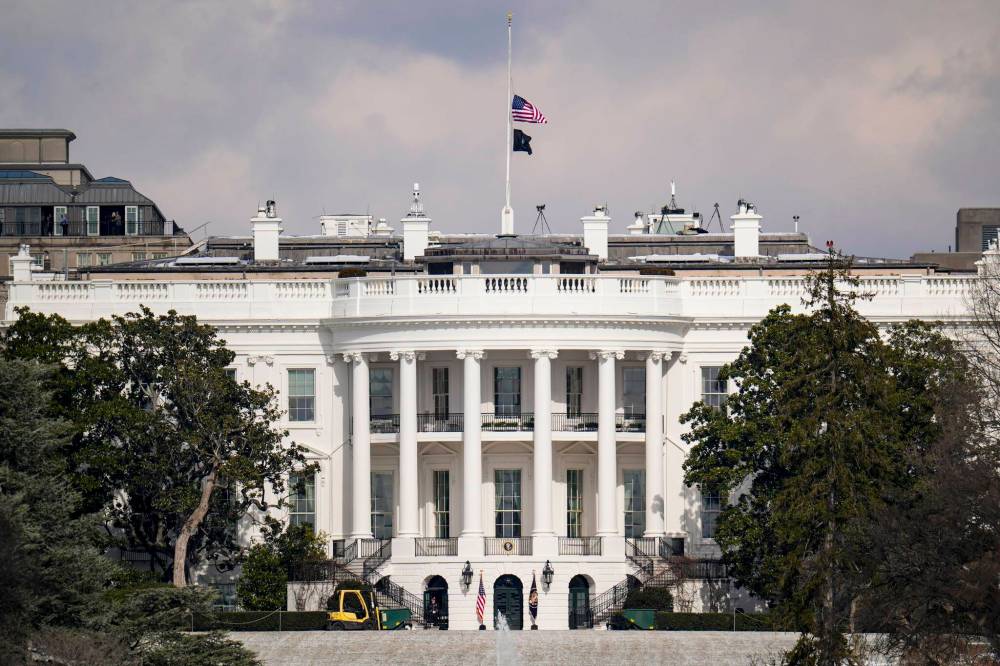
Columnist David McLaughlin writes that the revolution is coming from inside the house — the White House, that is.
He is shuttering the multi-billion-dollar U.S. foreign aid agency and the Consumer Financial Protection Bureau and is threatening to eliminate the Department of Education.
He forced the resignations or caused the firings of top, non-partisan officials in the FBI, Justice Department, State Department, Consumer Financial Protection Bureau, the Federal Aviation Authority, and has threatened to get rid of 1,000 employees at the Environmental Protection Agency.
He fired 17 inspector-generals across government responsible for auditing and checking errant and illegal behaviour by bureaucrats and White House appointees.
And, of course, he threatened devastating tariffs on his country’s biggest trading partners in North America, Asia, and Europe causing massive economic and political angst.
All in less than a month.
This is a deliberate strategy called “flooding the zone.” It is revolutionary in method because it is revolutionary in goal. It is meant to overwhelm and confuse the opposition parties, media, institutions, and the public with so much, so fast, that no one can keep up with it or oppose it. Unceasing, relentless momentum is the means; rolling over any opposition is the result.
“Take Back Control” was the slogan of the Brexit campaign in Great Britain to get that country out of the European Union. Taking control is what Trump’s administration is now doing. Combining Oval Office executive orders (50 so far, as his weapon of choice) and burrowing mega-MAGA appointees to replace an “obstructionist deep state,” Trump is making an unprecedented bid to remake the U.S. government.
Canada was not a country or even a colony during the first American revolution. It took the American Civil War of 1860-65, to help shake off our self-governing indolence and propel us into our unique form of federalism. Sir John A. Macdonald put it this way during the Confederation debates: “Ever since the union was formed the difficulty of what is called ‘state rights’ has existed, and this had much to do in bringing on the present unhappy war in the United States.”
It was, of course, much more than that. But even then, proximity to America’s upheaval bore heavily on how Canada sought to govern itself.
So, it is today.
Trump’s disruptions, the disuniting of America, are lapping into our country. Two grand unity reckonings in Canada are now going to occur. Unity with America and unity with each other.
First, is a reckoning about our economic relationship the United States, our most important and, until recently, reliable friend, ally, and economic partner.
Trump’s capricious 25 per cent tariff threat upended 75-years of free trade arrangements with the U.S., dating back to the 1965 Auto Pact. The original FTA signed in 1989 with NAFTA in 1993, established a stable economic trading union for us with the U.S.
They were meant not to just open up new markets for our goods and services, but also to protect Canada against arbitrary trade actions by codifying free trade arrangements reinforced by a dispute settlement mechanism.
Deepening trade with the U.S. required then, as now, mutually agreed rules and processes to make it work. Most of all, it required an expectation of reliability on how our trading partners would act towards each other. That’s now gone.
While we cannot and should not walk away from the world’s richest market, our lazy reliance on that market, once a no-brainer strength, is now a glaring weakness. Fixing that means confronting some hard truths about our spotty industrial competitiveness, weak business and labour productivity, and yes, nonsensical interprovincial trade barriers, that we’ve skated around for years.
Second, is a reckoning about our relationship with each other. It is about what kind of country and nation we wish to become, and how we get there. If we are to build new economic resilience, our current approaches won’t cut it.
Federalism is fractious. Canadians get that. But the past few years have tested our tolerance for that notion. From energy projects to the pandemic, any notion of national resolve has descended into regional bickering and political polarization. Fomented mostly, but not exclusively, by a federal government that has preached in its rhetoric and overreached in its actions.

Mutual mistrust is no basis for building. And build we must if Canada is to survive and prosper through and beyond the second American revolution.
Here’s a little remembered fact. Donald Trump first ran for president 25 years ago in 2000. He pulled out. But his reasons for running echo today, writing this in a New York Times op-ed:
“I felt confident that my argument that America was being ripped off by our major trade partners and that it was time for tougher trade negotiations would have resonance …”
The title of that op-ed? What I Saw at the Revolution.
David McLaughlin is a former clerk of the executive council and cabinet secretary in the Manitoba government.
Our newsroom depends on a growing audience of readers to power our journalism. If you are not a paid reader, please consider becoming a subscriber.
Our newsroom depends on its audience of readers to power our journalism. Thank you for your support.
Our newsroom depends on a growing audience of readers to power our journalism. If you are not a paid reader, please consider becoming a subscriber.
Our newsroom depends on its audience of readers to power our journalism. Thank you for your support.
Advertisement Advertise With Us
Advertisement Advertise With Us