

Is Manitoba ready? The answer’s yes — and no

Advertisement
Read this article for free:
or
Already have an account? Log in here »
To continue reading, please subscribe:
Monthly Digital Subscription
$1 per week for 24 weeks*
- Enjoy unlimited reading on winnipegfreepress.com
- Read the E-Edition, our digital replica newspaper
- Access News Break, our award-winning app
- Play interactive puzzles
*Billed as $4.00 plus GST every four weeks. After 24 weeks, price increases to the regular rate of $19.95 plus GST every four weeks. Offer available to new and qualified returning subscribers only. Cancel any time.
Monthly Digital Subscription
$4.99/week*
- Enjoy unlimited reading on winnipegfreepress.com
- Read the E-Edition, our digital replica newspaper
- Access News Break, our award-winning app
- Play interactive puzzles
*Billed as $19.95 plus GST every four weeks. Cancel any time.
To continue reading, please subscribe:
Add Free Press access to your Brandon Sun subscription for only an additional
$1 for the first 4 weeks*
*Your next subscription payment will increase by $1.00 and you will be charged $16.99 plus GST for four weeks. After four weeks, your payment will increase to $23.99 plus GST every four weeks.
Read unlimited articles for free today:
or
Already have an account? Log in here »
Hey there, time traveller!
This article was published 01/03/2025 (429 days ago), so information in it may no longer be current.
Is Manitoba ready for the new economic reality being spawned by U.S. President Donald Trump’s tariff threats?
Yes and no.
Yes, for full free trade across Canada. No, to having the fiscal flexibility to respond to a sustained economic slowdown.
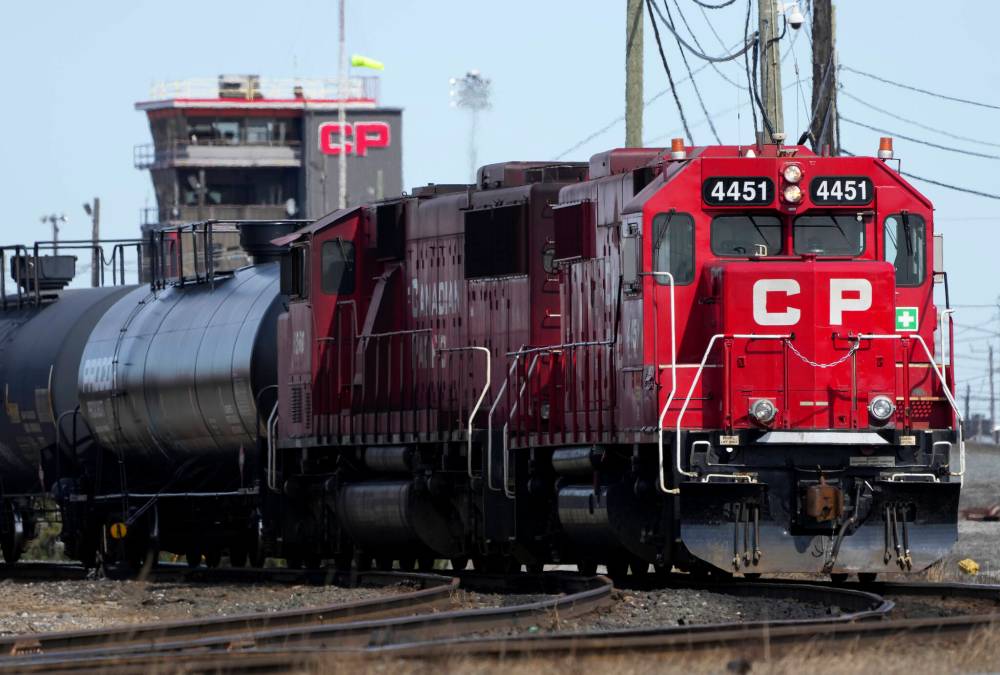
Nathan Denette / The Canadian Press
Manitoba may be well positioned to take advantage of increased interprovincial trade, but the province doesn’t have the deep financial pockets to help businesses through the expected upcoming tariff turmoil.
These are the conclusions from two recent reports assessing provincial economic preparedness in the wake of a radically changed Canada-America free trade relationship.
Trump’s attack on north-south free trade is sparking a welcome re-examination of east-west free trade and the internal tariffs we impose on ourselves. Statistics Canada estimates these as adding an equivalent tariff of between 7.8 per cent and 14.5 per cent on our own goods and services. Eliminating all interprovincial trade barriers could boost Canada’s economy by some $200 billion.
Getting rid of these barriers and costs is all to the good. Thankfully, Manitoba already has a leg up. It received the highest-ranking for interprovincial free trade in the country, according to the 2024 Canadian Federation of Independent Business. Manitoba now has fewer exceptions or barriers listed under the Canada Free Trade Agreement than any other jurisdiction.
This all happened since Manitoba joined the New West Partnership Trade Agreement in 2017 under the government of then-premier Brian Pallister. Since the change of government, that Manitoba momentum has evaporated. Unlike the 2016 election platform of the PCs, the 2023 NDP platform made no mention of reducing interprovincial trade barriers.
This matters to the province’s economic future. Fifty-one percent of all Manitoba trade is interprovincial. Exports to the rest of Canada grew by $5 billion in 2016 to over $23 billion in total in 2022.
Manitoba businesses are heavily engaged in interprovincial trade. They are fourth in the country for purchasing goods from other provinces and third in selling to other provinces.
While the province is well positioned to progress on free trade within Canada, it is less so in withstanding the economic impact of Trump’s tariffs. A February report by Desjardins Economics noted Manitoba as one of four provinces most at risk. This is due to the province’s higher trade exposure to the U.S., with between six per cent to eight per cent of all economic output directly linked to U.S. exports. Manitoba’s manufacturing sector is most exposed of all economic sectors in the province. That same report estimated that about one per cent of total Manitoba employment is at direct risk, or about 6,700 jobs.
More tariff exposure means more financial support would be required to shore up businesses and jobs. Within Manitoba, that is getting harder to come by.
At a time when more fiscal flexibility will be required, the opposite is happening. The provincial deficit is now estimated to be $1.3 billion for the current fiscal year; half a billion more than first budgeted. With last year’s $1.9 billion deficit, that would make the last two fiscal years the worst in Manitoba financial history with the highest public debt burden the province has ever had.
Economic resilience means getting your economy in shape to adapt to this new economic reality. Financial resilience means getting your fiscal house in order so as to have the financial flexibility to invest in this new economic reality.
Past progress on eliminating interprovincial trade barriers puts Manitoba in a solid economic position today to go the distance and get rid of the rest. Past spending by governments puts Manitoba in a worst financial position to weather what’s ahead.
On both fronts, more needs to be done. A recent survey of Manitoba businesses by Statistics Canada found that 48 per cent of businesses in the province said they had experienced obstacles to purchasing goods and services in another province, while 43 per cent experienced obstacles to selling Manitoba goods and services to another province such as transportation costs and distance as well as regulatory and fee barriers.
Overcoming these obstacles, given Manitoba’s geographic location and small domestic market in Canada, will require an outsized effort by business and government.

At the same time, Manitoba’s deteriorating financial situation will require an even larger effort by government to rein in unnecessary spending and direct resources to growing the economy.
Economic growth is the motor that powers social progress. That’s what brings in the money to pay for health care and education. The ‘Trump Tariff Threat’ makes this all the more true.
What’s also true is that standing pat on interprovincial free trade progress made by past governments while standing pat on high deficits and more spending by your own government will not cut the mustard.
Canada, by the way, is the largest mustard seed exporter in the world. Trouble is, it comes from next door in Saskatchewan.
David McLaughlin is a former clerk of the executive council and cabinet secretary in the Manitoba government.
Our newsroom depends on a growing audience of readers to power our journalism. If you are not a paid reader, please consider becoming a subscriber.
Our newsroom depends on its audience of readers to power our journalism. Thank you for your support.
Our newsroom depends on a growing audience of readers to power our journalism. If you are not a paid reader, please consider becoming a subscriber.
Our newsroom depends on its audience of readers to power our journalism. Thank you for your support.
Advertisement Advertise With Us
Advertisement Advertise With Us