

Annexation through the tech ‘back door’
Advertisement
Read this article for free:
or
Already have an account? Log in here »
To continue reading, please subscribe:
Digital Subscription
One year of digital access for only $1.44 a week*
- Enjoy unlimited reading on winnipegfreepress.com
- Read the E-Edition, our digital replica newspaper
- Access News Break, our award-winning app
- Play interactive puzzles
*Billed as $5.77 plus GST every four weeks. After 52 weeks, price increases to the regular rate of $19.95 plus GST every four weeks. Offer available to new and qualified returning subscribers only. Cancel any time.
To continue reading, please subscribe:
Add Free Press access to your Brandon Sun subscription for only an additional
$1 for the first 4 weeks*
- Enjoy unlimited reading on winnipegfreepress.com
- Read the E-Edition, our digital replica newspaper
- Access News Break, our award-winning app
- Play interactive puzzles
*Your next Brandon Sun subscription payment will increase by $1.00 and you will be charged $17.95 plus GST for four weeks. After four weeks, your payment will increase to $24.95 plus GST every four weeks.
Read unlimited articles for free today:
or
Already have an account? Log in here »
Hey there, time traveller!
This article was published 03/03/2025 (458 days ago), so information in it may no longer be current.
The Free Press has published various important responses to the threat to Canadian sovereignty from the Trump administration.
They have yet to touch on a major concern — the security of our digital information systems. If Trump’s tariffs do not coerce us into becoming Americans, he might try what his lieutenant Elon Musk’s DOGE is doing to radically remake the U.S. government.
It is no accident that DOGE is first seizing control of its digital information systems. Control of information is the gateway to control of all else in governments, other institutions, and our personal lives.
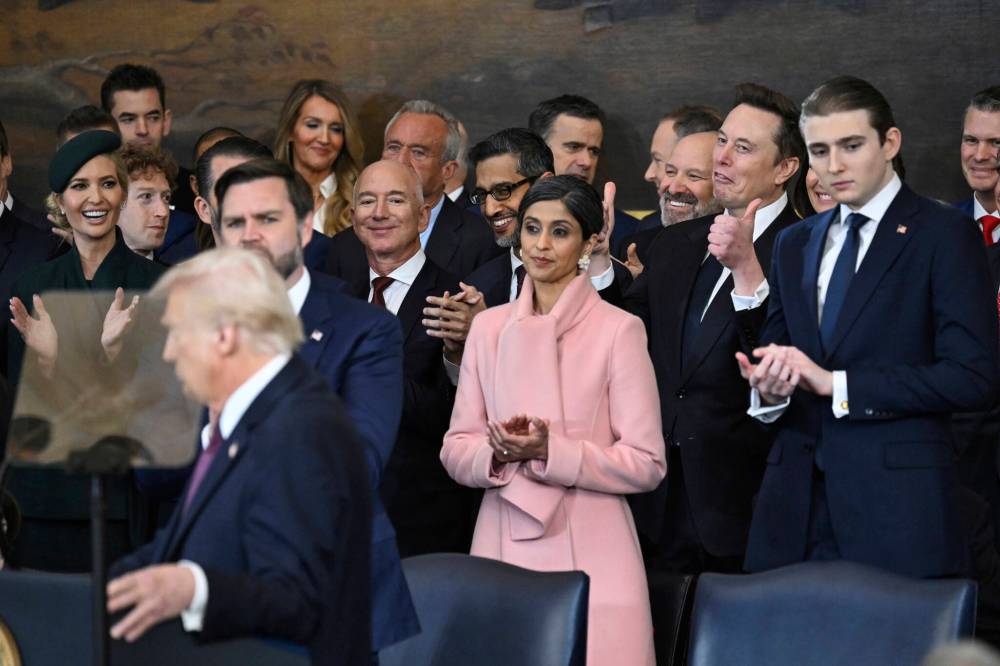
Saul Loeb/Pool photo via AP
Tesla and SpaceX CEO Elon Musk gives a thumbs up as U.S. President Donald Trump speaks during the presidential inauguration on Jan. 20. The technocrats in the background hold a key card in talks of annexation — Canada’s information.
As with much else, we have become too reliant on U.S.-based digital information system providers, such as Big Tech corporations Amazon, Microsoft, and Alphabet/Google. They run most of the cloud infrastructure storing our ever-growing mass of digital information and provide software services we use to make those records.
They may try to reassure us that the information generated in Canada is stored here and owned by Canadians. But what does ownership really amount to if we do not also own the tools needed to use it?
Trust in American Big Tech, already battered, has hit new lows in the Trump era, especially as the heads of these companies made a great show of fealty to him by attending his inaugural and helping pay for it. One of them now leads the charge to transform the American government to better serve their ends. Expert public servants in the United States Digital Service, for example, have quit in protest rather than do Musk’s bidding.
There are well-founded fears that DOGE is deleting and manipulating vital government information regardless of records, freedom of information, and archival legislation that protects their integrity.
Trump cared little for the Presidential Records Act when he left the White House in 2021 with official records that must be deposited in the National Archives. No doubt private appropriation of government records is part of the DOGE modus operandi, with presidential pardons on demand in the unlikely event that a DOGE employee faces prosecution. Trump’s animus toward even the FBI that located those records at Mar-a-Lago and his firing of the U.S. National Archivist are stark warnings to those who would challenge him or Musk.
Any takeover of Canada would not begin with invading soldiers, but just as it began in the American government — by exerting a stranglehold over digital information. Actual annexation would be unnecessary when digital information control would do the trick.
Trump has no qualms about unilaterally tearing up agreements that even he has signed and praised. Recall the Canada-U.S.-Mexico Agreement. Given their dependence on him for highly lucrative current and anticipated U.S. government cloud and other contracts, American tech companies (regardless of their Canadian contracts) would surely bend to his demands if he wanted them to hold Canadian records as leverage, quickly turn off services here, lose or destroy information, and violate promises to keep information in Canada.
This tech coup would not be difficult to pull off.
The track record of Big Tech companies here, never mind other countries where they have behaved badly, shows they have little regard for Canada.

They have resisted regulation and taxation of any kind wherever they operate.
In January, allegedly to thwart its employees’ union activity, Amazon suddenly shut its Quebec warehouses leaving nearly 2,000 people out of work. Musk has meddled in our electoral politics and followed Trump in insulting Canada. Musk and the tech corporations now have an extremely aggressive president in their corner. He understands very clearly the power of information technology to advance his political ambitions and American interests. He can do so even more today through cowed Big Tech platforms like Facebook and Musk’s control of X. Ukraine’s war effort depends on mercurial Musk’s Starlink satellites. We are now dealing in effect with the tech arm of the U.S. government.
Many who placed their records in American tech clouds regret it. The fees have greatly increased and contractual terms effectively prevent leaving the cloud. Cloud services earn tech companies massive amounts of money. Why are we sending it south and leaving our information so exposed to a hostile American government?
It is time to build our own public provincial and national digital infrastructure to take back full control of this most important source of our prosperity, security, and well-being — our information.
Tom Nesmith is professor emeritus of archival studies in the department of history at the University of Manitoba.