

A closer campaign than many might have expected
Advertisement
Read this article for free:
or
Already have an account? Log in here »
To continue reading, please subscribe:

Digital Subscription
One year of digital access for only $205*
- Enjoy unlimited reading on winnipegfreepress.com
- Read the E-Edition, our digital replica newspaper
- Access News Break, our award-winning app
- Play interactive puzzles
*First annual payment billed as $205.00 + GST for one year. This annual subscription will automatically renew at $233.00 + GST every 52 weeks (10% off the regular annual price of $259.35). Offer available to new and qualified returning subscribers only. Cancel any time.
To continue reading, please subscribe:
Add Free Press access to your Brandon Sun subscription for only an additional
$1 for the first 4 weeks*
- Enjoy unlimited reading on winnipegfreepress.com
- Read the E-Edition, our digital replica newspaper
- Access News Break, our award-winning app
- Play interactive puzzles
*Your next Brandon Sun subscription payment will increase by $1.00 and you will be charged $17.95 plus GST for four weeks. After four weeks, your payment will increase to $24.95 plus GST every four weeks.
Read unlimited articles for free today:
or
Already have an account? Log in here »
Hey there, time traveller!
This article was published 04/03/2025 (526 days ago), so information in it may no longer be current.
There’s a seismic and potentially permanent shift occurring in Canada’s political landscape.
For more than a year, Pierre Poilievre’s Conservative Party had held a commanding lead over Justin Trudeau’s Liberals and Jagmeet Singh’s New Democrats. In early January, weeks after Trudeau announced his intention to step down as Liberal leader, several polls had the Tories leading the Liberals by 25 points or more.
Then something happened. On January 25, the EKOS polling organization revealed that support for the Liberals had surged to 33 per cent, while support for the Tories was at 36 per cent. Over the ensuing two weeks, several other polling organizations also identified a similar trend, though not the same numbers.
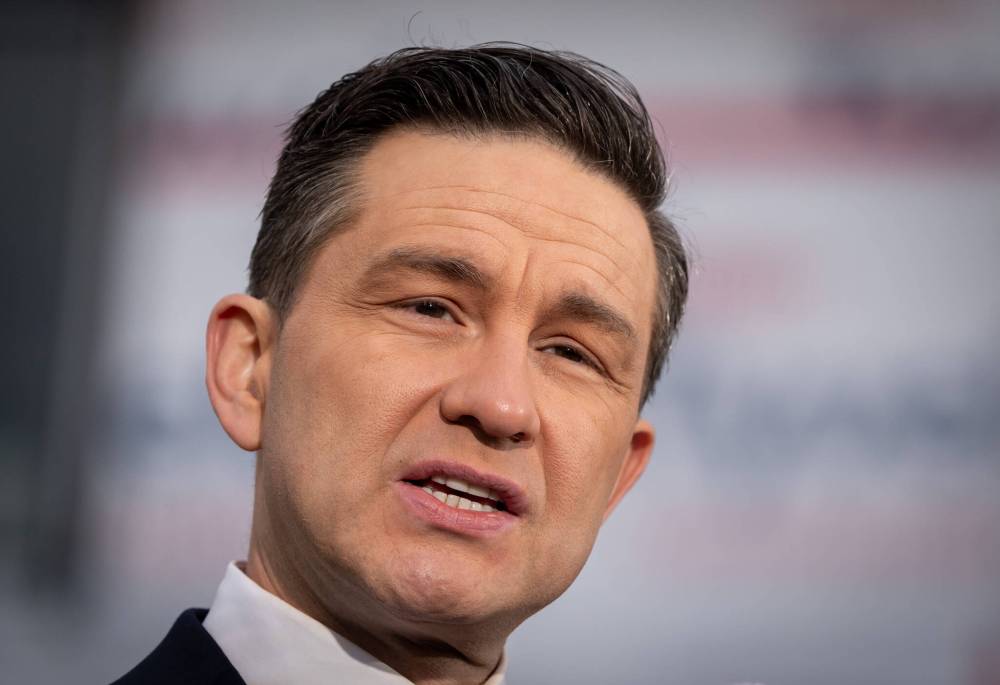
Ethan Cairns / THE CANADIAN PRESS files
Conservative Leader Pierre Poilievre has seen a massive lead in the polls melt away — to the point that a federal election campaign may be a real race.
On Feb. 21, a new EKOS poll gave the Liberals a 38-37 lead over the Tories. Two days later, an Ipsos poll revealed a similar result, giving the Liberals a 38-36 lead. Two days after that, Léger Marketing found that the Conservatives had a 38-35 lead over the Liberals, but that Liberal support would rise to 40 per cent with Mark Carney as party leader, with the Conservatives remaining at 38 per cent.
Those same Léger, Ipsos and EKOS polls found that the Liberal surge is almost entirely the result of a collapse in support for the NDP, and not at the expense of the Tories.
Last Thursday, Ipsos released the results of yet another poll, which revealed that 28 per cent of respondents believe Poilievre would be a “tough negotiator who would get the best deal for Canada from (U.S.) President (Donald) Trump,” with Carney trailing at 23 per cent. The same poll found, however, that 31 per cent of respondents believe that Poilievre “would roll over an accept whatever President Trump demands,” while just six per cent believe Carney would do so.
On the question of which leader “has the skills to put in place the right government programs to deal with the hardships Canadians will face because of the tariffs being imposed by President Trump,” respondents gave Poilievre a 26-24 lead over Carney — a statistical tie.
Also last Thursday, Abacus Data released the results of its recent poll which found that, according to those Canadians polled, the top five issues facing the nation are the rising cost of living, Donald Trump and his administration, healthcare, housing affordability and accessibility, and the economy. The Conservatives are viewed as the best party to address each of those issues, other than Trump. The Liberals have a 10-point lead among those who regard Trump and his administration as a top issue.
All of that polling data suggests that the upcoming federal election campaign will come down to a close competition between two vastly different ballot box questions. It also gives rise to two serious questions.
First, why has this sudden, unprecedented shift happened? Many pundits have suggested it is because the Poilievre Tories focused too much on churning hatred for Trudeau among Canadians, but were unprepared for the possibility the PM would resign before the next election, and even less prepared for the emergence of Carney as the Liberals’ likely next leader.
I disagree. If that were the case, support for the Conservatives would have collapsed after Trudeau’s announcement, and that really hasn’t happened. Tory support remains largely unchanged nationally.
Rather, the Liberal surge is almost entirely the result of NDP supporters shifting their support to the Liberals following Trump’s inauguration as president. That is likely because they perceive a Carney-led Liberal government as more capable than the Tories of protecting Canada from Trump’s reckless actions.

The shift also echoes the “unite the left” reality that has unfolded at the provincial level in Western Canada over the past two decades. And, finally, it may also reflect New Democrats’ comfort with the Liberal-NDP partnership that has governed the nation since the last federal election.
Will the shift continue into the upcoming federal election campaign and impact its result? That depends on Trump’s actions and the Liberals’ ability to convince erstwhile NDP supporters that they, not the Conservatives, are the best party to stand up to the Americans.
If they can do that, the Liberals have a decent shot at winning the election — a prospect that appeared all but impossible just six weeks ago.
Deveryn Ross is a political commentator living in Brandon.
deverynrossletters@gmail.com X: @deverynross