

The daily trials and tribulations of ordinary Cubans
Advertisement
Read this article for free:
or
Already have an account? Log in here »
To continue reading, please subscribe:

Digital Subscription
One year of digital access for only $205*
- Enjoy unlimited reading on winnipegfreepress.com
- Read the E-Edition, our digital replica newspaper
- Access News Break, our award-winning app
- Play interactive puzzles
*First annual payment billed as $205.00 + GST for one year. This annual subscription will automatically renew at $233.00 + GST every 52 weeks (10% off the regular annual price of $259.35). Offer available to new and qualified returning subscribers only. Cancel any time.
To continue reading, please subscribe:
Add Free Press access to your Brandon Sun subscription for only an additional
$1 for the first 4 weeks*
- Enjoy unlimited reading on winnipegfreepress.com
- Read the E-Edition, our digital replica newspaper
- Access News Break, our award-winning app
- Play interactive puzzles
*Your next Brandon Sun subscription payment will increase by $1.00 and you will be charged $17.95 plus GST for four weeks. After four weeks, your payment will increase to $24.95 plus GST every four weeks.
Read unlimited articles for free today:
or
Already have an account? Log in here »
Hey there, time traveller!
This article was published 15/05/2025 (481 days ago), so information in it may no longer be current.
My May 2025 trip to Cuba actually looked a lot like my 2024 visit to the island.
The enormously challenging situation on the ground did not appear to get any worse. But the acute shortages of food, medicines and fuel are not any better.
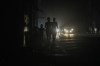
Prices are still high for what food is available (a large portion of it sold by privately-owned operations), vehicle lineups for petrol are ever-present (except at U.S. dollar-only gasoline stations) and electrical blackouts (sometimes up to 20 hours or more) remain a persistent problem.
Because of the energy crunch, there appeared to be more motorcycles, Chinese electric scooters and three-wheeled vehicles on the road. Some of these were providing private taxi services — particularly given the erratic schedule of the public bus system — along with trucks that were modified to provide rudimentary transportation for weary Cubans.
As one Cuban friend explained: “Things have always been tough in Cuba. Sometimes life in Cuba is harder and, at other times, it is less hard. But it is still hard.”
I have always marvelled at the resiliency of Cubans and their keen ability to adjust or to improvise in order to eke out a hardscrabble existence. Though there may be fewer Cubans leaving for Nicaragua and the U.S.-Mexico border these days, life is still extraordinarily challenging on the island.
The U.S. economic blockade obviously does not help matters, but Cuba has internal problems that go beyond the trade embargo. Right now, the country has precious few ways to generate the necessary foreign exchange needed to pay for imports of fuel and food. I was told that some oil tankers waiting in Havana and Matanzas wouldn’t unload their cargo because the Cuban government didn’t have the money to pay for it.
The hard reality is that Cuba is having a difficult time securing sufficient supplies of oil for gasoline and diesel. Indeed, Venezuela is no longer seen as a reliable partner and the Russians talk a good game about oil but tend to deliver fewer barrels at discounted prices (though still demand important concessions from Havana in return). The Mexicans, at least for the moment, are playing a key role in supplying the island with much-needed petroleum (and at lower prices).
That helps to explain why the Cuban political leadership is all in on boosting the tourism sector to generate cash. It was not hard to see the new hotels that were recently opened in Varadero — and the one or two that are now under construction. But some Cubans are questioning why so many resources are being allocated to an industry that is highly unpredictable and finicky, while Cubans deal with food shortages and regular blackouts during the day.
Speaking of tourists, there were plenty of Canadians (and Italians) to be seen and heard, though clearly less than the pre-pandemic numbers. I did see more Asians on this visit and a smattering of Europeans, along with slightly fewer Russians (perhaps reflecting the tougher economic conditions in Russia today).
According to one Cuban hotel employee, once you lose a Canadian tourist to a better tourism product, it is very hard to get them back. And he knew full well that there are many other competitively priced travel destinations throughout the Caribbean.
Nonetheless, the U.S. dollar is still highly coveted by Cubans working in the service industry (and those associated with it). They will obviously accept Canadian dollars and Euros, but their clear preference is for the U.S. greenback.
Since my return, I’ve been wondering what impact, particularly over the long term, the chasing of U.S. dollars by Cubans (to say nothing of the “dollarization” of the Cuban economy and privately owned businesses) will have on their long-standing and deeply-ingrained values of sharing, caring and advancement of collective rights. Will it diminish their staying power as capitalist ways take on greater import? Of course, I remind myself that the acquisition of U.S. dollars is a critical element in how Cubans are now keeping body and soul together.
So, where is the Canadian government in all of this? There are a number of areas where Canada could be of great assistance to Cuba — especially in the energy sector. But I can’t help think that the new Mark Carney government is not about to jeopardize the Canada-U.S. relationship for the sake of improving conditions in Cuba.
However, might the Cubans be able to help Canada given their long experience with minimal U.S. dependence and trade diversification after the demise of the Soviet Union in 1991-1992?
It bears re-emphasizing that both countries are now squarely in the crosshairs of the Donald Trump White House. But the one country that knows more than any other nation about how to survive the unrelenting U.S. onslaught is most assuredly Cuba.
It would be worth Prime Minister Mark Carney’s time to have a wide-ranging chat with our Cuban friends about how Havana has successfully executed its counter-dependency strategy for almost 65 years.
Peter McKenna is a professor of political science at the University of Prince Edward Island in Charlottetown.
Advertisement Advertise With Us
Advertisement Advertise With Us