

The Tory future may lie with the Liberals
Advertisement
Read this article for free:
or
Already have an account? Log in here »
To continue reading, please subscribe:

Digital Subscription
One year of digital access for only $205*
- Enjoy unlimited reading on winnipegfreepress.com
- Read the E-Edition, our digital replica newspaper
- Access News Break, our award-winning app
- Play interactive puzzles
*First annual payment billed as $205.00 + GST for one year. This annual subscription will automatically renew at $233.00 + GST every 52 weeks (10% off the regular annual price of $259.35). Offer available to new and qualified returning subscribers only. Cancel any time.
To continue reading, please subscribe:
Add Free Press access to your Brandon Sun subscription for only an additional
$1 for the first 4 weeks*
- Enjoy unlimited reading on winnipegfreepress.com
- Read the E-Edition, our digital replica newspaper
- Access News Break, our award-winning app
- Play interactive puzzles
*Your next Brandon Sun subscription payment will increase by $1.00 and you will be charged $17.95 plus GST for four weeks. After four weeks, your payment will increase to $24.95 plus GST every four weeks.
Read unlimited articles for free today:
or
Already have an account? Log in here »
Hey there, time traveller!
This article was published 24/06/2025 (446 days ago), so information in it may no longer be current.
Last week, the Free Press published editorials that discussed the predicament facing Manitoba’s two opposition parties and suggested solutions to those problems.
The first editorial (Tories must decide who they are, June 17) referred to the Progressive Conservative Party’s low poll numbers, especially in Winnipeg. The glaring ideological divide within that party — between a socially conservative base in rural Manitoba and a more centrist base in urban areas — was discussed, leading to the observation that the party is being pulled in opposite directions by competing factions.
It pointed out that the failure of new PC leader Obby Khan to articulate a vision for the party that differs from that of his failed predecessors yet is capable of healing the ideological divide within his party, is exacerbating the problem.
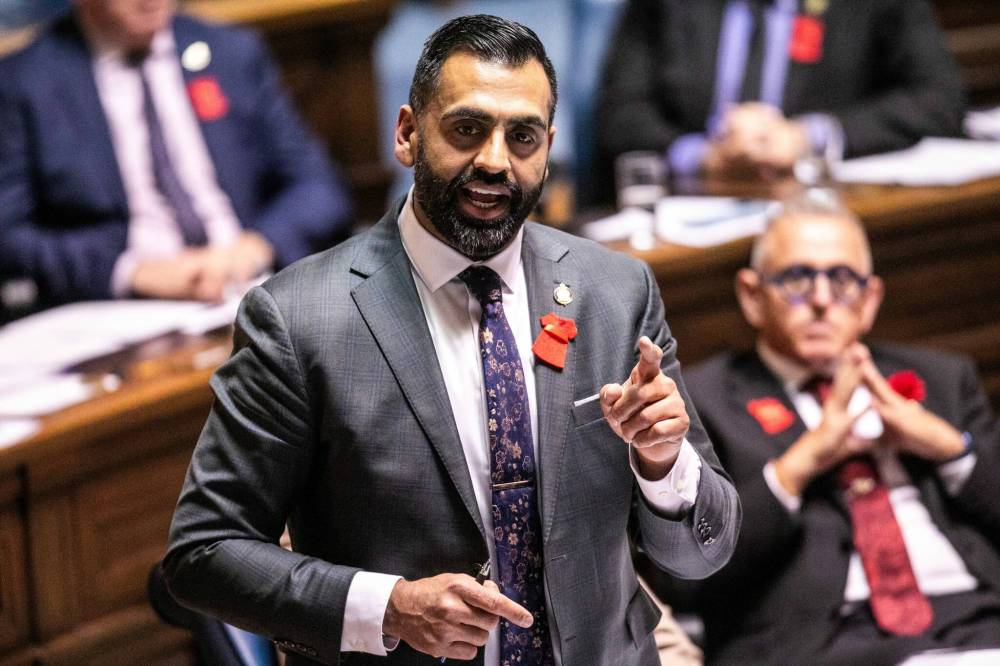
MIKAELA MACKENZIE / FREE PRESS files
Provincial PC leader Obby Khan and his colleagues have reached a political fork in the road: do they embrace their populist base or move towards the centre?
It correctly argued that democracy suffers in Manitoba when voters do not have a genuine choice at the ballot box between credible alternatives — and that such a choice does not currently exist because the Tories are not doing the work necessary to build a party that knows what it stands for and what it would do if elected to form government.
Two days later, another editorial (Provincial Liberals hunt for relevance — and a leader, June 19) discussed the plight of the leaderless Manitoba Liberal Party. It pointed out that the party’s lone MLA, Cindy Lamoureux, doesn’t want the leader’s job and that it has been decades since the party held enough seats to be relevant in Manitoba politics.
The editorial reasoned that, with the NDP having claimed the center-left of the political spectrum and the Tories having claimed the center-right, Manitoba politics has become a “two-party affair,” leaving no room for the Liberals to offer a viable, centrist alternative to voters. Based on that perception, it argued the challenge facing the provincial Liberals is of a “more urgently existential nature.”
In each editorial, it was suggested that the cure for the two parties’ problems is for them to each define and more effectively communicate a compelling vision for the province that offers a viable alternative to the incumbent NDP government.
Manitoba pundits having been making that same argument for much of the past three decades, yet the situation has only worsened for the Tories and Liberals and for our province’s democracy. A more emphatic solution may be required.
That begins with acknowledging that the Manitoba PC Party is not a serious contender to form government — and won’t be for several years — because it is a badly damaged brand, weighed down by a substantial membership group that favours policies that make Tory candidates largely unelectable in Winnipeg, where the outcome of provincial elections is decided.
The party is perceived by many Manitobans as angry, intolerant, anti-immigration, anti-reconciliation and anti-LGBTQ2S, weighed down by a populist base that coddles conspiracy kooks and views anti-vaxxers as victims.
Some may view that description as unfair and inaccurate, but perception is reality in the voting booth — and that perception has put the party to the verge of extinction inside the Perimeter Highway and is cutting into its support in rural areas.

Khan and his supporters within the PC caucus and party have reached a fork in the political road. They can either do nothing, accept the current reality and spend the next several years on the opposition benches or they can take the necessary steps to become a genuine, viable alternative to the NDP.
The second option would require them to boldly move the party’s platform to the center of the spectrum by formally rejecting the socially conservative policies and attitudes that are costing them support and, secondly, by formally inviting the Liberals to join them (under a new name) in the cause of opposing and eventually defeating the NDP.
Such a combined party would resemble the federal Carney Liberals from an ideological standpoint and would be instantly competitive for seats in Winnipeg and Brandon. Rural voters, including existing PC Party members, would then choose between a competitive, reinvigorated centrist party or a rural rump that would be destined to sit in perpetual opposition.
The strategy worked in Saskatchewan, where provincial Tories and Liberals joined together to challenge the NDP in 1997 and have been in power for the past 18 years. It’s an option worth considering here in Manitoba.
Deveryn Ross is a political commentator living in Brandon. deverynrossletters@gmail.com X: @deverynross