

What Trump’s deportation obsession means for Haiti
Advertisement
Read this article for free:
or
Already have an account? Log in here »
To continue reading, please subscribe:

Digital Subscription
One year of digital access for only $205*
- Enjoy unlimited reading on winnipegfreepress.com
- Read the E-Edition, our digital replica newspaper
- Access News Break, our award-winning app
- Play interactive puzzles
*First annual payment billed as $205.00 + GST for one year. This annual subscription will automatically renew at $233.00 + GST every 52 weeks (10% off the regular annual price of $259.35). Offer available to new and qualified returning subscribers only. Cancel any time.
To continue reading, please subscribe:
Add Free Press access to your Brandon Sun subscription for only an additional
$1 for the first 4 weeks*
- Enjoy unlimited reading on winnipegfreepress.com
- Read the E-Edition, our digital replica newspaper
- Access News Break, our award-winning app
- Play interactive puzzles
*Your next Brandon Sun subscription payment will increase by $1.00 and you will be charged $17.95 plus GST for four weeks. After four weeks, your payment will increase to $24.95 plus GST every four weeks.
Read unlimited articles for free today:
or
Already have an account? Log in here »
Hey there, time traveller!
This article was published 03/07/2025 (447 days ago), so information in it may no longer be current.
Life just got a whole lot more precarious for roughly 211,000 Haitians residing legally in the U.S. under temporary humanitarian parole status. And the chief source of that fear and danger is U.S. President Donald Trump, who has now even banned Haitians from entering the U.S.
Yes, Trump campaigned in 2024 on securing the U.S.-Mexico border, stopping desperate migrants from Latin America from entering the U.S. illegally and initiating a mass deportation of the undocumented already living in America.
But did anyone in the Trump administration even bother to think about what the life-altering implications of such a policy prescription would be? I’m sure that they did, though not in the compassionate way that you might think.
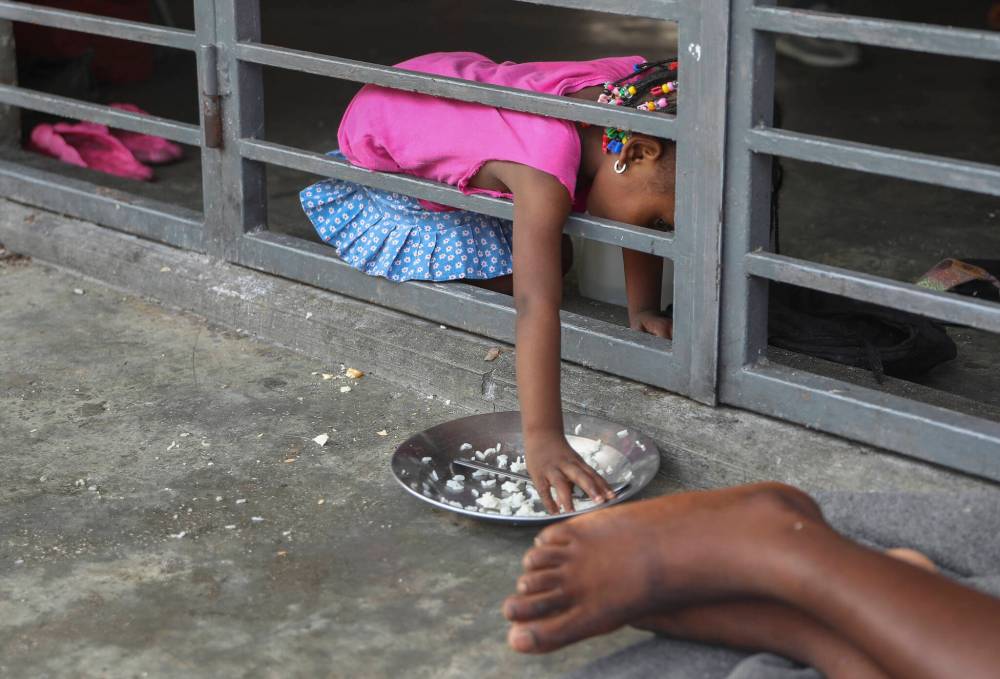
The hard truth is that Trump’s White House does not care one whit about these hundreds of thousands of frightened Haitians living in South Florida. Scaring them to death, targeting them with ICE raids and random stoppages is all part of coercing them into self-deportation via psychological warfare.
Recently, the U.S. Supreme Court ruled that Trump was within his executive purview to terminate a humanitarian parole/immigration program — instituted by the former Joe Biden administration in early 2023 to stem the flood of irregular migrants at the border — which protected some 530,000 Venezuelans, Cubans, Nicaraguans and Haitians from deportation.
This judicial decision will have huge ramifications for migrant families (and their families still living in impoverished Haiti and dependent on remittances from America), communities, employers and even local businesses in the U.S. But I’m convinced that Trump and his acolytes – to say nothing of his MAGA base – have already dismissed these concerns as insignificant. When it comes to the current occupants of the White House, domestic politics trumps compassion, humanity and economics all the time.
Those Haitians living in the U.S. will now have, from the official June 9 notice of termination, a 30-day window to leave the country. The U.S. Department of Homeland Security can, however, begin deportation proceedings at any time during those 30 days.
Some Haitians may be in a position to apply for an alternative immigration status – such as temporary protected status, political asylum or take their chances and remain in the U.S. without the proper documentation. There are also some ongoing legal challenges, but it’s hard to imagine that those will go in favour of the migrants. With Trump’s presidency, you have to think that he will fight hard to block all of these last-ditch efforts.
But is Haiti really a place where people should be forcibly returned? To be sure, the nightmarish conditions on the ground are horrendous, while the heavily armed gangs (and marauding self-defence brigades) are mobilizing to expand their control and territorial footprint as the country cries out for international intervention and compassion.
Without any viable legal options, though, these Haitians will have little choice but to return to violence-wracked Haiti – the most impoverished country in the Western Hemisphere. But then what will they do? How do they keep body and soul together? Will they move to Canada?
In the words of Ida Sawyer, the director of Human Rights Watch’s crisis, conflict and arms division: “Haitians, for example, could be sent back to Port-au-Prince, where they could be subjected to killings, kidnappings, forced recruitment, and widespread sexual violence by criminal gangs who control nearly all the capital, and where more than half the population suffers from acute hunger.”
I’ve been asking myself another key question: if the situation in Haiti gets worse, will this still not precipitate a mass exodus of Haitian migrants heading toward the U.S.?

An early June editorial in the Miami Herald was close to the mark: “People shouldn’t be forced to return to a dictatorship in Venezuela, or gang rule in Haiti, because of the whim of a particular president.” It went on to call for a “rational approach to immigration and deportation rather than one falsely based on fear or even prejudice.”
So what does the deportation of Haitians say about the Trump Administration? For one thing, it clearly demonstrates that human rights considerations don’t factor into its policy thinking. And that strongly suggests that Trump has no qualms about wheeling and dealing with governments in the world that don’t respect human rights and basic freedoms.
Equally important, as Haitian expatriate Tessa Petit, the executive director of the Florida Immigrant Coalition, remarked angrily: “To the American people, I say this: It’s us now, but your turn will come. If you don’t look, speak, or act a certain way, your turn will come. You are allowing precedents that will change your world forever.”
As for the world of those Haitian migrants, their whole lives have just been turned upside down. They can’t stay in the U.S. and they greatly fear the danger and violence that awaits them in crisis-ridden Haiti. No wonder that many of them view this horrible situation as a potential death sentence.
Peter McKenna is professor of political science at the University of Prince Edward Island in Charlottetown.