

Mayors as frontline ‘climate doers’ — not in Winnipeg
Advertisement
Read this article for free:
or
Already have an account? Log in here »
To continue reading, please subscribe:

Digital Subscription
One year of digital access for only $205*
- Enjoy unlimited reading on winnipegfreepress.com
- Read the E-Edition, our digital replica newspaper
- Access News Break, our award-winning app
- Play interactive puzzles
*First annual payment billed as $205.00 + GST for one year. This annual subscription will automatically renew at $233.00 + GST every 52 weeks (10% off the regular annual price of $259.35). Offer available to new and qualified returning subscribers only. Cancel any time.
To continue reading, please subscribe:
Add Free Press access to your Brandon Sun subscription for only an additional
$1 for the first 4 weeks*
- Enjoy unlimited reading on winnipegfreepress.com
- Read the E-Edition, our digital replica newspaper
- Access News Break, our award-winning app
- Play interactive puzzles
*Your next Brandon Sun subscription payment will increase by $1.00 and you will be charged $17.95 plus GST for four weeks. After four weeks, your payment will increase to $24.95 plus GST every four weeks.
Read unlimited articles for free today:
or
Already have an account? Log in here »
Hey there, time traveller!
This article was published 02/12/2025 (289 days ago), so information in it may no longer be current.
A few weeks ago, 300 city mayors gathered in Rio de Janeiro ahead of COP 30 to reaffirm their pledge to take decisive action on climate change.
They’re called the C40, an organization that began in 2005 when 40 mayors from 40 cities met to discuss the role municipalities could play in fighting climate change. Since then the organization has expanded and is closely aligned with the 14,000 cities that now belong to the Global Covenant of Mayors for Climate and Energy.
Their goal is to reduce emissions and protect their citizenry from the impacts of climate change.
Russell Wangersky/Free Press
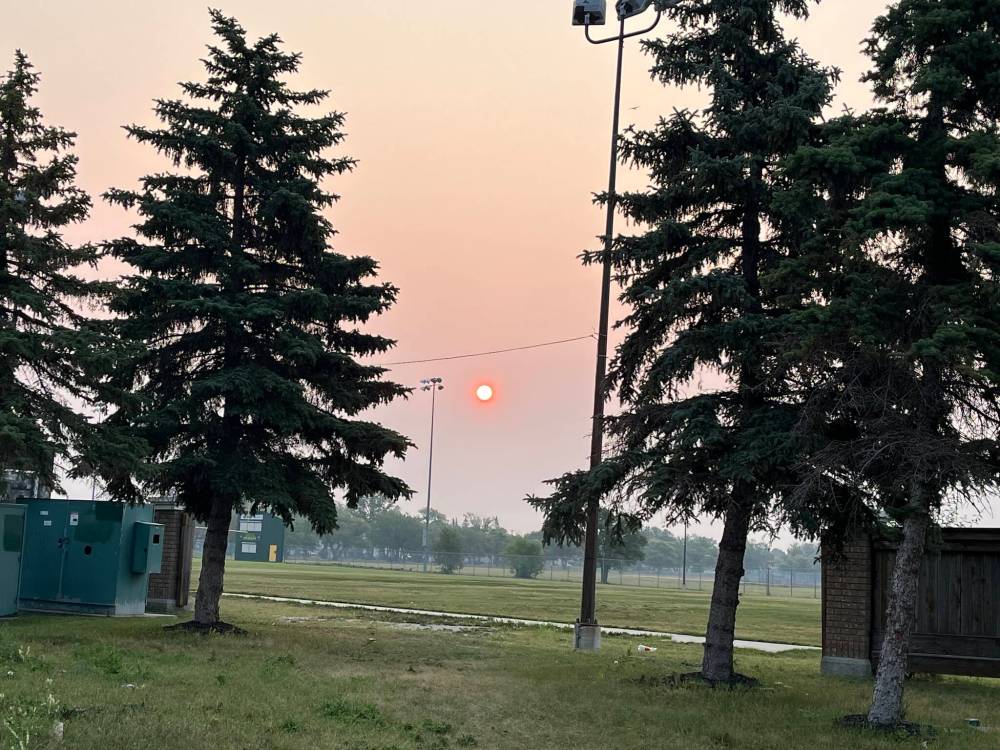
Yet another summer of forest fire smoke hasn’t convinced Winnipeg’s mayor and council to join other cities pledging action on climate change.
This year, the focus was on how city governments can mitigate the dire health impacts of climate-driven heat waves — heat waves so severe that scientists now estimate that more than four billion people — half the world’s population — experienced at least one extra month of extreme heat thanks to climate change.
And when you’re poor, sick and can’t afford air conditioning, the cost of escalating heat can be staggeringly high. In fact, heat waves now take more lives than any other extreme weather event, with a global death count as high as half a million.
Which doesn’t even begin to measure the impact of megafires on our health. This summer Manitoba fires, driven by the dry conditions created by those same heatwaves, resulted in Winnipeggers breathing in toxic smoke for weeks on end.
But while mayors can’t stop megafires, hundreds of them are committed to reducing the carbon emissions that drive those events. In fact, members of the Global Covenant of Mayors predict they could reduce CO2 emissions by 1.3 billion tons per year by 2030. The equivalent of taking 276 million cars off the road.
In terms of mitigating the health impact of heat, there’s a lot that mayors can do. As Kate Gallego, mayor of Phoenix, Ariz., observed, expanding and protecting urban canopies, demanding better, greener building standards, opening cooling centres and training emergency responders to handle heat emergencies are just a few of the actions cities can take to protect their citizens.
That work is essential, because if measured just in terms of lost productivity, never mind loss of life, heatwaves will cost the world upwards of $2.7 trillion a year by 2030.
So what is Winnipeg doing to beat the heat and fight climate change? Well, based on the most recent budget, I think it would be fair to say — not a lot.
While the city has committed to maintain and replant our public tree canopy of 300,000 trees, it has done nothing to protect the vast majority of our canopy which is situated on private land.
As for cooling centres, the city allows access to libraries and leisure centres during heat waves — assuming you have one — and has designated a little over $1 million in the budget for charitably run “safe spaces.”
And before you ask, most of those “safe spaces” serve as detox, domestic violence and youth facilities, not cooling centres.
Most telling is the fact that there is absolutely no money in the budget for reducing city emissions. In fact, our city government still hasn’t approved its own building emissions reduction strategy, let alone budgeted the estimated $44 million needed to execute the plan.
Released in August, the goal is to switch public buildings to renewable energy and ensure they’re energy efficient. If followed, it would not only cut emissions but also save the city almost $1 million dollars a year.
But, apparently, there’s no money available for saving money.

Instead, projects to widen Kenaston and extend Chief Pequis are receiving buckets of cash. Projects that will eat up hundreds of millions of tax dollars, put more gas-guzzling cars on the road and only serve to increase our escalating infrastructure deficit.
So if London (England) Mayor Sadiq Khan is right to say that “cities have long been climate doers,” where the heck are our climate doers? At what point will our city government earmark the budget needed to reduce emissions and enhance resiliency?
“Not any time soon,” would be my answer, given that our mayor has never, as far as I know, attended a C40 meeting, nor signed on as a member of The Global Covenant of Mayors for Climate and Energy.
So, what’s the solution? Well, you might email Mayor Scott Gillingham, asking why a significant portion of your property tax increase of 9.45 per cent over just two years, is going toward new and wider roads, instead of being invested in the creation of a net zero, climate resilient city.
Erna Buffie is a writer and environmentalist. Read more @ https://www.ernabuffie.com/