

Climate change touches the world, and my family
Advertisement
Read this article for free:
or
Already have an account? Log in here »
To continue reading, please subscribe:
Digital Subscription
One year of digital access for only $1.44 a week*
- Enjoy unlimited reading on winnipegfreepress.com
- Read the E-Edition, our digital replica newspaper
- Access News Break, our award-winning app
- Play interactive puzzles
*Billed as $5.77 plus GST every four weeks. After 52 weeks, price increases to the regular rate of $19.95 plus GST every four weeks. Offer available to new and qualified returning subscribers only. Cancel any time.
To continue reading, please subscribe:
Add Free Press access to your Brandon Sun subscription for only an additional
$1 for the first 4 weeks*
- Enjoy unlimited reading on winnipegfreepress.com
- Read the E-Edition, our digital replica newspaper
- Access News Break, our award-winning app
- Play interactive puzzles
*Your next Brandon Sun subscription payment will increase by $1.00 and you will be charged $17.95 plus GST for four weeks. After four weeks, your payment will increase to $24.95 plus GST every four weeks.
Read unlimited articles for free today:
or
Already have an account? Log in here »
Hey there, time traveller!
This article was published 08/12/2025 (313 days ago), so information in it may no longer be current.
Recently, national government representatives from 193 countries attending the COP 30 climate meeting in Brazil were unable to agree on a communique containing the phrase “a roadmap for a transition away from fossil fuels.”
Canada did not speak up for this language, nor did it sign the side letter endorsed by more than 80 other countries calling for such a roadmap. The final outcomes document for the meeting contained no mention of fossil fuels. On the face of it, this seems like madness.
The COP 30 meeting took place in Belem, Brazil, a long way from Winnipeg where I live. But climate change affects my family in many ways.
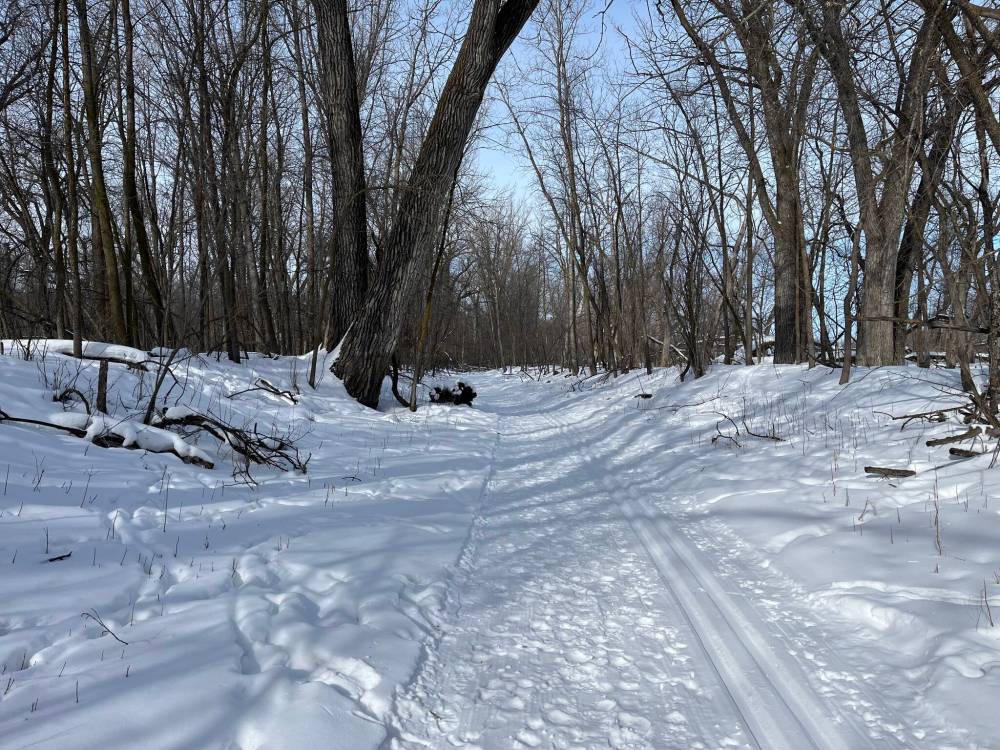
Russell Wangersky/Free Press
Climate change is affecting us all — even the trails we ski on.
We spent the summer of 2025 in Winnipeg. It was another brutal year for wildfires in western Canada and especially in eastern and northern Manitoba. About 2.1 million hectares of forest burned. That’s about four times the area of Prince Edward Island.
About 32,000 citizens were evacuated from fire zones — some of them twice. There were 48 days this summer when public health authorities recommended that senior citizens, small children and those with compromised respiratory systems not venture outdoors or engage in strenuous activities.
I could feel smoke stinging my eyes and smell it indoors. I cancelled a few outdoor activities — no cost in dollars but a decrease in quality of life. My grandchildren participate in outdoor sports. Some of their activities were cancelled because of poor air quality. I worry about their future quality of life.
My Winnipeg family paid higher food prices this year, especially for coffee, chocolate, olive oil, vegetables and beef. All these increases were mostly driven by climate events: heat waves in west Africa, southern Europe and Brazil, floods in field crops and persistent drought in western North America. All told, those increases might result in $300 to $400 in increased annual grocery bills for our family.
We will pay more for house insurance. Wildfires and floods in developed countries have caused billions of dollars in insurance claims in recent years. The massive increase in claims flows through to the reinsurance market and is in turn being passed along to insurance clients. If you pay $1,000 annually in premiums for house insurance, next year you may pay 12 per cent more, according to some estimates.
In the last few years, rainfall in the watershed feeding Manitoba Hydro’s generation system has been wildly variable, predictably the result of a generally warmer atmosphere. In the last two years, reservoir levels have been low due to drought. This will influence electrical rates to power our home. As Manitoba Hydro generates less power from our hydroelectric grid, it exports less power (revenues down) and imports more (costs up). The most recent application for a rate increase is for an annual 3.5 per cent increase over the next three years. For our family, that will add up to about $100 extra per year at the end of the increase period.
The costs of the summer wildfires and more than 32,000 citizens of northern Manitoba fleeing their communities, and associated incremental health costs related to dangerously high levels of airborne particulates, are difficult to estimate but likely range in the hundreds of millions of dollars in public expense. I do not begrudge these necessary expenses for a minute but know that they must be funded eventually, either by reducing services and expenses or raising taxes to service debt.
We like to cross-country ski. Last year was one of the worst winters for that. There wasn’t much snow until after Jan. 1; then frequent freeze/thaw conditions meant that ski trails often became icy toboggan slides. You may have noticed there have been more winters like that recently.
Does any responsible, educated person not understand that rising levels of CO2 and methane, both the products of fossil fuel production and combustion, cause global warming?
No. Responsible, educated people attended the COP 30 meeting. This is not a case of “it’s hard to get a person to understand something when his livelihood depends on him not understanding it.” The facts are generally understood.
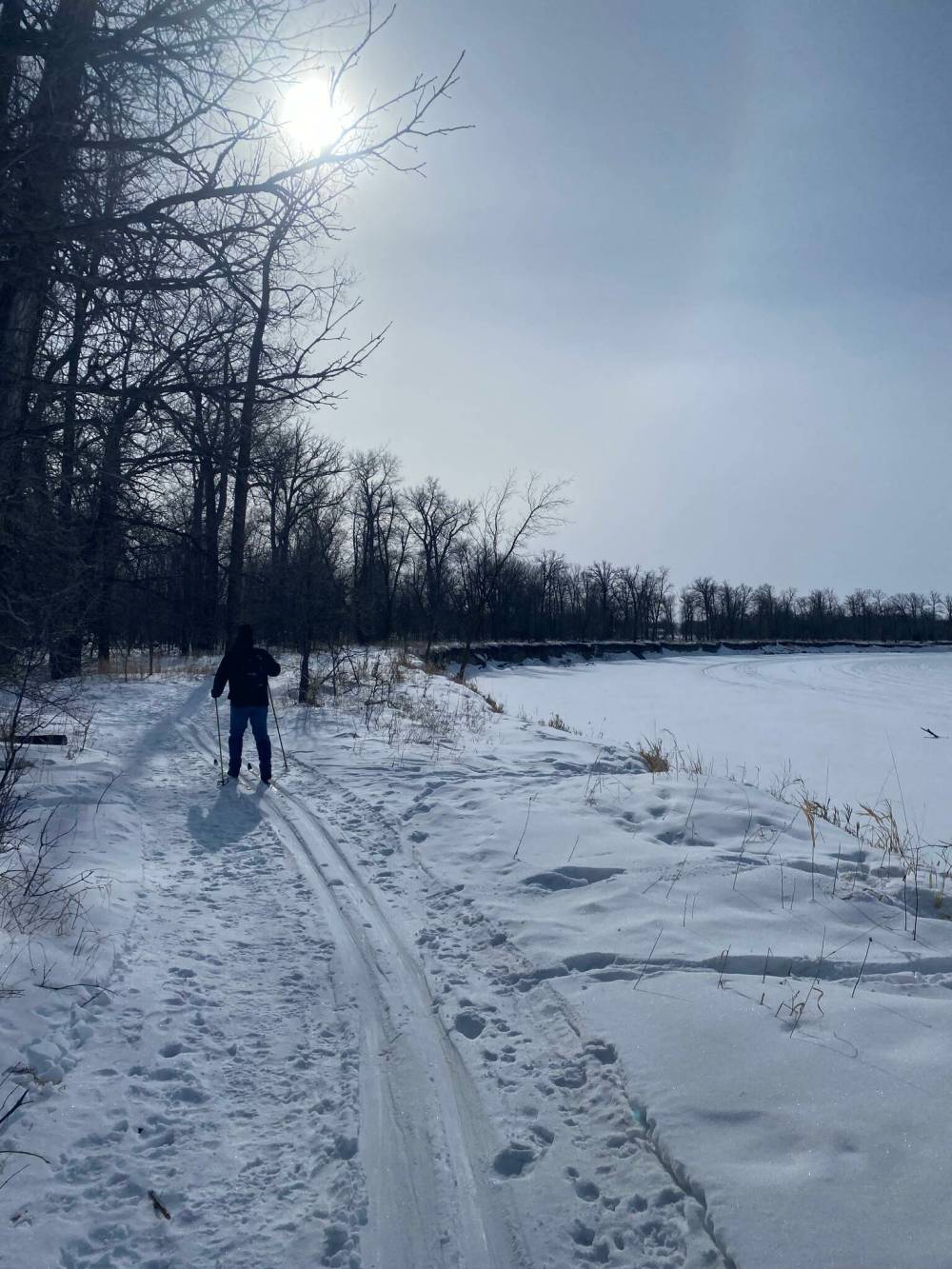
Raquel Bracken / Submitted
Climate change affects us all — even the trails we ski on.
However, it is true that many responsible, educated people are willing to accept global warming, rationalizing that a policy of limiting or reducing fossil fuel production threatens their economy and the interests of powerful groups in their national or regional communities. It is possible to have a bit of sympathy with this view. Change is hard. Change fuels fear, the emotion that diminishes wisdom. Whatever else they are, nations like Saudi Arabia, Russia, China, India and the United States have a large part of their identities bound up in the expansion of their societies through energy production.
The good folks who attend meetings like COP 30 think about climate action in terms of national, regional or sectoral interests rather than personal experience. Their governments give them strategic marching orders going into these meetings. And, notably, there were about 1,600 fossil-fuel industry lobbyists at the COP 30 meeting.

It might be a useful tonic for government representatives to reframe the urgency for action in terms of individual citizen impacts rather than national dynamics.
Climate issues are personal issues. They affect you and your family. Even those representatives who evaluate issues primarily in financial terms may see that the cost of inaction is accelerating faster than the cost of action.
They won’t reframe the issue, of course, until governments change and provide different strategic marching orders. The systemic problem is often the trap of undervaluing the distant horizon. The next election comes far before the distant horizon. But the present is now punching citizens in the mouth. People don’t change much until there is a crisis touching them personally. Even the relatively wealthy citizens who tend to be decision makers at events like COP 30 won’t be able to insulate themselves from personal impacts. Perhaps voters will soon wake up.
Accepting, in plain language, that it’s necessary to transition away from fossil fuels can be a threat to national identity. Threats to identity whether national or personal will always be tough to accept. But those things that must be, will be, eventually. So, in the end, while I am discouraged that COP 30 was unable to adopt the fossil fuel transition pledge, I don’t despair. Whatever words are eventually agreed to, there is no alternative to the transition. It is a matter of time. Eventually, necessity always wins. Unfortunately, today, time is our enemy. Necessity will not win soon enough to prevent massive human suffering, mostly among people who can bear it least.
Ian Gillies is a graduate of the Natural Resource Institute, a former member of Manitoba’s Expert Advisory Council on climate matters and former commissioner with the Manitoba Clean Environment Commission.