

Developers say protection is ‘for the birds’
Advertisement
Read this article for free:
or
Already have an account? Log in here »
To continue reading, please subscribe:
Digital Subscription
One year of digital access for only $1.44 a week*
- Enjoy unlimited reading on winnipegfreepress.com
- Read the E-Edition, our digital replica newspaper
- Access News Break, our award-winning app
- Play interactive puzzles
*Billed as $5.77 plus GST every four weeks. After 52 weeks, price increases to the regular rate of $19.95 plus GST every four weeks. Offer available to new and qualified returning subscribers only. Cancel any time.
To continue reading, please subscribe:
Add Free Press access to your Brandon Sun subscription for only an additional
$1 for the first 4 weeks*
- Enjoy unlimited reading on winnipegfreepress.com
- Read the E-Edition, our digital replica newspaper
- Access News Break, our award-winning app
- Play interactive puzzles
*Your next Brandon Sun subscription payment will increase by $1.00 and you will be charged $17.95 plus GST for four weeks. After four weeks, your payment will increase to $24.95 plus GST every four weeks.
Read unlimited articles for free today:
or
Already have an account? Log in here »
So, something pretty unusual happened to me today. I got an email from Margaret Atwood. And before you ask, no, it wasn’t a personal letter, it was a mass email sent out to solicit donations to protect Canada’s resident and migratory birds.
Atwood, it turns out, is an avid bird watcher and like a lot of us is acutely concerned about a North American bird population that’s plummeting. The reasons behind that rapid decline are both simple and complex, including everything from habitat loss and extreme climate-change-driven weather to glass windows and the kind of chemical pollution that can poison their bodies and their environment.
The situation is so bad that one in three North American bird species is in urgent need of conservation and 75 per cent of the total bird population is in decline.
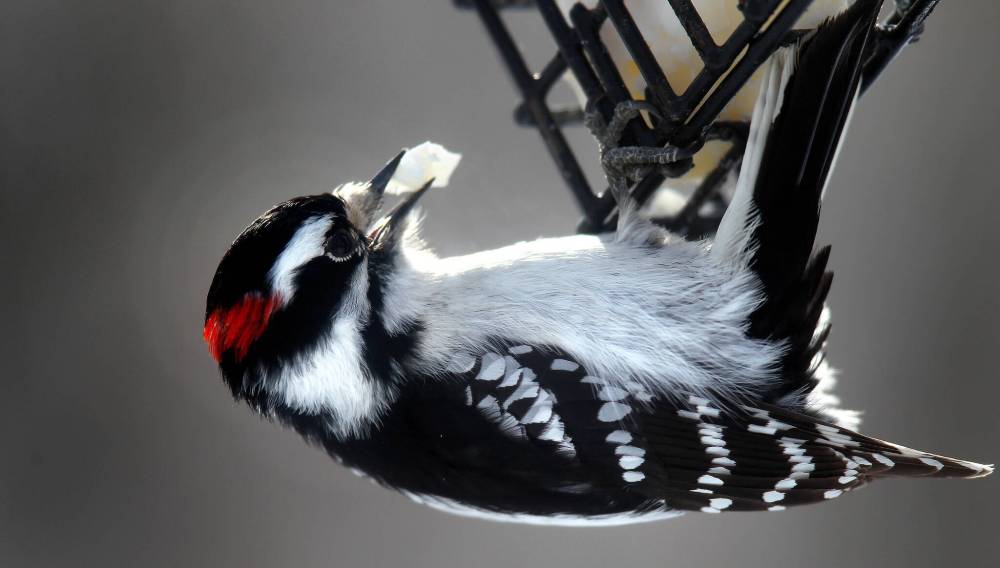
phil hossack / free press FILEs
A downy woodpecker helps itself to a piece of suet at a feeding station. North American urban birds face a legion of threats, from cats to window glass.
So why should that matter to you?
Well, imagine a world in which the treetops are empty and birdsong is rare. A world where chimney swifts, red-headed woodpeckers and the golden-winged warbler will never be seen or heard by your grandchildren or your great grandchildren.
It’s a chilling thought, isn’t it? And it’s one that often plagues me in the summertime, when I’m out on the lake in my canoe. I usually head out with my paddle and camera in the evening at what filmmakers call the “magic hour” when the light is perfect for photographing everything from plants and tree stumps to lily pad-eating beavers.
Sundown is also the perfect time to hear the sounds of the evening chorus — in this case, the amazing twilight songs of the boreal birds. But while that chorus was once loud and various, it now seems greatly diminished. When I was last out on the water, the chorus was more a series of solo performances than the great cacophony of bird song it had once been.
And the truth of that is evidenced in the sound recording archives of the great Bernie Krause.
For more than 30 years, Krause, a musician and soundscape recordist, has been taping the sounds of nature, especially bird song, in locations around the world. What he hears when he returns to those locations now is what he calls “the sound of extinction.”
Whereas 30 years ago the soundscapes he chronicled were rich and various, what he’s documenting now is the impact of a catastrophic loss in biodiversity that is slowly silencing nature.
And yes, I know, that sounds depressing, but before you turn the page, let me reassure you that the loss of our birds could be reversed with concerted action by cities.
Cities are among the worst offenders when it comes to killing birds, whether because of feral cats, light, air and water pollution, habitat loss or a top three offender, glass windows.
But the good news is this — thanks to a campaign led by Nature Canada, some 30 Canadian municipalities have been certified as “bird-friendly” cities by introducing bylaws, zoning regulations or best practice guidelines that protect our feathered friends.
One of the most important actions they can take is to ensure the use of bird-friendly window glass. Windows that feature such things as coatings, decals or patterns that reduce strikes by alerting birds that what they’re looking at is a solid rather than an open, fly-through space.
And given that Environment and Climate Change Canada estimates that between 16 million and 42 million migratory birds die here every year just as a result of window collisions, shouldn’t we be doing everything we can to reverse that trend?
It seemed that Winnipeg was about to do just that, when it introduced a bylaw amendment requiring bird-friendly windows in new builds and building retrofits.
But just about a year after introducing that amendment, the city may be poised to delete it today.
And — surprise, surprise — they were asked to ditch the amendment by the Urban Development Institute of Manitoba, an association representing the multi-billion dollar development industry. An industry which claims that bird-friendly windows not only create a barrier to “some” housing projects but are also not all that effective.
This, when the science suggests that non-reflective glass is very effective in saving the lives of birds.

What can you do to ensure that our city joins the ranks of the bird friendly?
Well, you can start by putting decals on your reflective windows to prevent bird strikes.
You can also keep your bird-killing cat inside or restrict its movements when outside.
But most importantly you can write to your councillor and the mayor and ask them not to delete a bylaw amendment that could save the lives of hundreds, possibly thousands, of birds.
Erna Buffie is a writer and environmentalist. Read more at ernabuffie.com.