

The woolliest time of the year
Advertisement
Read this article for free:
or
Already have an account? Log in here »
To continue reading, please subscribe:

Digital Subscription
One year of digital access for only $205*
- Enjoy unlimited reading on winnipegfreepress.com
- Read the E-Edition, our digital replica newspaper
- Access News Break, our award-winning app
- Play interactive puzzles
*First annual payment billed as $205.00 + GST for one year. This annual subscription will automatically renew at $233.00 + GST every 52 weeks (10% off the regular annual price of $259.35). Offer available to new and qualified returning subscribers only. Cancel any time.
To continue reading, please subscribe:
Add Free Press access to your Brandon Sun subscription for only an additional
$1 for the first 4 weeks*
- Enjoy unlimited reading on winnipegfreepress.com
- Read the E-Edition, our digital replica newspaper
- Access News Break, our award-winning app
- Play interactive puzzles
*Your next Brandon Sun subscription payment will increase by $1.00 and you will be charged $17.95 plus GST for four weeks. After four weeks, your payment will increase to $24.95 plus GST every four weeks.
Read unlimited articles for free today:
or
Already have an account? Log in here »
Hey there, time traveller!
This article was published 22/12/2025 (246 days ago), so information in it may no longer be current.
Feeling chilly? If you grabbed a sweater, you’re not alone. Yet, if you’re shopping for one, there’s a shift in what’s available.
Wool (from sheep), and other natural fibres are great biodegradable, sustainable sources for warm winter gear. However, with the rise of cheap synthetic clothing, it’s increasingly hard to find warm woollies when shopping.
Fast fashion produces trendy items made from cheap petrochemical synthetics. Poor workers, with few rights, are often manufacturing these far away. In 2012, a disastrous fire in a Dhaka, Bangladesh clothing factory brought this to the forefront. Overall, this industry’s still a problem.
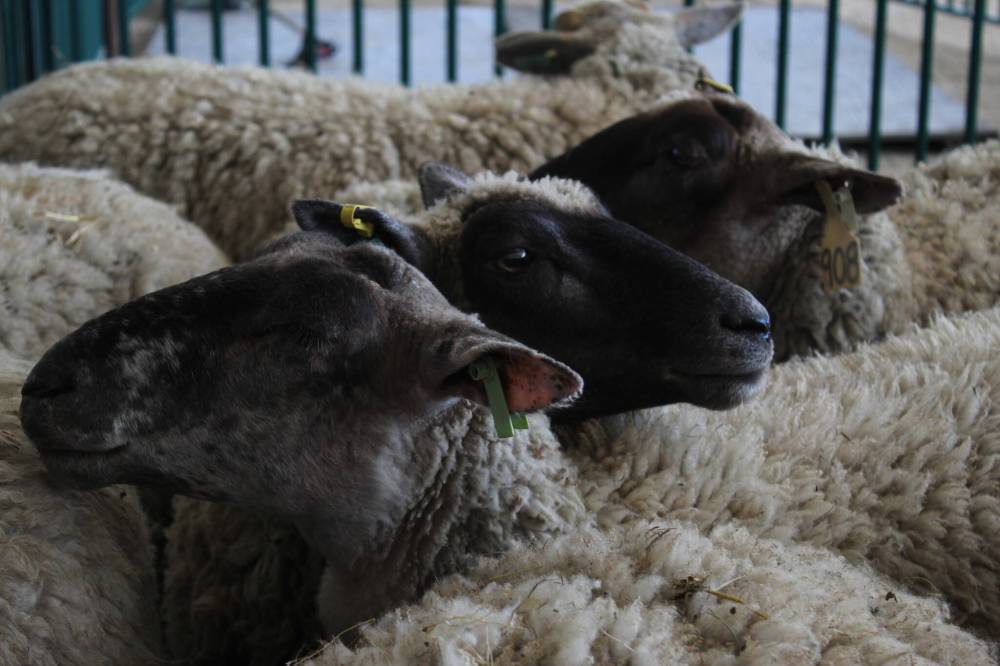
MATTHEW FRANK / THE CARILLON
Three sheep waiting to be sheared. Thinking local? Think wool for warmth.
While the 1911 Triangle Shirtwaist Factory Fire tragedy affected workers’ rights in the United States, it also did something else. As labour unions improved North American working conditions, the cost of doing business rose. Clothing production gradually left North America. There are far fewer U.S. or Canadian clothing factories today compared to the localized production that was common 100 years ago.
Supporting small businesses and buying local benefits us. This boosts the local economy. Specifically, locally produced clothing often caters to locals’ needs and the weather conditions.
Our severe climate means we need good clothing to manage in wintertime temperatures. For instance, hoodies or socks made of cotton or cotton-poly blends aren’t as breathable and don’t retain body heat the way that wool does. Beyond the parka and snowpants, a wool tuque, mitts, socks and a sweater can help us thrive outside for much longer than that hoodie.
While this might be about boosting knitting — which I heartily support — not everybody has a hand-knitter to outfit the household.
Rather, consider how to boost local manufacture of materials we’ve already got here at home.
Canada still has sheep farms. The sheep must be shorn (given a haircut) for health reasons once or twice a year. After the shearer is paid, sometimes farmers don’t break even. Since the main market is for meat (lamb), some farmers earn so little for their wool that it gets burnt or discarded rather than sold to the industrial wool pool.
Once it gets into the pool, according to the Canadian Co-operative Wool Growers Limited “China accounts for upwards of 70 per cent of Canadian wool production and the balance is marketed to the United States, India, Western Europe and domestic mills.” Most Canadian wool leaves home. Much of it doesn’t come back. We don’t grow or process anywhere near enough wool to meet our country’s needs. That coarse wool, ideal for industrial uses as well as home insulation, isn’t processed here. Even if the wool is Canadian, those finished products can be in short supply.
We also don’t grow enough fine wool to meet Canadians’ clothing preferences. Even if we did, we don’t currently have the capacity to process it.
There are some bright spots, as Canadian natural fibre lovers will mention.
There are several historic wool mills, including Custom Woolen Mills in Alberta, Briggs & Little and MacAusland’s Woollen Mill in the Maritimes, and many “mini mills” produced for farm cottage industry by Belfast Mini Mills. We have two Manitoba mini mills which keep busy processing local wool into clean fibre for hand-spinners, knitting yarn and batts for quilters. This domestic small-scale processing accounts for perhaps 10 per cent of the total Canadian wool clip.
The Campaign for Wool Canada, with patron King Charles, advocates for our wool industry. Their projects include educational documentaries, sustainability efforts, and manufacturing high-end Canadian wool products. However, without significant government and industry investment, Canada won’t bring home more of its wool production any time soon.
Practically, whatever synthetic clothing you put on might not be warm enough. It melts if there’s a fire. It won’t biodegrade like wool does. Wool is ideal for warm socks, sweaters, tuques and mitts.
Yet, these natural fibre products’ prices have skyrocketed, billed as luxury niche products. At Canadian retailers, finished wool products are scarce these days.

Consumers who buy locally grown, natural fibres can dress appropriately for the cold, but only if these woolly items are available. There are many reasons to skip fast fashion, but for warm winter comfort, natural fibres like wool can’t be beat. Wool insulation, if available, could keep our homes warm, too.
We shouldn’t have to rely on China’s international trade for this wintertime essential. Prioritize our country’s wool growers and invest in production facilities to make natural-fibre, environmentally friendly, affordable products. Someday new Canadian woollies might be available for everybody’s comfort.
The time to fix this problem is now.
In Canada, winter’s always coming.
Joanne Seiff, Winnipeg author of Knit Green, a book about sustainability for knitters, has contributed opinions and analysis to the Free Press since 2009.