

Hopes and fears for the coming year

Advertisement
Read this article for free:
or
Already have an account? Log in here »
To continue reading, please subscribe:

Digital Subscription
One year of digital access for only $205*
- Enjoy unlimited reading on winnipegfreepress.com
- Read the E-Edition, our digital replica newspaper
- Access News Break, our award-winning app
- Play interactive puzzles
*First annual payment billed as $205.00 + GST for one year. This annual subscription will automatically renew at $233.00 + GST every 52 weeks (10% off the regular annual price of $259.35). Offer available to new and qualified returning subscribers only. Cancel any time.
To continue reading, please subscribe:
Add Free Press access to your Brandon Sun subscription for only an additional
$1 for the first 4 weeks*
- Enjoy unlimited reading on winnipegfreepress.com
- Read the E-Edition, our digital replica newspaper
- Access News Break, our award-winning app
- Play interactive puzzles
*Your next Brandon Sun subscription payment will increase by $1.00 and you will be charged $17.95 plus GST for four weeks. After four weeks, your payment will increase to $24.95 plus GST every four weeks.
Read unlimited articles for free today:
or
Already have an account? Log in here »
Hey there, time traveller!
This article was published 31/12/2025 (275 days ago), so information in it may no longer be current.
New Year’s Eve has always felt like a day of reckoning — a time to reflect on what has passed in the current year — but also a time of hope and anticipation for potentially brighter days ahead.
The year we’re about to usher out has been a tumultuous one.
Wars, famine, wildfires, floods, droughts, the reoccurrence of diseases we thought were eradicated — it sounds like an excerpt from the Book of Revelation — but 2025 also brought moments of joy, triumph, shared wonder and, in Canada, even a surge of national pride.
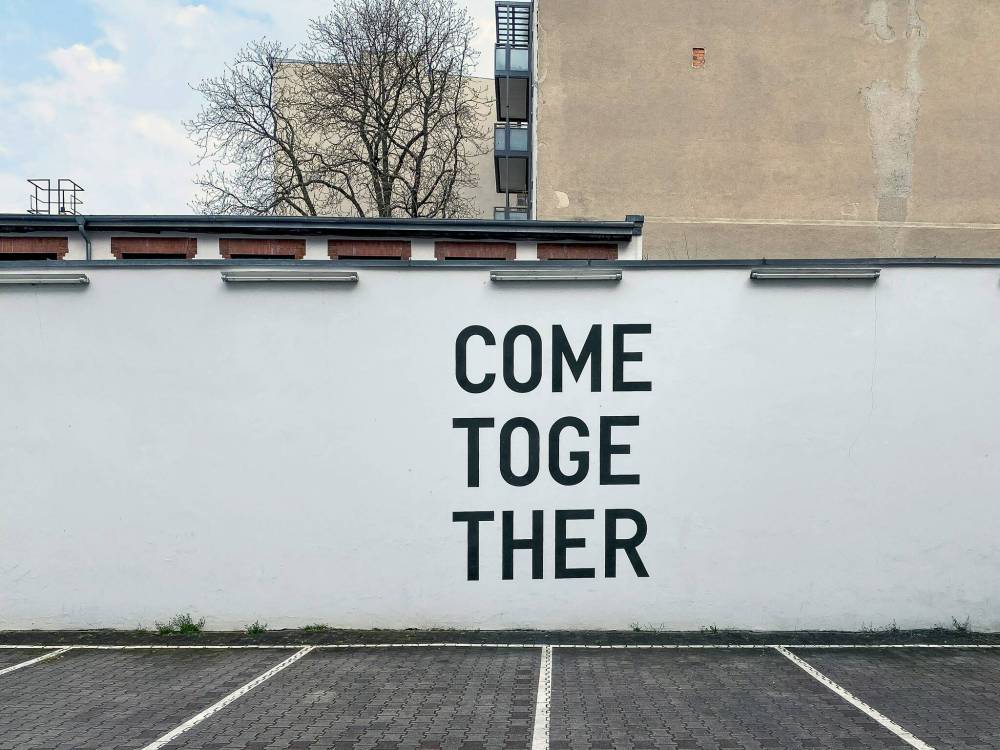
Unsplash
The Beatles’ song title’s directive is good advice at any time of year.
Technology seems to be moulding our world almost faster than we humans can keep pace. Facial and voice recognition, paying for purchases with the tap of a card, the constant haranguing of text reminders about medical appointments and prescriptions requiring pickup, the incessant requests for online feedback, the general tyranny and constant surveillance of smartphones and nanny cams — all these things have become de rigueur in just a few short years. There’s an awful lot of reaching out going on, but how much of it is authentic connection and how much just Big Tech at work?
When it comes to change, I generally roll with the punches, but there’s a lot to take in and it can be difficult to feel at peace in a world where the ground keeps shifting under our feet.
What do you hope for in the coming year? Good health? Reasonable grocery prices? A break from the banality of social media? Civility’s return to politics?
These are all things I can get behind, but the thing I long for most of all is a renewed appreciation for the importance of human interaction and connection.
Tech forecasts are awash with the promise of artificial intelligence and, undoubtedly, AI can perform complex tasks much faster than mere mortals ever could. But will it ever be a viable substitute for human connection? Does it improve our lives or diminish them?
Can chatbots offer the nuanced service that live agents can in customer service settings? Certainly not yet. Are AI companion apps truly a replacement for the challenges and intricacies and depth of feeling of real human partnerships?
Right now, I see plenty of people who seem far more connected to their smartphone than the living, breathing people sitting next to them.
I’ve been reading about deathbots and griefbots lately. They’re AI applications that let you generate — and continue to interact with — video and audio of your departed loved one.
Writing in The Lighthouse, an online publication showcasing research at Macquarie University in Sydney, Australia, Susan Skelly outlines the concept: “Based on generative AI systems that depend on a large collection of human-generated information, deathbots draw on text messages, voice messages, emails and social media posts to mimic the speech or writing of a deceased person.”
Do we really want to digitize the dead to create synthetic stand-ins for our loved ones?
As with any emerging technology, there are many ethical quandaries about mining data in an attempt to maintain bonds after a person has died, not the least of which is whether it is psychologically healthy to rely on an AI-generated version of a person as part of the grieving process. If the shortcomings of AI toys are anything to go by, there is real cause for concern that a lack of parameters could lead to manipulation and exploitation by businesses intent on profiting from human emotion.
As Skelly writes, “There has been discussion, too, about whether human-deathbot interactions could see an irreversibly lost human relationship replaced by a digitally mediated relationship with an AI system, leading to self-deception or even delusion.”
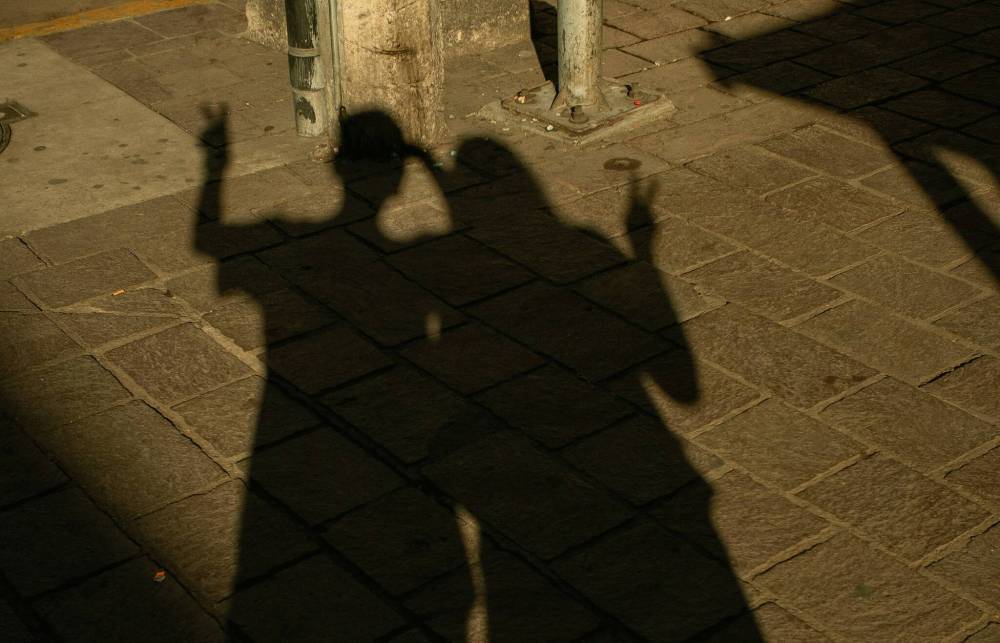
Unsplash photo
Positive human connections are important for our physical and mental health.
Which brings me back to my original wish for more face-to-face human connections in 2026.
It should come as no surprise to anyone that countries have declared epidemics of loneliness and social disconnection and are grappling with ways to combat those issues.
In 2023, then-U.S. surgeon general Dr. Vivek H. Murthy urged people to come together, for their own good and for the benefit of others.

“If we fail to do so,” he wrote, “we will pay an ever-increasing price in the form of our individual and collective health and well-being. And we will continue to splinter and divide until we can no longer stand as a community or a country. Instead of coming together to take on the great challenges before us, we will further retreat to our corners — angry, sick and alone.”
Sure, the self-serve checkout is fast and convenient, but it robs us of one more way to interact with our fellow human beings. The same goes for the so-called “community mailbox” postal service, automated office directories and no-contact package delivery.
In this new year, let’s resolve to stay in touch.
Pam Frampton lives in St. John’s.
Email pamelajframpton@gmail.com | X: @Pam_Frampton Bluesky: @pamframpton.bsky.social
Pam Frampton is a columnist for the Free Press. She has worked in print media since 1990 and has been offering up her opinions for more than 20 years. Read more about Pam.
Pam’s columns are built on facts, but offer her personal views through arguments and analysis. Every column Pam produces is reviewed by an editing team before it is posted online or published in print — part of the Free Press‘s tradition, since 1872, of producing reliable independent journalism. Read more about Free Press’s history and mandate, and learn how our newsroom operates.
Our newsroom depends on a growing audience of readers to power our journalism. If you are not a paid reader, please consider becoming a subscriber.
Our newsroom depends on its audience of readers to power our journalism. Thank you for your support.
Pam Frampton is a columnist for the Free Press. She has worked in print media since 1990 and has been offering up her opinions for more than 20 years. Read more about Pam.
Pam’s columns are built on facts, but offer her personal views through arguments and analysis. Every column Pam produces is reviewed by an editing team before it is posted online or published in print — part of the Free Press‘s tradition, since 1872, of producing reliable independent journalism. Read more about Free Press’s history and mandate, and learn how our newsroom operates.
Our newsroom depends on a growing audience of readers to power our journalism. If you are not a paid reader, please consider becoming a subscriber.
Our newsroom depends on its audience of readers to power our journalism. Thank you for your support.

Advertisement Advertise With Us
Advertisement Advertise With Us