

Maduro abduction underscores new strongman era
Advertisement
Read this article for free:
or
Already have an account? Log in here »
To continue reading, please subscribe:

Digital Subscription
One year of digital access for only $205*
- Enjoy unlimited reading on winnipegfreepress.com
- Read the E-Edition, our digital replica newspaper
- Access News Break, our award-winning app
- Play interactive puzzles
*First annual payment billed as $205.00 + GST for one year. This annual subscription will automatically renew at $233.00 + GST every 52 weeks (10% off the regular annual price of $259.35). Offer available to new and qualified returning subscribers only. Cancel any time.
To continue reading, please subscribe:
Add Free Press access to your Brandon Sun subscription for only an additional
$1 for the first 4 weeks*
- Enjoy unlimited reading on winnipegfreepress.com
- Read the E-Edition, our digital replica newspaper
- Access News Break, our award-winning app
- Play interactive puzzles
*Your next Brandon Sun subscription payment will increase by $1.00 and you will be charged $17.95 plus GST for four weeks. After four weeks, your payment will increase to $24.95 plus GST every four weeks.
Read unlimited articles for free today:
or
Already have an account? Log in here »
Hey there, time traveller!
This article was published 07/01/2026 (209 days ago), so information in it may no longer be current.
It took barely three days for U.S. President Donald Trump to put his stamp on 2026. By ordering the U.S. military to kidnap Venezuela’s president, Nicolás Maduro, he dethroned a thuggish dictator. America’s leader also shattered any lingering illusion the current international system can restrain determined actors.
Whether Venezuela and its people will ultimately benefit from Maduro’s ousting is unclear.
What is clear is that Trump’s brazen raid is being quietly celebrated by authoritarians worldwide.
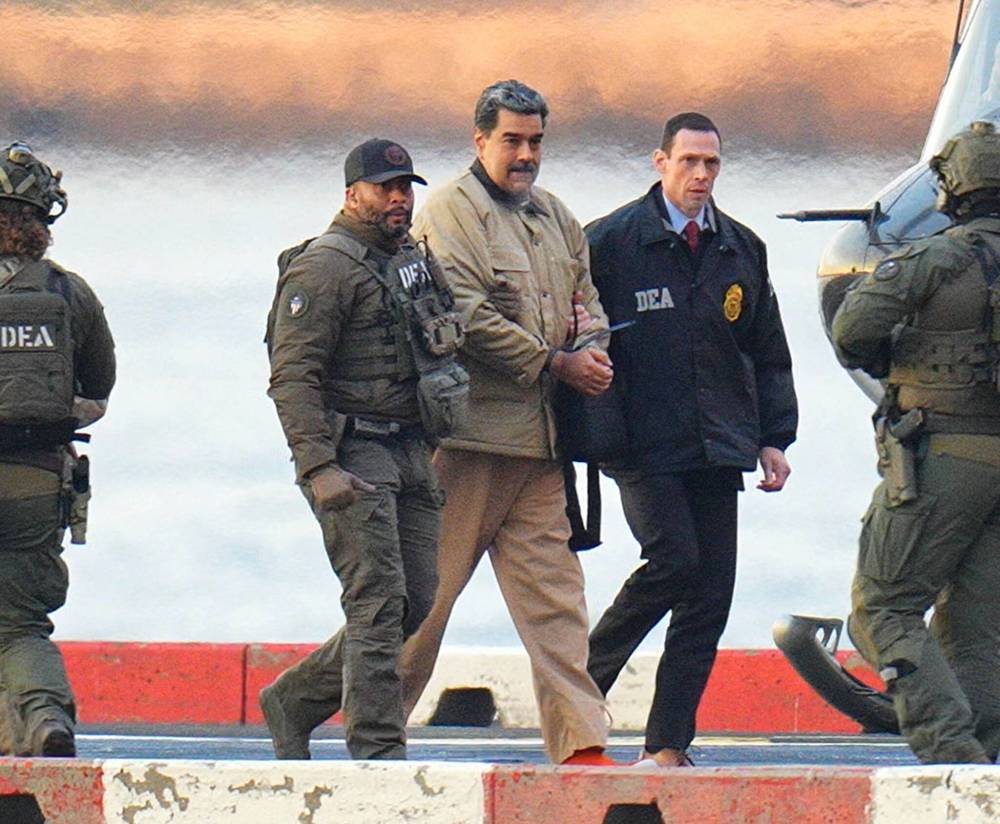
Starmax / Newscom via ZUMA Press / TNS
Venezuelan President Nicolas Maduro is escorted by federal agents en route to a federal courthouse in Manhattan after landing at a Manhattan helipad on Monday.
“However unhappy (Russian President Vladimir) Putin and (Chinese President) Xi Jinping might be about a short-term loss of their interests in Venezuela,” said Richard Haass, president emeritus of the Council on Foreign Relations, the day after Maduro was captured, “I bet they are extraordinarily happy, nodding their head, applauding.”
That’s because Trump’s actions reinforce what China and Russia view as their divine right to bully and coerce their neighbours. “That might ultimately be the biggest cost of this,” warns Haass. “We go from a world order to three regional disorders. And this is a really dangerous development.”
Maduro is a corrupt despot who deserves no sympathy. Lacking the vision, skill and charisma of his predecessor, Hugo Chavez, Maduro responded to popular anger over Venezuela’s spiralling economy by inventing foreign conspiracies and unleashing violence. United Nations investigators say dissenters have been routinely tortured and subject to crimes against humanity.
The regime’s political manoeuvres — sham constitutional reforms, electoral fraud, co-opting the supreme court, jailing opposition leaders and manipulating media — have also fuelled a unrelenting political crisis. More than eight million Venezuelans have voted with their feet by fleeing abroad.
The Trump administration now boasts about taking down a malignant tyrant. They also suggest the operation was consistent with both U.S. and international law by capturing a criminal fugitive. A Manhattan court levelled drug and weapons charges against Maduro in 2020.
And yet, “Trump and his team didn’t even try creating a coalition (of support) either at home or abroad,” writes Tom Nichols, former professor at the U.S. Naval War College. “By simply landing troops in another nation and decapitating its leadership,” he adds, “Trump has done Russia and China a great service by trashing, yet again, guardrails that limit other nations from running amok.”
The Globe & Mail editorial board declared the operation marks “the formal debut of an imperial America.”
Indeed, the erosion of international rules and global breakdown in norms has gained frightening momentum. And not only thanks to autocracies like China, Russia, Iran, North Korea and Gulf states, but also leaders in ostensible democracies such as Hungary, India, Indonesia, Israel, Turkey, the U.S. and many more.
It’s no secret that the vast, entrenched inequality caused by globalization has created a deep sense of anxiety and alienation within populations worldwide. Economic precarity and rapid social and technological change have contributed to a stark loss of faith in the democratic process. Into this gap have jumped uncompromising populists peddling fantasies about restoring the glory days.
“The rise of these strongmen — leaders who dominate their countries’ politics, shatter old norms and institutions and rely on quasi-autocratic (or purely autocratic) methods and cults of personality — isn’t a new story,” wrote international relations scholar Hal Brands in a lengthy essay last September, shortly after Trump mused that many Americans were keen on living under dictatorship.
What’s new is the cumulative effects this is starting to have for the world at large. We are seeing the emergence of “a new international system,” Brands warns, “in which highly empowered, illiberal leaders control many of the world’s mightiest, most energetic nations and use concentrated domestic authority to seek historic changes abroad.”
The consequences, he predicts, is that the status quo will be shaken up in unknowable ways — some necessary and overdue, others unpredictable and disastrous. Norms and rules meant to promote multilateralism and constrain rogue power will increasingly fall by the wayside.

Alliances between nations will also be scrambled. No longer will they fit neatly into ideological camps or reflect economic rationality but increasingly mirror the personal affinities — or animosities — between world leaders.
Overall, the quality of governance both within nations and internationally is poised to suffer. “Although every strongman styles himself a stable genius,” cautions Brands, “the truth is that illiberal leaders, especially when surrounded by sycophants, are prone to grievous errors.”
There’s grave repercussions ahead for smaller countries like Canada. Our security, influence and prosperity have for decades stemmed from channelling our interests and amplifying our values through the rules-based international order.
America snatching a foreign leader from his bedroom in the dark of night confirms those days are gone.
Kyle Volpi Hiebert is a Montreal-based political risk analyst focused on globalization, conflict and emerging technologies.
Related Articles
US seeks to assert its control over Venezuelan oil with tanker seizures and sales worldwide
Advertisement Advertise With Us
Advertisement Advertise With Us