

The idea of the museum, revisited

Advertisement
Read this article for free:
or
Already have an account? Log in here »
To continue reading, please subscribe:

Digital Subscription
One year of digital access for only $205*
- Enjoy unlimited reading on winnipegfreepress.com
- Read the E-Edition, our digital replica newspaper
- Access News Break, our award-winning app
- Play interactive puzzles
*First annual payment billed as $205.00 + GST for one year. This annual subscription will automatically renew at $233.00 + GST every 52 weeks (10% off the regular annual price of $259.35). Offer available to new and qualified returning subscribers only. Cancel any time.
To continue reading, please subscribe:
Add Free Press access to your Brandon Sun subscription for only an additional
$1 for the first 4 weeks*
- Enjoy unlimited reading on winnipegfreepress.com
- Read the E-Edition, our digital replica newspaper
- Access News Break, our award-winning app
- Play interactive puzzles
*Your next Brandon Sun subscription payment will increase by $1.00 and you will be charged $17.95 plus GST for four weeks. After four weeks, your payment will increase to $24.95 plus GST every four weeks.
Read unlimited articles for free today:
or
Already have an account? Log in here »
Hey there, time traveller!
This article was published 08/01/2026 (248 days ago), so information in it may no longer be current.
Today, as I’ve done for the past 12 years, I’ll begin my graduate seminar course The Idea of the Museum at the University of Winnipeg. It’s not a course about how to hang paintings or write gallery didactics, though those practical skills inevitably surface.
Instead, it asks more fundamental questions: Why do we build collections at all? Why do we construct buildings to house them? Why do we organize exhibitions, design programs and invite the public inside? And perhaps most importantly — who are museums for, right now?
Each year, the course changes. It has to. The museum sector is not static, and neither is the world that museums reflect and serve. What is happening in our communities, our politics, our economies and our cultural debates inevitably reshapes the classroom.
Stephen Borys
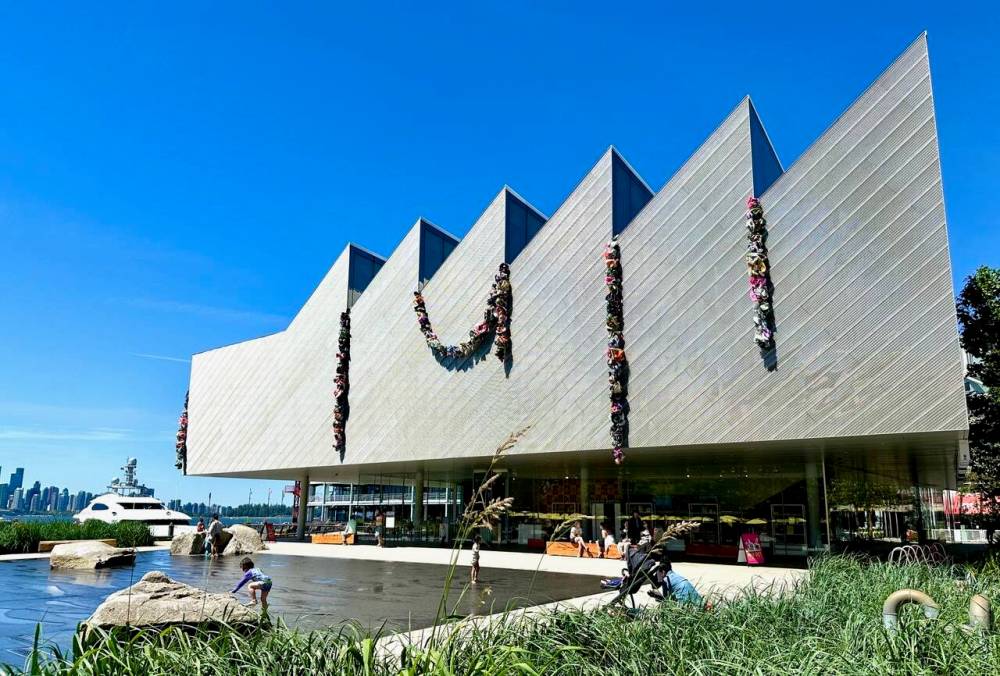
The Polygon Gallery, North Vancouver, with Coloratura installation by Tau Lewis.
So do the students themselves — emerging curators, artists, educators, activists, administrators — each arriving with different expectations and lived experiences.
The syllabus may be familiar, but the conversation never is.
In recent years, that conversation has become more urgent — and more contested. Museums are being asked, sometimes demanded, to change. Are they responding meaningfully to calls for reconciliation and decolonization? Are they dismantling outdated structures of authority, or merely rebranding them? Are they evolving fast enough to remain relevant, trusted and sustainable?
What makes The Idea of the Museum feel particularly alive for me now is how closely it mirrors my consulting work. In the classroom, we debate theory, history and policy. Outside it, I work alongside museums, community organizations, architects, academics, collectors and boards who are grappling with those same questions in real time.
Teaching and practice are no longer parallel tracks; they are deeply intertwined.
Teaching, in fact, has been a constant thread throughout my museum career — as a curator, director, board member and now consultant. I’ve always understood teaching not simply as the transmission of knowledge, but as an act of learning, of sharing and of making a difference.
Alongside The Idea of the Museum seminar at the University of Winnipeg, I also teach at the University of Manitoba. Between the two institutions, I lead courses in art history, museology, cultural studies and business. While these subjects may appear distinct, they are connected by a common concern: the study, appreciation and dissemination of art and culture.
These classrooms are where theory meets practice, and where students are encouraged to see culture not as a static inheritance, but as a living civic responsibility.
This year, the seminar has been shaped by projects I am involved with through Civic Muse Inc. My work with the National Indigenous Residential School Museum of Canada, Oseredok Ukrainian Cultural and Educational Centre, Winnipeg Architecture Foundation, the William Kurelek documentary film project, the Robert Archambeau ceramics monograph and several private collectors all feed directly back into the seminar.
These are not abstract case studies pulled from textbooks; they are living experiments in what museums and cultural organizations can be — and what they still struggle to become.
Students get a front-row seat to these debates. We talk frankly about what is working and what is not: about ambition and constraint; about governance structures that enable change — and those that quietly resist it. We examine architecture not just as shelter for collections, but as a public statement of values and sustainability. We look at exhibitions not simply as displays, but as constructive dialogue about history, identity and belonging. We examine collections — how they were formed, whose voices they amplify and whose they silence.
One of the most important dimensions of this seminar is experience. There is no substitute for museum professionals — directors, curators, educators — sharing what they have learned, including their missteps. Beyond the textbook and the PowerPoint lies a messier reality in the sector: stalled projects, underfunded ambitions, board dynamics, community mistrust and, occasionally, moments of genuine transformation. Students contemplating careers in museums deserve honesty about all of it.
That honesty is increasingly necessary. Museums today are being asked to reconcile with Indigenous and racialized communities, confront colonial legacies, rethink authority and redistribute power.

These are not boxes to be checked; they are long, complex processes that affect every aspect of an institution. Through projects like the National Indigenous Residential School Museum of Canada, we can ask what it means to take a historic building and create a new museum from the ground up — one that is community-led rather than institution-driven. With Oseredok, we can explore how cultural organizations respond to global crises while remaining rooted in local community life. With the Winnipeg Architecture Foundation, we test whether advocacy organizations can evolve to become more sustainable, relevant and impactful.
Even a book or film project can become a case study. The Archambeau monograph and the Kurelek film are not simply about documenting an artist’s work. They ask how museums, collections and critical discourse shape artistic production — and how artists, in turn, shape the institutions that collect and exhibit their work.
At its core, The Idea of the Museum is about teaching and learning as reciprocal acts. Students challenge assumptions. Practice tests theory. The course becomes a laboratory for rethinking some of the most basic components of cultural life: architecture, exhibitions, collections and — above all — the people within and beyond the museum walls.
After 12 years, I’m convinced of one thing: the museum is not a finished idea. It is a battleground of values, expectations and possibilities. And if museums are to remain relevant — indeed, necessary — they must continue to listen, to change and to imagine themselves anew, always in conversation with the communities they claim to serve.
Stephen Borys is president and CEO of Civic Muse, and former director and CEO of the Winnipeg Art Gallery.
Our newsroom depends on a growing audience of readers to power our journalism. If you are not a paid reader, please consider becoming a subscriber.
Our newsroom depends on its audience of readers to power our journalism. Thank you for your support.
Our newsroom depends on a growing audience of readers to power our journalism. If you are not a paid reader, please consider becoming a subscriber.
Our newsroom depends on its audience of readers to power our journalism. Thank you for your support.
Advertisement Advertise With Us
Advertisement Advertise With Us