

Telephone etiquette, then and now

Advertisement
Read this article for free:
or
Already have an account? Log in here »
To continue reading, please subscribe:

Digital Subscription
One year of digital access for only $205*
- Enjoy unlimited reading on winnipegfreepress.com
- Read the E-Edition, our digital replica newspaper
- Access News Break, our award-winning app
- Play interactive puzzles
*First annual payment billed as $205.00 + GST for one year. This annual subscription will automatically renew at $233.00 + GST every 52 weeks (10% off the regular annual price of $259.35). Offer available to new and qualified returning subscribers only. Cancel any time.
To continue reading, please subscribe:
Add Free Press access to your Brandon Sun subscription for only an additional
$1 for the first 4 weeks*
- Enjoy unlimited reading on winnipegfreepress.com
- Read the E-Edition, our digital replica newspaper
- Access News Break, our award-winning app
- Play interactive puzzles
*Your next Brandon Sun subscription payment will increase by $1.00 and you will be charged $17.95 plus GST for four weeks. After four weeks, your payment will increase to $24.95 plus GST every four weeks.
Read unlimited articles for free today:
or
Already have an account? Log in here »
Hey there, time traveller!
This article was published 14/01/2026 (237 days ago), so information in it may no longer be current.
I’m not one of those people who thinks that everything was better back in the day.
Indeed, changing times and advanced technologies often bring progress and added convenience.
For someone who tends to be impatient, like me, near field communication — also known as tap technology — is a godsend for shopping, allowing me to touch my credit or debit card to a contactless payment terminal, collect my purchases and be on my way. It seems like eons ago that I handed over cash and waited for the clerk to count out the change.
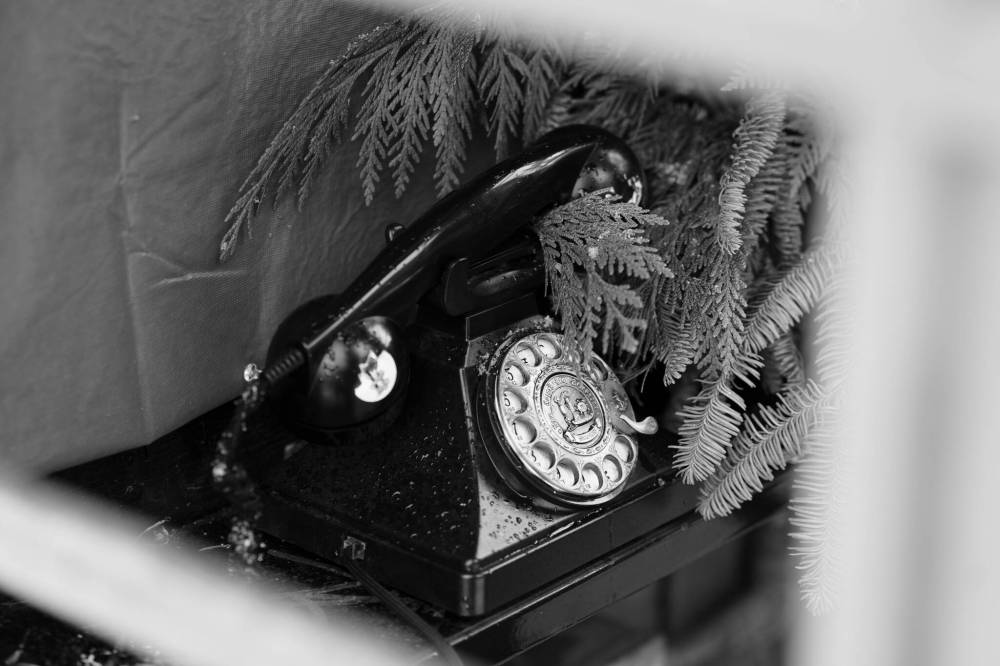
Josh Marty / Unsplash
Even in its infancy, the telephone could bring out the worst in us.
But availing of new technologies doesn’t mean we should forget we are sharing the planet with other humans. Just because you can make contactless transactions doesn’t mean you shouldn’t still be courteous to the cashier in the grocery store or the sales associate at the mall or the Salvation Army member collecting for the Christmas kettle. And just because you are talking in public to someone on the phone doesn’t mean you are closeted away in a phone booth for privacy, as in days of old.
Given the ubiquity of cellphones, how they have insinuated themselves into our lives and embedded themselves there, it’s no surprise that the lack of etiquette surrounding their use is a common pet peeve.
People who would have never dreamt of having a phone conversation in public 20 years ago now have no problem gabbing away on their cellphones in the middle of a crowded place about their gallbladder attacks, their cat’s urinary output, or the merits of buying personal hygiene products in bulk at Costco.
Now, anything goes. People are figuratively letting it all hang out on their phones in emergency waiting rooms, on hospital wards, in shopping malls, workplaces, on buses and trains, on street corners and in public washrooms.
And they’re not just having casual conversations, they’re haranguing ex- and current partners, chastising the kids, arguing with service providers and running down their colleagues. You can hear it all.
And, because cellphones are multifunctional, people in public are also playing video games on top volume, listening to their pets bark excitedly on doggie daycare cams, taking photos of restaurant interiors and their food, texting and taking calls in movie theatres, and holding their phones aloft and capturing video during live performances — thereby blocking the view of the people directly behind them.
In short, the cellphone is both useful and a menace.
But it has ever been thus.
A century ago, the Alexander Graham Bell-invented telephone was finding its way into North American homes and was also quickly becoming a nuisance.
Even in those relatively early days of the telephone’s use, American etiquette maven Virginia Van der Water was lamenting the fact that the device had become so commonplace that people were shortening its name.
“It is better not to speak of calling a friend on the ‘phone,’ though through usage the abbreviation may have become colloquially correct,” she admonishes.
In her book Present Day Etiquette, published in 1924, she decries the vulgar manners displayed by many people making phone calls, who in other circumstances, were considerate and courteous.
“Calling one day on a woman whom I had met with pleasure half a dozen times,” Van der Water confides, “I was the unwilling listener to her conversation with her grocer.”
It seems the woman was upset that the grocery store had sent a substitute for the kind of apples she had ordered and was further vexed because she had been charged for a five-cent box of matches that she had not asked for.
“With regard to all of which she expostulated shrilly and with numerous exclamations that were as near as she dared come to masculine explosives — such as ‘Great heavens!’ ‘Goodness gracious!’ and so forth…,” Van der Water writes.
“That the ways of telephones and the persons who operate them are sometimes trying, no one can deny… It is nothing less than a habit, and a pernicious one — this way we have of talking into the transmitter. Let us remember that courtesy pays better than curses, and politeness better than profanity.”
One can only imagine how a person of Virginia Van de Water’s delicate sensibilities would react to today’s relaxed conventions, when you could easily find yourself on a bus or train where the person in the seat in front of you is using their cellphone to watch porn.

But perhaps Van de Water was made of sturdier stuff than we think. After all, life really does seem to mirror those lines from the Old Testament’s book of Ecclesiastes:
What has been will be again,
what has been done will be done again;
there is nothing new under the sun.
Pam Frampton lives in St. John’s. Email pamelajframpton@gmail.com | X: @Pam_Frampton | Bluesky: @pamframpton.bsky.social
Pam Frampton is a columnist for the Free Press. She has worked in print media since 1990 and has been offering up her opinions for more than 20 years. Read more about Pam.
Pam’s columns are built on facts, but offer her personal views through arguments and analysis. Every column Pam produces is reviewed by an editing team before it is posted online or published in print — part of the Free Press‘s tradition, since 1872, of producing reliable independent journalism. Read more about Free Press’s history and mandate, and learn how our newsroom operates.
Our newsroom depends on a growing audience of readers to power our journalism. If you are not a paid reader, please consider becoming a subscriber.
Our newsroom depends on its audience of readers to power our journalism. Thank you for your support.
Pam Frampton is a columnist for the Free Press. She has worked in print media since 1990 and has been offering up her opinions for more than 20 years. Read more about Pam.
Pam’s columns are built on facts, but offer her personal views through arguments and analysis. Every column Pam produces is reviewed by an editing team before it is posted online or published in print — part of the Free Press‘s tradition, since 1872, of producing reliable independent journalism. Read more about Free Press’s history and mandate, and learn how our newsroom operates.
Our newsroom depends on a growing audience of readers to power our journalism. If you are not a paid reader, please consider becoming a subscriber.
Our newsroom depends on its audience of readers to power our journalism. Thank you for your support.
Advertisement Advertise With Us
Advertisement Advertise With Us