

Budget 2026 must have climate action funding
Advertisement
Read this article for free:
or
Already have an account? Log in here »
To continue reading, please subscribe:

Digital Subscription
One year of digital access for only $205*
- Enjoy unlimited reading on winnipegfreepress.com
- Read the E-Edition, our digital replica newspaper
- Access News Break, our award-winning app
- Play interactive puzzles
*First annual payment billed as $205.00 + GST for one year. This annual subscription will automatically renew at $233.00 + GST every 52 weeks (10% off the regular annual price of $259.35). Offer available to new and qualified returning subscribers only. Cancel any time.
To continue reading, please subscribe:
Add Free Press access to your Brandon Sun subscription for only an additional
$1 for the first 4 weeks*
- Enjoy unlimited reading on winnipegfreepress.com
- Read the E-Edition, our digital replica newspaper
- Access News Break, our award-winning app
- Play interactive puzzles
*Your next Brandon Sun subscription payment will increase by $1.00 and you will be charged $17.95 plus GST for four weeks. After four weeks, your payment will increase to $24.95 plus GST every four weeks.
Read unlimited articles for free today:
or
Already have an account? Log in here »
Hey there, time traveller!
This article was published 21/01/2026 (228 days ago), so information in it may no longer be current.
The past year’s record-breaking wildfires and drought have brought climate-change impacts to the fore in Manitoba. In response, the new provincial climate strategy, Manitoba’s Path to Net Zero, pledges to legislate emissions targets, decarbonize government operations, achieve a net-zero electricity grid by 2035, and advance other commitments to reduce emissions across sectors.
But how far these promises go in pulling Manitoba’s weight in the collective climate fight will depend on how swiftly they are prioritized and adequately funded — starting in the upcoming spring budget. Manitoba cannot afford to balance today’s budget by offloading more costs and irreversible losses onto the next generation.
Climate change is already carving into the province’s bottom line. In the past year alone, the costs of $324 million in wildfire response and $684 million in Manitoba Hydro drought-related losses ballooned the provincial deficit, underscoring the staggering toll of inaction.
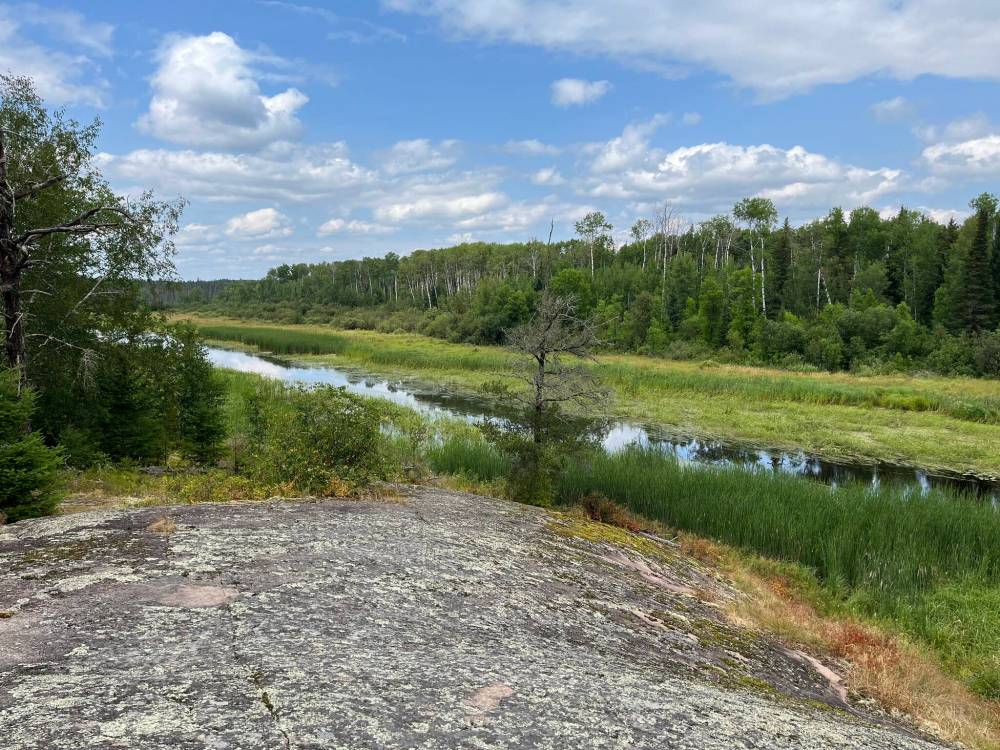
Russell Wangersky/Free Press
Protecting Manitoba’s environment takes money, not just words.
Of course, Manitoba is not alone; governments and communities the world over are grappling with escalating climate costs.
A recent Climate Central report found the number of “billion-dollar climate disasters” in the U.S. has skyrocketed, with over 23 such events last year costing a total of US$115 billion in damages. In Canada, insured losses from severe weather events nearly tripled in 2024 compared to the previous year, totalling a record $9 billion, according to the Insurance Bureau of Canada.
It is ultimately far more cost-effective — not to mention essential for protecting health and saving lives — to scale up climate action investments now. Experts estimate that decarbonizing the economy, remaining competitive in the energy transition, and preparing for climate impacts will require an annual investment of about two per cent of GDP. For Manitoba, that translates to roughly $1.4 billion a year — an investment with enormous potential to create jobs, drive low-carbon growth, and build long-term resilience. Public investments can be deployed faster, provide more local jobs, and be more cost-effective than private projects.
Among the many investments that are sorely needed, there are three areas of low-hanging fruit with abundant benefits for Manitobans: public transit, energy demand reductions, and clean electricity.
While in opposition, the NDP repeatedly advocated for reinstating the 50/50 transit funding model. Following the PC freeze to dedicated provincial support in 2017, then-MLA Wab Kinew argued that “any credible plan to fight climate change has to include investments in transit.”
The Path to Net Zero promises to “work with municipalities to expand public and regional transit systems.” Now in the third year of this government’s mandate, their spring budget must make good on this core pledge and reinstate the dedicated funding for transit operations, as called for by many municipalities across the province. Amid the public outcry surrounding Winnipeg’s new transit system, improved and expanded operations can’t come too soon.
A second essential investment to reduce emissions while easing costs is a major expansion of energy efficiency and demand management programs. These investments would reduce peak electricity demand, lessening the need for expensive new generating capacity such as the proposed $3-billion fossil gas-fired power plant.
Efficiency Manitoba reduced peak demand by 51 megawatts (MW) for $68 million in 2024/25 — far more cost-effective than new gas power — while in the same period saving Manitobans over $15 million on their energy bills.

These programs should be scaled up through a doubling of Efficiency Manitoba’s budget in the coming year. This should be paired with a focus on retrofitting and installing ground-source heat pumps in government-owned buildings like schools and hospitals, and strengthening building codes this legislative session.
Third, Manitoba needs to grow investment in renewables and energy storage to enable electrification of transportation, heating, and industry. In particular, pairing wind power with battery energy storage would maximize firm capacity while advancing the government’s commitment to a fully clean grid by 2035. The province should work with Manitoba Hydro to develop a plan to build at least 200 MW of battery energy storage by 2030, likely to cost around $500 million.
There is no doubt that the global context surrounding climate policy is rapidly changing. But while the world stands shocked at Trump’s moves to retrench fossil fuel dependence through U.S. global power and imperial reach, momentum on the energy transition continues to build in parts of Europe and Asia. Despite our sabotaging southern neighbour, investing in climate action still makes sense: it keeps Manitoba competitive in a shifting global economy, while creating good jobs, building resilience, and protecting the places we love for our children.
We cannot afford another climate plan that sits on the shelf, lacking the resources to meaningfully reduce emissions. In Budget 2026, Manitoba must choose decisive, ambitious climate action.
Laura Cameron is director of programs and strategy with Climate Action Team Manitoba.