

Who is next on Trump’s hemispheric hit list?
Advertisement
Read this article for free:
or
Already have an account? Log in here »
To continue reading, please subscribe:

Digital Subscription
One year of digital access for only $205*
- Enjoy unlimited reading on winnipegfreepress.com
- Read the E-Edition, our digital replica newspaper
- Access News Break, our award-winning app
- Play interactive puzzles
*First annual payment billed as $205.00 + GST for one year. This annual subscription will automatically renew at $233.00 + GST every 52 weeks (10% off the regular annual price of $259.35). Offer available to new and qualified returning subscribers only. Cancel any time.
To continue reading, please subscribe:
Add Free Press access to your Brandon Sun subscription for only an additional
$1 for the first 4 weeks*
- Enjoy unlimited reading on winnipegfreepress.com
- Read the E-Edition, our digital replica newspaper
- Access News Break, our award-winning app
- Play interactive puzzles
*Your next Brandon Sun subscription payment will increase by $1.00 and you will be charged $17.95 plus GST for four weeks. After four weeks, your payment will increase to $24.95 plus GST every four weeks.
Read unlimited articles for free today:
or
Already have an account? Log in here »
Hey there, time traveller!
This article was published 26/01/2026 (237 days ago), so information in it may no longer be current.
Now that Venezuelan President Nicolás Maduro has been ousted, no one should be surprised to see U.S. President Donald Trump turn his hegemonic sights elsewhere in the hemisphere. The only question that remains is: where will it all stop?
We’ve heard a lot of chatter out of Washington about democratic Greenland’s fate. There is no hiding the fact that Trump has coveted Greenland for a long time — and he doesn’t appear to be bluffing this time around. He has repeatedly stated that the U.S. needs Greenland for national security purposes.
Perhaps there is a tentative “framework agreement” on Greenland now. But who can be sure about this U.S. president?
Mandel Ngan/Pool Photo via AP
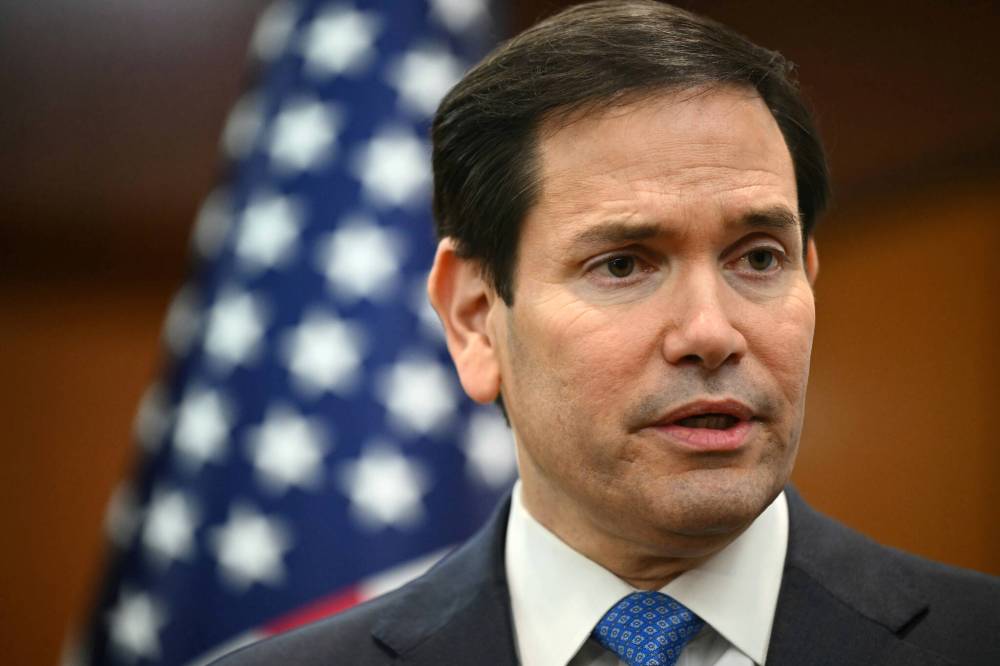
Who’s the next U.S. target in the western hemisphere? If U.S. Secretary of State Marco Rubio gets to pick, it might well be Cuba.
Add to that U.S. homeland security adviser Stephen Miller’s stunning comments on CNN in early January about what lies in store for Greenland: “The president has been clear for months that the United States should be the nation that has Greenland as part of our overall security apparatus.” He then went on to intone angrily: “Nobody is going to fight the United States military over the future of Greenland.”
White House Press Secretary Karoline Leavitt also issued an astonishing statement about the semi-autonomous island: “The president and his team are discussing a range of options to pursue this important foreign policy goal, and of course, utilizing the U.S. military is always an option at the Commander in Chief’s disposal.” Will Trump really let go of all of this?
Some commentators in Canada are even warning that this country could face “military coercion” from the U.S.
Former Canadian ambassador to the UN Bob Rae cut right to the point in a recent interview: “I think the challenges we face are existential. And I think Canadians need to understand that our neighbour has desires and ambitions and goals under the current administration that no other administration in American history has had — and that this poses a genuine challenge for all Canadians and for the future of our country.”
But one shouldn’t just stop at Trump’s targeting of Greenland and Canada. There are far bigger fish to fry in the Americas — namely, Mexico, Colombia and Cuba.
Indeed, a Jan. 6 U.S. State Department social media post doesn’t mince words: “This is our hemisphere and President Trump will not allow threats to our security.” Two days earlier, U.S. Secretary of State Marco Rubio issued a similar statement: “This is the Western hemisphere. This is where we live — and we will not allow the Western Hemisphere to become an operational base for adversaries, competitors and rivals of the United States.”
In another interview with NBC News in the wake of Maduro’s removal, Rubio couldn’t remain tight-lipped about his real objective. He was emphatic that the Cuban political leadership ought to be worried about its own survival.
“I think they’re in a lot of trouble, yes. I’m not going to talk to you about what our future steps are going to be right now in this regard,” he said ominously. “But I don’t think it’s any mystery that we are not big fans of the Cuban regime, who, by the way, are the ones that were propping up Maduro.”
In terms of cocaine-producing Colombia, the Trump administration has absolutely no time for the left-leaning government of Gustavo Petro. Even though he is constitutionally barred from seeking a second term in 2026 and will be gone by August, Trump has personalized matters and would love to see Petro gone yesterday.
In his own words: “Colombia is very sick, too, run by a sick man, who likes making cocaine and selling it to the United States and he’s not going to be doing it very long.”
More disturbing have been Trump’s disrespectful comments about sending in U.S. military forces to crush the drug cartels inside Mexico and to stop the flow of drugs coming across the border. “Mexico has to get their act together, because they’re (drugs) pouring through Mexico. And we’re going to have to do something,” he stated bluntly.

What is clear from all of this menacing behaviour is that Marco Rubio is actually the one driving the hemispheric bus. That is partly why I believe that the attack against Maduro’s Venezuela was really about destabilizing the Cuban government. Rubio is dying to claim that he was the one who finally slayed “communist Cuba” and Fidelismo.
The other part of all of this sabre-rattling is to deflect attention away from Trump’s political difficulties: poll numbers that are underwater, a slumping U.S. economy and serious affordability issues and the ever-present Epstein files. Another part of it has to do with Trump’s authoritarian bent and his desire to look tough, to silence dissent and undermine democratic impulses and to seek additional territorial gains.
Of course, no one can say for sure whether all of these threats and presidential bluster will amount to anything substantive. Maybe it is just loose talk. I have my doubts, though.
But we should all remember what the gifted author Maya Angelou once said: “When someone shows you who they are, believe them the first time.”
Peter McKenna is professor of political science at the University of Prince Edward Island in Charlottetown.
Related Articles
House Republicans barely defeat Venezuela war powers resolution to check Trump’s military actions
Advertisement Advertise With Us
Advertisement Advertise With Us