

The issue of creeping health-care privatization
Advertisement
Read this article for free:
or
Already have an account? Log in here »
To continue reading, please subscribe:

Digital Subscription
One year of digital access for only $205*
- Enjoy unlimited reading on winnipegfreepress.com
- Read the E-Edition, our digital replica newspaper
- Access News Break, our award-winning app
- Play interactive puzzles
*First annual payment billed as $205.00 + GST for one year. This annual subscription will automatically renew at $233.00 + GST every 52 weeks (10% off the regular annual price of $259.35). Offer available to new and qualified returning subscribers only. Cancel any time.
To continue reading, please subscribe:
Add Free Press access to your Brandon Sun subscription for only an additional
$1 for the first 4 weeks*
- Enjoy unlimited reading on winnipegfreepress.com
- Read the E-Edition, our digital replica newspaper
- Access News Break, our award-winning app
- Play interactive puzzles
*Your next Brandon Sun subscription payment will increase by $1.00 and you will be charged $17.95 plus GST for four weeks. After four weeks, your payment will increase to $24.95 plus GST every four weeks.
Read unlimited articles for free today:
or
Already have an account? Log in here »
Hey there, time traveller!
This article was published 29/01/2026 (253 days ago), so information in it may no longer be current.
Privatization by stealth occurs in many ways within our public health care systems across Canada.
For Manitoba, reliance on private, for-profit agencies to fill staffing vacancies in the public system is one of the most significant forms of this phenomenon.
This practice funnels public dollars into private, for-profit companies.
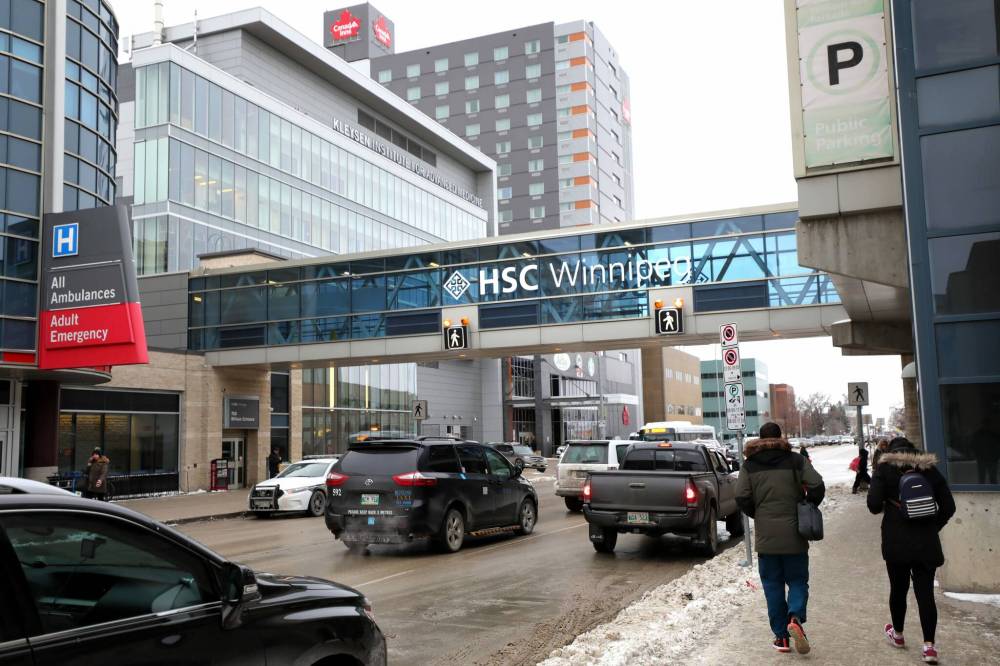
FILE/RUTH BONNEVILLE / WINNIPEG FREE PRESS
The Health Science Centre in Winnipeg.
It is also not cost-effective.
For nursing alone, the cost of using private agency staff has risen sharply over the past few years, from $26.9 million in 2020-21 up to $80 million in 2024-25. By the end of October, another $34 million had already been spent on agency nurses for the 2025/26 fiscal year.
This is money that could be better spent investing in the public system, through educational subsidies, workplace safety improvements, increased staffing ratios, and efforts to boost retention and promote recruitment. Importantly, relying on these private agencies does not add capacity to the system overall or provide better service to Manitobans. It just redistributes that capacity from the public to the private, for-profit provision of care.
Using public health-care funding to support for-profit, private agencies has other costs as well — with evidence consistently showing that worse patient outcomes result from reliance on such private agencies.
Ultimately, stealth privatization threatens the universality of public health care by introducing the profit motive to our systems of care.
Eliminating health-care privatization will take political will. Ongoing pressure from advocates who believe in universal health care is needed to help generate that political will and hold governments accountable.
Although they have made many public commitments to combat privatization, the NDP have only recently begun to take concrete steps to reduce reliance on private, for-profit agency spending.
Thus far, the main focus has been on reducing reliance on agency nurses. After a call for proposals and a vetting process, the province initially reduced the number of private nursing agencies they will work with from almost 80 down to just four.
Despite inadequate planning, this change was implemented on Jan. 15, quickly causing chaos in some rural hospitals that have come to rely on agency staffing to fill vacancies in the public system. As a result, the government has backtracked — allowing for health regions to continue to contract with other agencies in the short term.
This is not a sign privatization is necessary — only that it has become deeply integrated into our public system. Successfully eliminating privatization requires investment in the public system and must be carefully planned and executed. It is crucial that rural and remote communities are not left without the health-care services they need while the government moves away from costly and ineffective reliance on private, for-profit agencies to fill the gaps.
To ensure the transition away from agency use is successful and does not leave patients without full access to care, resources must flow to public solutions like the Provincial Travel Nurse Team. Incentives to work in rural and remote communities, and greater educational opportunities are also needed for all health care workers. Better co-ordination for travel nurse teams, greater flexibility in scheduling, and improved working conditions and culture are some of the key efforts that are needed to draw nurses and other workers back into the public system.
It is also crucial that this work does not stop with nursing or lead only to the consolidation of privatization through ongoing reliance on a smaller set of private agencies. Eliminating reliance on for-profit agencies to fill staffing vacancies in health care must extend to other health care staff, including health-care aides, paramedics and home care workers.
This government must ensure that there are opportunities for workers to be educated and trained to fill vacancies. This would enable people to stay within their existing communities and fill gaps in care, no matter what part of the province they live in.

At the Manitoba Health Coalition, we want to keep profit out of health care and believe public dollars should be used to strengthen our public system, not pad the profit margins of private companies. Reducing reliance on agency staffing for nursing is a good step — but it must go further. The goal should be to eliminate all public funding to support private, for-profit delivery of health care across all regions and health care professions.
Privatization cannot become the new normal, or accepted simply because it enters the public system by stealth. We need public solutions, not private stopgaps that create greater downstream costs in terms of worsened health outcomes and turn public dollars into private profits.
As other provinces like Alberta open their doors for privatized, two-tier medicine, Manitoba must stand firm and do more to invest in our public system, not private profits.
We cannot allow further privatization to take root and threaten the public health care system we all rely on.
Noah Schulz is the provincial director of the Manitoba Health Coalition.