

Convincing railways to cut down on urban noise
Advertisement
Read this article for free:
or
Already have an account? Log in here »
To continue reading, please subscribe:
Monthly Digital Subscription
$1 per week for 24 weeks*
- Enjoy unlimited reading on winnipegfreepress.com
- Read the E-Edition, our digital replica newspaper
- Access News Break, our award-winning app
- Play interactive puzzles
*Billed as $4.00 plus GST every four weeks. After 24 weeks, price increases to the regular rate of $19.95 plus GST every four weeks. Offer available to new and qualified returning subscribers only. Cancel any time.
Monthly Digital Subscription
$4.99/week*
- Enjoy unlimited reading on winnipegfreepress.com
- Read the E-Edition, our digital replica newspaper
- Access News Break, our award-winning app
- Play interactive puzzles
*Billed as $19.95 plus GST every four weeks. Cancel any time.
To continue reading, please subscribe:
Add Free Press access to your Brandon Sun subscription for only an additional
$1 for the first 4 weeks*
*Your next subscription payment will increase by $1.00 and you will be charged $16.99 plus GST for four weeks. After four weeks, your payment will increase to $23.99 plus GST every four weeks.
Read unlimited articles for free today:
or
Already have an account? Log in here »
Rail relocation and a Canadian National Railway derailment have both been recent news.
Trains are also noisy. Large diesel engines, whistles from time to time, shunting cars and metal cars of various configurations supported by steel wheels running on steel rails. Imperfection in the rails results in excessive noise from the wheel/rail interface.
The following is a snapshot of a 14-year regulatory process to minimize noise from the CN St. James junction in the River Heights area, with initial success, and then failure experienced.
Submitted/Larry Strachan
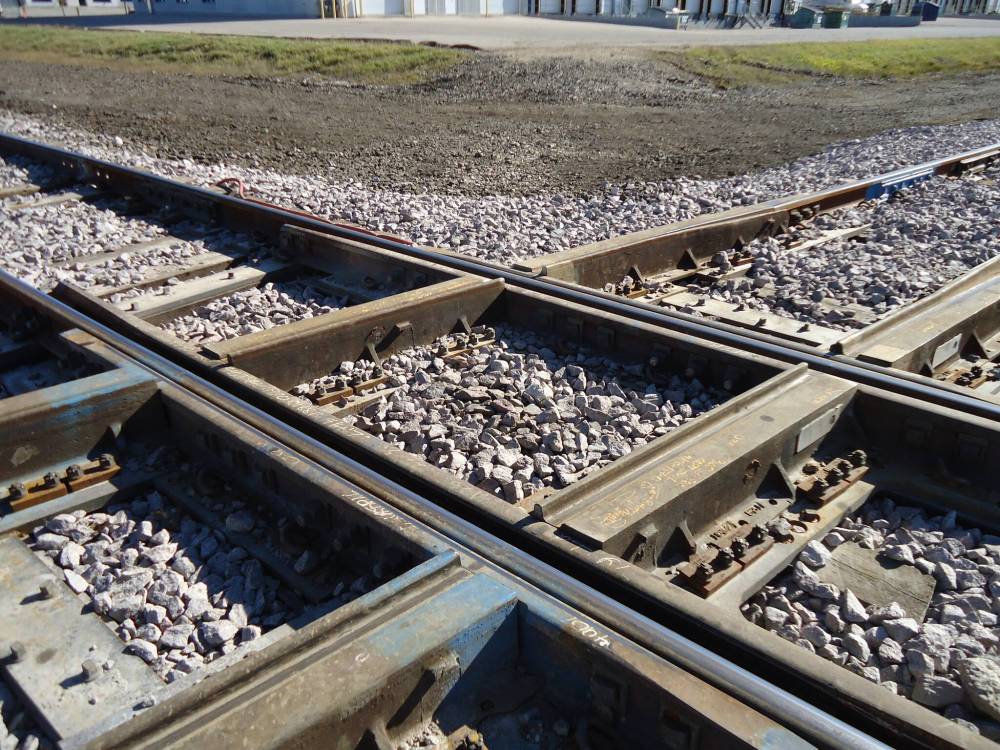
A One-Way-Low Speed Junction for crossing rail lines.
The junction serves two east/west CN tracks (north and south) and one north/south Canadian Pacific Kansas City track. In 2011, a complaint was filed with CN about excessive noise from the junction.
After a short investigation CN dismissed the complaint, so a complaint was filed with the regulator, the Canadian Transportation Agency. After discussion, CN agreed to a mediation process chaired by the agency to address the noise issue.
The process resulted in CN agreeing to replace the existing junction with a one-way-low speed junction. The change allows the CN trains to pass through the junction on continuous rails that have no joints or barriers to create excessive noise. The CPKC trains “lift” over the CN rail tracks at low speed by way of wheel bearing flanges.
The low-speed junction was installed in 2014, noise was reduced significantly and the community was happy.
Success.
In 2019, noise increased significantly from the junction.
On-site observation revealed that the continuous rails in the junction were damaged with wheel grooves and depressions as the wheel bearing flanges to lift the CPKC trains over the CN tracks were worn, and the CPKC train wheels were impacting the CN tracks.
A complaint was filed with CN.
The complaint was dismissed by CN, so a complaint was again filed with the agency. The transportation agency tried to engage with CN, but CN refused to engage, so the agency invoked its adjudication process.
The process pits residents against the legal might of CN. It is slow and time-consuming. The transportation agency does not conduct a site inspection, but relies on exchange of information and rebuttal from the parties to make decisions.
The adjudication process eventually resulted in an order from the agency that required CN to identify parts to be replaced in the low-speed junction, to install the replacement parts and to conduct noise monitoring before and after installation of the replacement parts.
CN identified the parts of the low-speed junction to be replaced, including the continuous rails, but the parts were not installed. CN conducted some maintenance at the junction focusing on the south track, installed some parts on the south track and undertook grinding of the damaged continuous rails on both tracks to smooth them out. Not much change was evident on the north track.
Before and after noise monitoring was carried out, but was restricted to when trains were passing on the south track of the junction.
Photo evidence that showed the damaged continuous rails were still in place was submitted, but the agency accepted the CN maintenance and monitoring and adjourned the adjudication process. An appeal via a petition to the governor in council to vary or rescind the agency’s decision to adjourn the adjudication process was submitted.
Compelling photo and video evidence was submitted with the petition. In November 2025, the governor in council, on the recommendation of the minister of transport, dismissed the petition.
Failure.
The regulatory process to address a simple noise complaint was exhausting and frustrating. The cause and remedy of the noise was obvious.
Why does the federal agency not conduct site inspections?
CN claims to support the communities in which it operates, and that reducing noise and vibration is one of their top priorities. In our experience with the St. James junction, when a noise complaint is filed their strategy is to dismiss, delay, deny and lie.
The agency ordered CN to replace all the identified parts of the low-speed junction in 2023. CN refused and the agency did not take any regulatory action, and then adjourned the adjudication process based on CN maintenance work and partial part installation on the south track, grinding of the rails to smooth them out and no noise monitoring of trains passing on the north track.

Why did the agency fail to enforce its order to require CN to replace all the parts in the junction? Why did CN restrict noise monitoring to south track trains only? Why did the agency not require monitoring of the north track trains? Compelling photo and video evidence submitted with the petition showed that the damaged continuous rails in the low-speed junction were still in place and that excessive noise from passing CN trains was still present, especially from those on the north track of the junction.
The governor in council and the transport minister did not agree with the compelling evidence submitted, but did not offer any explanation. Are they just protecting their own regulator?
The noise in the community remains. CN’s attitude to public noise and other complaint needs to change.
The regulatory process needs to change.
Larry Strachan is a retired professional engineer with experience in environmental protection.