

When a governor general said no to a prime minister
Advertisement
Read this article for free:
or
Already have an account? Log in here »
To continue reading, please subscribe:

Digital Subscription
One year of digital access for only $205*
- Enjoy unlimited reading on winnipegfreepress.com
- Read the E-Edition, our digital replica newspaper
- Access News Break, our award-winning app
- Play interactive puzzles
*First annual payment billed as $205.00 + GST for one year. This annual subscription will automatically renew at $233.00 + GST every 52 weeks (10% off the regular annual price of $259.35). Offer available to new and qualified returning subscribers only. Cancel any time.
To continue reading, please subscribe:
Add Free Press access to your Brandon Sun subscription for only an additional
$1 for the first 4 weeks*
- Enjoy unlimited reading on winnipegfreepress.com
- Read the E-Edition, our digital replica newspaper
- Access News Break, our award-winning app
- Play interactive puzzles
*Your next Brandon Sun subscription payment will increase by $1.00 and you will be charged $17.95 plus GST for four weeks. After four weeks, your payment will increase to $24.95 plus GST every four weeks.
Read unlimited articles for free today:
or
Already have an account? Log in here »
Hey there, time traveller!
This article was published 09/02/2026 (227 days ago), so information in it may no longer be current.
In our constitutional monarchy, which has evolved over many centuries, the governor general, who represents the Crown (currently King Charles) as Canada’s head of state, “acts on the advice of the head of government but has the right to advise, encourage and warn… (and) can offer valued counsel to the prime minister,” according to the Governor General of Canada’s website.
Hence, on March 24, 2025, 10 days after Mark Carney was sworn in as prime minister, he advised Gov. Gen. Mary Simon that he wished to dissolve Parliament and hold a general election. While there are no official transcripts of conversations between governor generals and prime ministers, it is safe to assume the discussion was pleasant and short. Simon immediately granted Carney’s request and the general election was held on April 28.
Only once since 1867 has a governor general refused a prime minister’s request for the dissolution of Parliament. That was 100 years ago and an intense and controversial melodrama ensued that led to a clarification of the governor general’s role.
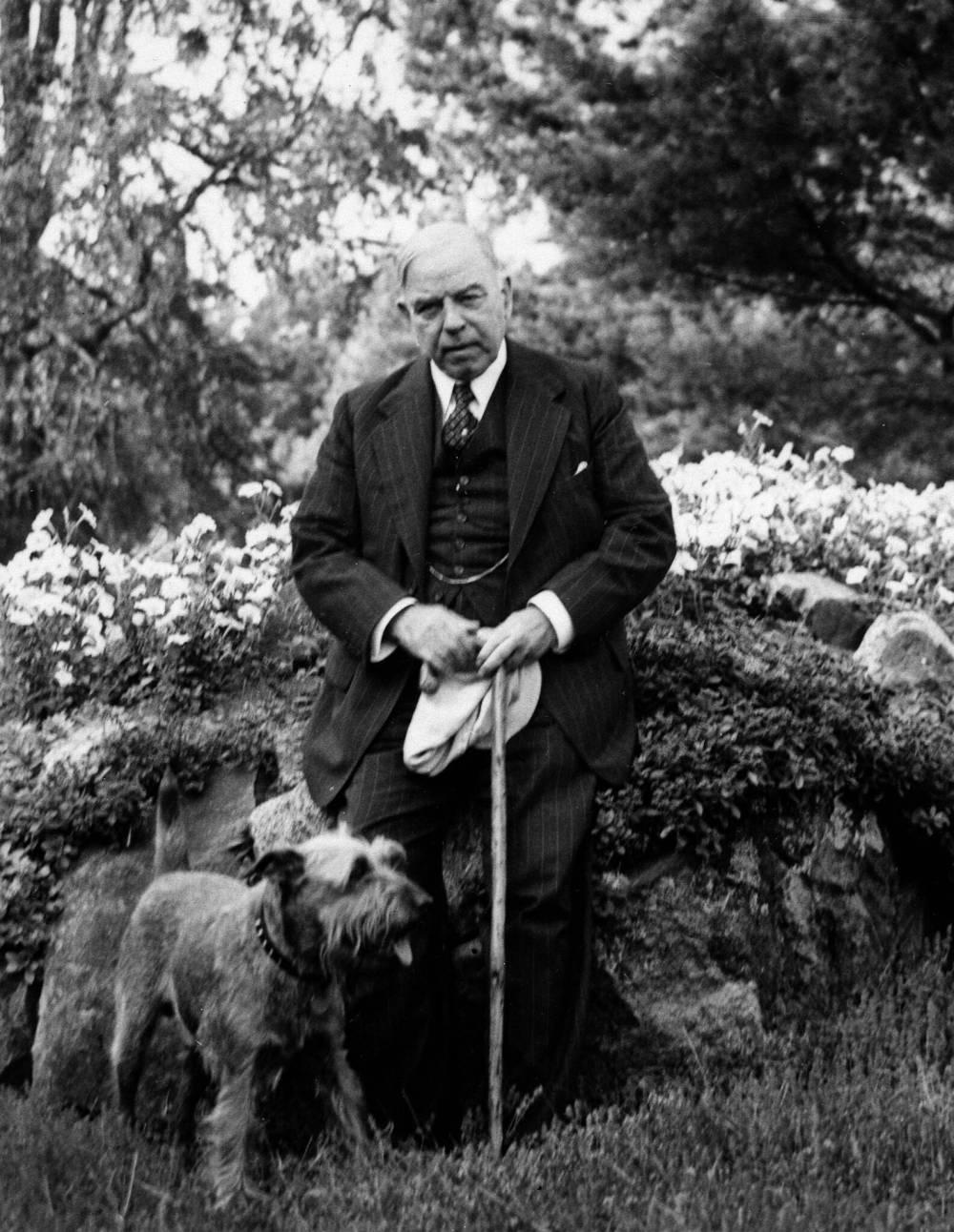
CP PHOTO / National Archives of Canada
William Lyon Mackenzie King and his dog Pat. King believed he had the right of the ‘King-Byng Affair’ to his dying day.
This political saga began with the federal election held on Oct. 29, 1925 in which the governing Liberals led by William Lyon Mackenzie King won fewer seats (100) than the Conservatives (115) led by Arthur Meighen, with the farmers’ Progressive Party coming in third with 22 seats. Two Labour MPs from Winnipeg, J.S. Woodsworth and Abraham A. Heaps, were also victorious. King lost his own seat in an Ontario riding.
Meighen assumed that he would head a minority government. So, too, did the governor general, Julian Byng, Baron Byng of Vimy (known as Lord Byng and later promoted to viscount), a celebrated First World War British commander. King, however, determined — correctly as it turned out — that the Liberals could remain in power with the support of the Progressives, who opposed a Conservative government headed by Meighen.
When Byng learned of King’s decision, he was critical yet accepted it, as he was required to do. In what would soon become the main sticking point of the so-called “King-Byng Affair” of June 1926 was Byng’s insistence in early November 1925 that if King should fail to win a vote of confidence, he would not be granted a dissolution and another election until Meighen had an opportunity to try to form a government. It was not clear if King agreed or understood Byng’s assertion.
For the next seven months, King, who won a byelection in a Saskatchewan riding in February 1926, continued to be the prime minister and continued to govern with help from the Progressives. What finally did him in were sensational revelations of a scandal in the customs department that the Progressives, Labour, and few Independent MPs could not ignore.
At the end of June, 1926, realizing that his government was about to lose a vote of confidence — on a Conservative motion to censure the government — King went to see Byng and asked for a dissolution so that a new election could be held. He did this before the confidence vote had taken place.

In a heated discussion that played out over three tense days, King and Byng debated and bickered about what should happen. In the end, Byng stuck to his earlier declaration and refused King’s request. Left with no choice, King resigned and Byng asked Meighen to form a government.
As King predicted, Meighen could not sustain the necessary support. His government lasted only a few days before he lost a vote of no confidence. He then asked the governor general for a dissolution of Parliament, which was granted and another election was held on Sept. 14. With notable support from then-Manitoba Free Press editor John W. Dafoe, who believed that Lord Byng had not acted properly and who was not a fan of Meighen, King and the Liberals won another minority government.
To his dying day, King believed he had been right and Byng wrong in their constitutional dispute. Eugene Forsey, a senator and constitutional expert, profoundly disagreed. He later argued that Byng had every right to refuse King’s request. The consensus among historians and political scientists is that King would have had a stronger case had he waited for the vote of censure to have taken place. As it was, King, as historian Jack Granatstein says, had “played fast and loose with the traditions and practices of parliamentary government in his efforts to escape (the vote of censure).”
King had the last word, however. A short time after the 1926 election, King attended the Imperial Conference in London, where he easily won support for redefining the role of the governor general in Canada (and the other dominions). Henceforth, the governor general would no longer be considered an agent of the British government, but solely as the representative of the Crown — a role that was enhanced in 1947 by a legal document signed by King George VI.
Now & Then is a column in which historian Allan Levine puts the events of today in a historical context. His most recent book is The Dollar-A-Year Men: How the Best Business Brains in Canada Helped to Win the Second World War.