

Putting democracy in the hands of the people

Advertisement
Read this article for free:
or
Already have an account? Log in here »
To continue reading, please subscribe:

Digital Subscription
One year of digital access for only $205*
- Enjoy unlimited reading on winnipegfreepress.com
- Read the E-Edition, our digital replica newspaper
- Access News Break, our award-winning app
- Play interactive puzzles
*First annual payment billed as $205.00 + GST for one year. This annual subscription will automatically renew at $233.00 + GST every 52 weeks (10% off the regular annual price of $259.35). Offer available to new and qualified returning subscribers only. Cancel any time.
To continue reading, please subscribe:
Add Free Press access to your Brandon Sun subscription for only an additional
$1 for the first 4 weeks*
- Enjoy unlimited reading on winnipegfreepress.com
- Read the E-Edition, our digital replica newspaper
- Access News Break, our award-winning app
- Play interactive puzzles
*Your next Brandon Sun subscription payment will increase by $1.00 and you will be charged $17.95 plus GST for four weeks. After four weeks, your payment will increase to $24.95 plus GST every four weeks.
Read unlimited articles for free today:
or
Already have an account? Log in here »
Hey there, time traveller!
This article was published 21/02/2026 (232 days ago), so information in it may no longer be current.
Floor-crossings are raising questions about the democratic hygiene of Canada’s governing institutions.
When an MP elected under one political banner crosses the floor of the House of Commons or legislature to sit under another political banner, this is called a betrayal of democracy.
It isn’t. It is an inevitable bug of our system of representative democracy. A system that permits voters to choose a local candidate as their representative in Parliament or a legislative assembly. That representative is bound only by convention and conscience to remain bound to the party and constituents that elected them. Voters have a say only when that representative is forced to reapply for their role in a subsequent election.
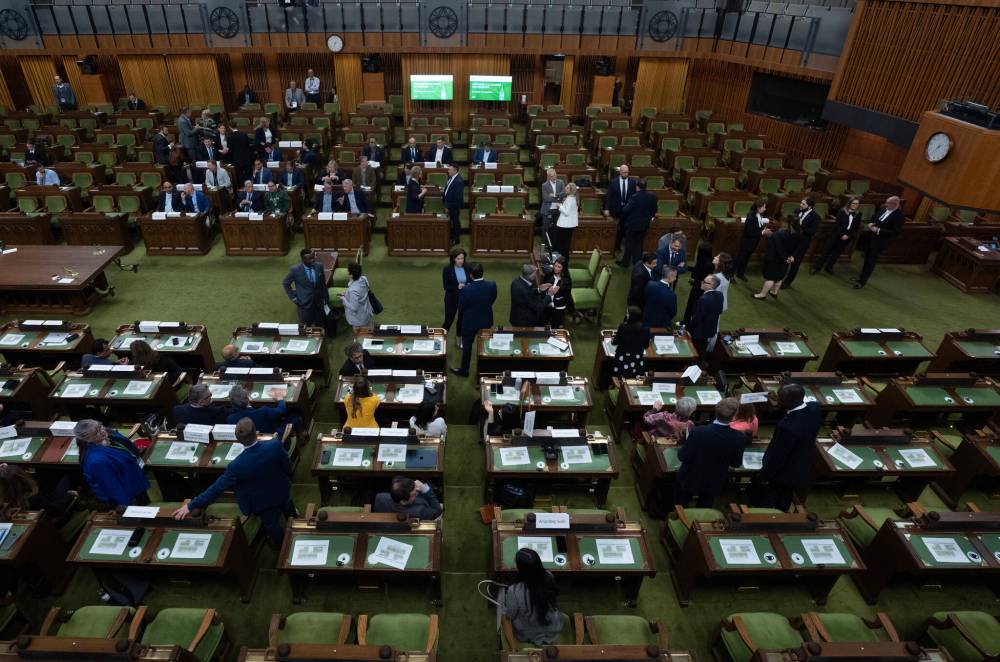
The Canadian Press
Canadian democracy has to move beyond being a spectator sport, watched from the visitors’ gallery.
If we, as citizens, truly want more of a say between elections, we need another set of democratic opportunities. A second democratic act, you might call it.
That is the title of a compelling new book by called Democracy’s Second Act: Why Politics Needs the Public, by Peter MacLeod and Richard Johnson. The first act of democracy was the long historical journey that established our democratic frameworks of electoral systems, the right to vote, and governing institutions. In Canada’s case, that is our first-past-the-post representative democracy known as responsible government. The second act is about deliberately and directly engaging citizens in the way they are governed. “Where democracy’s first act is about electing representatives,” the authors write, “its second act is about people serving as representatives.”
The book’s contention is that democracy is under evolutionary stress. It is being challenged in myriad, unforeseen ways. Its original construct requires bold, new ways of citizen engagement to salvage. Those challenges include a “trust gap between citizens and government, and between citizens themselves.” It leads to citizens believing their governments are increasingly ineffective, incompetent, or worse, corrupt. It fosters a citizenry that becomes cynical at best, angry at worst. Witness Jan. 6, 2021, in the United States.
Salvaging democracy requires a rethink in how it is practised. A role reversal away from exclusive representative government with which we are familiar, to forms of inclusive citizen engagement in the way that government power is exercised. This second act of democracy revolves around the subtitle of the book: why politics needs the public.
A traditional answer about why politics needs the public has focused on voting. Apathy is the problem. Get more people out to vote and democracy will be better, goes that thinking. Yet fewer people vote in Canada than ever. It has been almost 40 years since federal election turnout exceeded 70 per cent. If the measure of democratic health is turnout, then this patient needs treatment.
This begs a different question: what if asking how to boost turnout is the wrong question in the first place? If democracy is a practice, not just an ideal measured every few years by how many people showed up to pronounce on it at that moment, then a different way of looking at the state of our democracy is required. Focusing on turnout suggests the public is the problem, not the practice of democracy itself. It views elections as a regularly scheduled spectator sport where simple attendance connotes approval of whatever follows.
Every disappointed or dismayed voter knows this is simply not true and, frankly, never has been. But this goes beyond broken election promises. After all, accountability at the next election can rectify that. Those are singular episodes. Democracy’s deeper challenge is a civic one. It is an ennui, a malaise that has set in among citizens who give up on it because it doesn’t seem to represent what they believe or want.

To the authors, a solution lies in greater citizen participation. Not just at election time but in actively working with elected, representative governments between elections. Citizen engagement can take numerous forms, examples of which are portrayed throughout the book. These include citizens assemblies, where a representative group of randomly chosen citizens gather over a sustained period to deliberate and recommend on policy solutions to big problems, such as climate change and democratic reform, to grassroots problems at the community level via civic lotteries, service ballots, democratic action funds, civic formation grants, amongst others.
Integrating civic novelties such as these here seems difficult until realizing that it was Canada that held the very first citizens assembly. It was 20 years ago in B.C. on electoral reform. Meanwhile, many countries are successfully utilizing these tools. The distinction between a citizen-focused approach to democratic governance and a representative-focused approach to governing is the role of the citizen. Too often governments treat citizens as a risk to manage, not an asset to exploit. It is here that the trust deficit infecting our democratic hygiene is most corrosive.
Democracy comes from the Greek words “demos” which means people and “kratia” which means power. If Canada is to achieve the big things this and the next generation needs, then we must be prepared to apply new ways of civic engagement.
At election time, politicians ask us to “trust them.” It’s time to ask politicians to “trust us.”
David McLaughlin is a former clerk of the executive council and cabinet secretary in the Manitoba government.
Our newsroom depends on a growing audience of readers to power our journalism. If you are not a paid reader, please consider becoming a subscriber.
Our newsroom depends on its audience of readers to power our journalism. Thank you for your support.
Our newsroom depends on a growing audience of readers to power our journalism. If you are not a paid reader, please consider becoming a subscriber.
Our newsroom depends on its audience of readers to power our journalism. Thank you for your support.
Advertisement Advertise With Us
Advertisement Advertise With Us