

Police body cameras: costs and limited benefits
Advertisement
Read this article for free:
or
Already have an account? Log in here »
To continue reading, please subscribe:

Digital Subscription
One year of digital access for only $205*
- Enjoy unlimited reading on winnipegfreepress.com
- Read the E-Edition, our digital replica newspaper
- Access News Break, our award-winning app
- Play interactive puzzles
*First annual payment billed as $205.00 + GST for one year. This annual subscription will automatically renew at $233.00 + GST every 52 weeks (10% off the regular annual price of $259.35). Offer available to new and qualified returning subscribers only. Cancel any time.
To continue reading, please subscribe:
Add Free Press access to your Brandon Sun subscription for only an additional
$1 for the first 4 weeks*
- Enjoy unlimited reading on winnipegfreepress.com
- Read the E-Edition, our digital replica newspaper
- Access News Break, our award-winning app
- Play interactive puzzles
*Your next Brandon Sun subscription payment will increase by $1.00 and you will be charged $17.95 plus GST for four weeks. After four weeks, your payment will increase to $24.95 plus GST every four weeks.
Read unlimited articles for free today:
or
Already have an account? Log in here »
Hey there, time traveller!
This article was published 12/03/2026 (211 days ago), so information in it may no longer be current.
Police body cameras are coming to Winnipeg following years of debate. Last week, police chief Gene Bowers announced that the Winnipeg Police Service will trial the cameras in June. Forty front-line officers are expected to test the devices.
One of the major reasons for the years-long delay in equipping Winnipeg police with body-worn cameras (BWCs) was the matter of cost.
A body camera pilot was approved by the Winnipeg Police Board in 2015 but cancelled due to budgetary concerns. In 2021, city council voted against increasing the police budget to equip the service with body cameras. The cost was anticipated at $7 million to purchase equipment with estimates of as much as $5.5 million a year to keep the program running.
Budgetary constraints continue to remain a significant issue. So, why are Winnipeg police piloting the devices again in 2026?
One reason is because Axon Enterprise has reportedly agreed to freely supply its products to Winnipeg police for a trial. Offering free products on a limited basis is consistent with Axon’s strategy to convert police agencies into long term paying customers.
In 2017, Axon offered free body cameras and related software services to all police in Canada for an entire year. The company reported that “many” agencies started pilots including the Durham Regional Police Service in Ontario. Axon currently has contracts with numerous Canadian police agencies including the Toronto Police Service and RCMP.
Another reason for the 2026 pilot is that Chief Bowers seems to think a body camera program will now cost less, while simultaneously acknowledging having no estimated cost to equip all front-line officers with the devices, remarking “the technology has advanced so much. Like anything, the prices go down.” However, body camera programs are expensive and can demonstrably increase police budgets causing some departments to discontinue their programs.
Axon acquired its “#2 competitor” in 2018. An antitrust class action suit is pending against Axon. Plaintiffs that include government officials and municipalities, represented by U.S. law firm Cohen Milstein, allege “that Axon unlawfully monopolized the BWC” market claiming “governments and agencies have overpaid substantially for BWC systems (and) that the prices Axon charges for BWC systems have shot up astronomically as a result” of the 2018 merger. According to Cohen Milstein, Axon’s reported gross margins on body cameras have since increased “nearly fourfold.”
Furthermore, using public information like financial disclosures, a July 2025 American Bar Association antitrust law section summary found that “Axon’s prices and margins increased after the merger, no new competitors have entered the market, and existing competitors have failed to expand their market presence.”
All of this contrasts with Chief Bower’s unsubstantiated claim that any potential costs to eventually implement a body camera program would be “dramatically” lower in 2026.
Axon is an American company that has far-reaching control over digital technology in policing, with near-complete control over the global body camera market. In our politically volatile times, there are significant concerns the Canadian policing and justice system is being monopolized by a single American corporation motived by sales and profits.
It is perfectly reasonable then to assume that Axon increases prices for its products like costs associated with recurring software purchases and hardware upgrades. A relative unknown is the hiring of more staff to manage digital evidence as body camera recordings increase in Winnipeg, leading to consequential unbudgeted costs.
Then there is the simple matter of cost versus public benefit. “It’s about accountability and transparency,” said Chief Bowers of the body camera pilot.
Equipping Winnipeg police with body cameras alone will not create more transparency or accountability, and this cannot be assumed. Body cameras produce a lot of data (video). Consider that since 2018, the Calgary Police Service (CPS) alone has produced over 3.7 million recordings. Transparency in a Canadian context is already extremely limited, given that most body camera video is never reviewed by police or ever seen by taxpaying citizens because federal privacy legislation generally restricts its public release.
Furthermore, according to a 2024 CPS report evaluating its body camera program, “the current Axon software functionality does not allow measuring compliance (and) measuring BWC activation compliance continues to be a challenge.” If assurances are not in place to guarantee activation compliance, transparency and accountability are irrelevant. Even so, a review of the academic literature concerning police accountability, what it is and how to do it, is fraught with many limitations and is inconsistently effective.
Given Winnipeg police seem determined on an eventual permanent body camera program, and that Winnipeggers will subsidize the program, it is imperative that the selection of the body camera program vendor be subject to an open call for tender to ensure the best price for service.
Additionally, in the interest of transparency, Chief Bowers should at the very least provide evidence that the prices have gone down for body cameras so that Winnipeggers know how much this is going to cost them.
Christopher J. Schneider is professor of sociology at Brandon University. His most recent book (with Erick Laming) is Police Body-Worn Cameras: Media and the New Discourse of Police Reform.
Related Articles
Winnipeg police to launch body camera program next week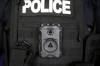
Advertisement Advertise With Us
Advertisement Advertise With Us