

The transatlantic divide deepens
Advertisement
Read this article for free:
or
Already have an account? Log in here »
To continue reading, please subscribe:
Digital Subscription
One year of digital access for only $1.44 a week*
- Enjoy unlimited reading on winnipegfreepress.com
- Read the E-Edition, our digital replica newspaper
- Access News Break, our award-winning app
- Play interactive puzzles
*Billed as $5.77 plus GST every four weeks. After 52 weeks, price increases to the regular rate of $19.95 plus GST every four weeks. Offer available to new and qualified returning subscribers only. Cancel any time.
To continue reading, please subscribe:
Add Free Press access to your Brandon Sun subscription for only an additional
$1 for the first 4 weeks*
- Enjoy unlimited reading on winnipegfreepress.com
- Read the E-Edition, our digital replica newspaper
- Access News Break, our award-winning app
- Play interactive puzzles
*Your next Brandon Sun subscription payment will increase by $1.00 and you will be charged $17.95 plus GST for four weeks. After four weeks, your payment will increase to $24.95 plus GST every four weeks.
Read unlimited articles for free today:
or
Already have an account? Log in here »
The bond that’s anchored the global order for eight decades is unravelling. Europe and the U.S. have together shaped the international system since the Second World War ended. Now, their shared pursuit of common interests seems relegated to history.
German Chancellor Friedrich Merz told a group of students on April 27 the U.S. was being “humiliated” in its war with Iran. U.S. President Donald Trump responded by ordering the withdrawal of 5,000 American troops stationed in Germany. He also threatened to go “a lot further.”
The soldiers will reportedly be recalled over many months. Trump has mused about pulling soldiers from Italy and Spain too. Both nations’ leaders have denied use of their territory to stage U.S. military operations in Iran and criticized the war for stoking global instability.
Spencer Colby / The Canadian Press files
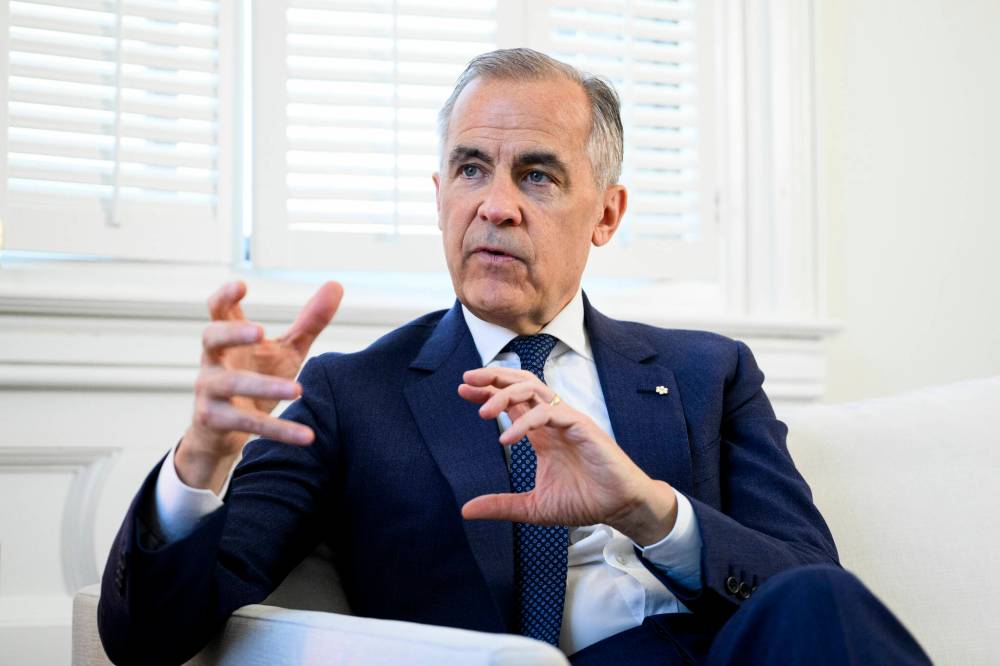
Prime Minister Mark Carney may feel that Europe is the future, but, as Kyle Volpi Hiebert writes, it’s not that easy.
But even if the president follows through, it won’t change how America and Europe still need each other — for now.
Military bases dotted across the continent underpin U.S. power projection. And not only to deter Russia, but also to operate throughout Africa and the Middle East. European defence capabilities have meanwhile been stunted by decades of complacency under America’s security umbrella. This generally still applies, despite conflict raging on Europe’s doorstep for years in Ukraine.
The EU has an €800 billion (approximately C$1.3 trillion) plan to resurrect the continent’s military industrial base. Avoiding wasteful, redundant efforts will require urgency, co-ordination and comprise among the bloc’s 27 members. But success is hardly guaranteed. “When it comes to strategic priorities and procurement policies, too much of the picture remains fragmented along national lines,” lamented The Guardian earlier this month.
Disputes over the Iran war also point to the broader, accelerating dissolution of trust and solidarity within the transatlantic alliance.
“In a world where Washington is brandishing ‘flexible realism’ to justify business deals with Russia and China,” wrote the European Council on Foreign Relations in December, “competition across the Atlantic is now in full swing.”
Tensions erupted in January when Trump talked openly about annexing Greenland — territory belonging to fellow NATO member Denmark.
European Parliament lawmakers retaliated by pausing ratification of a lopsided trade deal they agreed to last year, favouring the U.S., prompted by Trump’s tariff blitz.
The continent — a lucrative market for U.S. tech giants — is also distancing itself from Silicon Valley. Some 800,000 government workstations across Denmark, Germany, France, Austria and Italy have ditched Microsoft products for open-source alternatives.
Political momentum for this can be traced back to last May. The chief prosecutor of the International Criminal Court (ICC) — located in the Netherlands — had his Microsoft email account disconnected after President Trump sanctioned the ICC for investigating human rights abuses committed by Israel during its assaults on Gaza.
The incident spooked European leaders that American firms, now and in the future, might withhold digital services after receiving pressure from a vindictive White House.
The EU is also increasingly courting Ukraine. The bloc has approved a new €90-billion (approximately C$143-billion) loan for the embattled nation previously stymied by Hungary’s recently departed ex-prime minister, Viktor Orban — an ally of Russian President Vladimir Putin. Several nations have started to co-produce military drones with Ukraine as well.
“For the Europeans, Trump’s diverted attention and pointed broadsides have given them newfound clarity about the urgent imperative of more autonomy and independence from Washington,” reports Politico. “At the same time, the war in Iran has boosted Ukraine’s confidence, making its own advancing military capabilities abundantly clear to allies in Europe and beyond.”
This puts Canada in a difficult spot.
Prime Minister Mark Carney has clear affinity for Europe. He’s called Canada “the most European of non-European countries.” His now-famous Davos speech implored middle powers to band together against rogue hegemons — a thinly veiled swipe at Trump’s America.

“It’s my strong personal view that the international order will be rebuilt, but it will be rebuilt out of Europe,” he said at a recent European leaders summit in Armenia.
Yet geography matters. Canada will always be wedded to the U.S. — culturally intertwined, economically reliant and indebted to Washington for continental defence.
And although fresh polling says 58 per cent of Canadians support joining the EU, the mechanics of it are pure fantasy. It would mean accepting the bloc’s byzantine regulatory regime, alongside unlimited immigration from fellow member states. Plus, sending enormous sums each year to Brussels for the common budget. Ottawa would cede its ability to craft a distinct foreign policy and negotiate Canada’s own trade deals.
When facing uncertainty, hedging your bets sometimes beats trying to pick a winner.
Kyle Volpi Hiebert is a Montreal-based political risk analyst focused on globalization, conflict and emerging technologies.