

Rainy day fund, meet climate change costs
Advertisement
Read this article for free:
or
Already have an account? Log in here »
To continue reading, please subscribe:

Digital Subscription
One year of digital access for only $205*
- Enjoy unlimited reading on winnipegfreepress.com
- Read the E-Edition, our digital replica newspaper
- Access News Break, our award-winning app
- Play interactive puzzles
*First annual payment billed as $205.00 + GST for one year. This annual subscription will automatically renew at $233.00 + GST every 52 weeks (10% off the regular annual price of $259.35). Offer available to new and qualified returning subscribers only. Cancel any time.
To continue reading, please subscribe:
Add Free Press access to your Brandon Sun subscription for only an additional
$1 for the first 4 weeks*
- Enjoy unlimited reading on winnipegfreepress.com
- Read the E-Edition, our digital replica newspaper
- Access News Break, our award-winning app
- Play interactive puzzles
*Your next Brandon Sun subscription payment will increase by $1.00 and you will be charged $17.95 plus GST for four weeks. After four weeks, your payment will increase to $24.95 plus GST every four weeks.
Read unlimited articles for free today:
or
Already have an account? Log in here »
On May 28, Winnipeg city council voted 14-1 to move over $18 million into the city’s rainy day fund. That same week, Mayor Scott Gillingham said the city’s chief financial officer is considering lowering the minimum amount the fund must hold.
These actions show the problem: we are trying to add to an emergency fund we cannot fully restore and also thinking about lowering the standard so the gap seems less serious.
I get why this is tempting.
MIKE DEAL / FREE PRESS
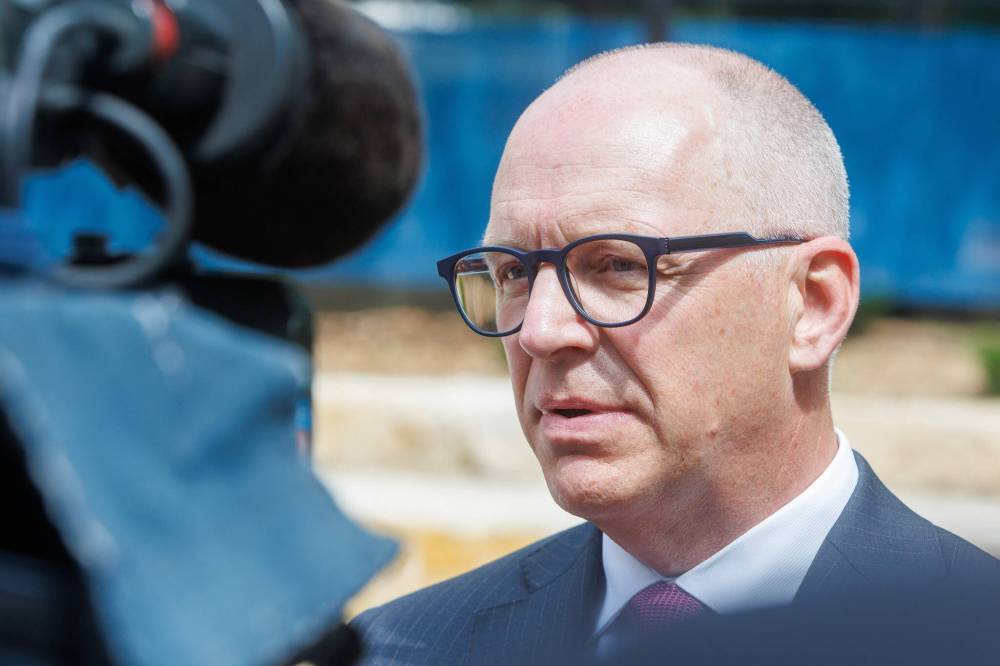
Winnipeg Mayor Scott Gillingham is right to feel the city’s financial pressure, Hersh Seth argues.
Keeping over $85 million in what the mayor calls a “just-in-case fund” puts real strain on a city that already has the tightest budget of any major Canadian city. Winnipeggers pay the lowest municipal property taxes in Canada, about $661 per person compared to a big-city average of nearly $1,069.
The city also collects the least revenue per resident, even as the population reaches a record 850,260 and the infrastructure deficit grows into the billions. The pressure is real and the mayor is right to feel it.
So I checked the city’s own financial reports and council records, not just the talking points. The numbers paint a picture different from “overfunded.”
The financial stabilization reserve is almost empty. It dropped to $2.1 million in 2022 and has stayed below its required minimum every year since 2021. At the end of 2025, it was $25.9 million—about $59 million short of the six per cent minimum. Even after this year’s transfers, it is expected to finish 2026 still tens of millions below the target.
There is no extra money to use. The real question is whether, after five years of not refilling the fund, we should now call “empty” good enough.
The six per cent minimum is not some old tradition: it’s meant to keep aside an amount equivalent to six per cent of the city’s annual tax-supported operating expenses.
City records show the target was five per cent in the late 2000s and increased to six per cent about 10 years ago. What used to be higher was the fund balance, not the rule. Before COVID, the fund had about $120 million, well above the minimum and that cushion helped the city get through the pandemic. The mayor has said this himself.
But let’s be clear about what the fund did and did not do. It kept the city financially stable, filling a revenue gap that grew to over $220 million, according to the city’s own numbers.
It did not make people feel supported: during those years, pools, libraries and community centres closed, bus service was cut, hiring was frozen and hundreds of workers lost their jobs. A reserve is meant to stabilize, not to fund services — that is its purpose.
We have already seen what happens when we use the reserve for operations: residents end up with fewer services, not better ones. Lowering the minimum won’t provide the care people deserve. Only enough revenue can do that.
The next emergency will not wait for us. Winnipeg is built on a flood plain. In 1950, a flood forced a third of the city’s residents from their homes. In 1997, the Flood of the Century nearly overwhelmed our defences.
The floodway has since saved us more than $40 billion in damage. We are protected from the river, but not from everything else. And it is these other problems — snow-clearing overruns, storm response and freeze-thaw cycles that damage our roads — which have been draining the fund.
These are no longer rare events. They are the effects of climate change showing up in the city’s budget, line by line.
Here is something most Winnipeggers do not know. The city is working on a climate resilience strategy, launched in 2024, that will not return to council for approval until 2027, after this fall’s election. Right now, we are doing two opposite things: weakening the emergency fund and delaying the plan that is supposed to help us get through the next crisis.
According to the Government Finance Officers Association, best practice is for a city to keep about two months of operating costs in reserve. Winnipeg’s six per cent reserve is closer to just one month. Lowering this amount does not make the city stronger; it only makes it easier to pretend that not enough is actually enough. Meanwhile, Moody’s and S&P cite our reserves as a reason for our good credit ratings, which help keep borrowing costs low.
There is a straightforward way to talk about this and the mayor has pointed it out: the city’s own analysis shows that matching property taxes with those of similar cities would bring in $700 million to $800 million more each year.
The ongoing shortfall that makes the reserve seem like a problem is mostly a result of revenue choices — not a tax grab, but simply the cost of keeping up what we already have. The responsible solution is to have that conversation, not to cut the safety net and hope for the best.

This is an election year, so the decision is no longer just up to the council; it is up to you. Ask every candidate who wants your vote the same simple questions — call it the storm test:
Will you maintain the six per cent reserve minimum and allocate any one-time windfalls to the reserve until it is fully funded again? Will you ensure any changes to the reserve are based on a real risk analysis that reflects our changing climate, not just a smaller, easier number? And will you complete and fund the climate resilience strategy the city has started or let it sit on a shelf as just another report?
The answers will show which candidates are preparing for the next crisis and which ones are just hoping it does not happen during their term.
We know another crisis is coming. This year, we have the chance to ask those who want to lead us whether they are ready.
Hersh Seth is a Winnipeg resident and community organizer.