

AI threatens relationship between writers, readers

Advertisement
Read this article for free:
or
Already have an account? Log in here »
To continue reading, please subscribe:

Digital Subscription
One year of digital access for only $205*
- Enjoy unlimited reading on winnipegfreepress.com
- Read the E-Edition, our digital replica newspaper
- Access News Break, our award-winning app
- Play interactive puzzles
*First annual payment billed as $205.00 + GST for one year. This annual subscription will automatically renew at $233.00 + GST every 52 weeks (10% off the regular annual price of $259.35). Offer available to new and qualified returning subscribers only. Cancel any time.
To continue reading, please subscribe:
Add Free Press access to your Brandon Sun subscription for only an additional
$1 for the first 4 weeks*
- Enjoy unlimited reading on winnipegfreepress.com
- Read the E-Edition, our digital replica newspaper
- Access News Break, our award-winning app
- Play interactive puzzles
*Your next Brandon Sun subscription payment will increase by $1.00 and you will be charged $17.95 plus GST for four weeks. After four weeks, your payment will increase to $24.95 plus GST every four weeks.
Read unlimited articles for free today:
or
Already have an account? Log in here »
For eight years I oversaw a short-story competition in St. John’s that was sponsored by The Telegram, where I worked, and Creative, a local book publisher.
It was called the The Cuffer Prize, based on the Dictionary of Newfoundland English definition of a “cuffer” as a tale, or yarn.
I would winnow down the entries based on merit, and they would then be stripped of author identification and passed on to a panel of judges.
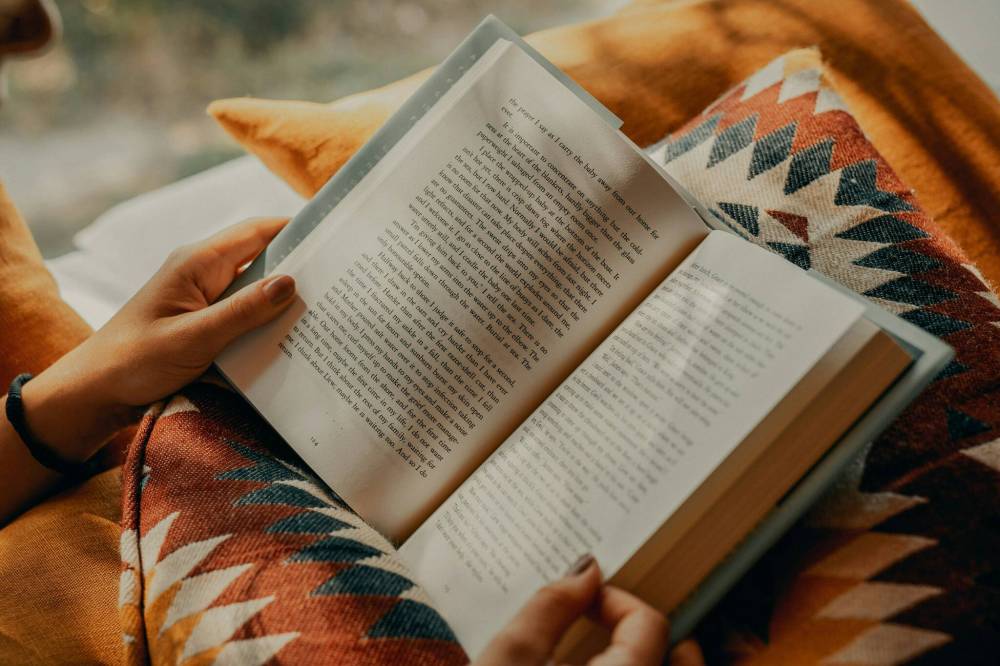
Clay Banks / Unsplash
Connections between writers and their readers are built on trust.
Some of the stories were published in anthologies, while the top 10 were also reprinted in The Telegram.
It was always exciting when the entries started arriving. Some were heartfelt but amateurish attempts at storytelling; others revealed burgeoning talent and still more were works by polished writers able to create believable worlds in 1,200 words.
It was a thrill, as an editor, to get first look at these works and to help launch some of them into the world. I imagined all these writers working away in front of keyboards, deep in concentration; the eureka moments when perfect words and phrases made themselves known.
And it was satisfying to hear enthusiastic feedback from readers once the anthologies were published, knowing we had helped introduce them to the writers, possibly even sparking enduring relationships as the authors’ craft and the audience’s appreciation developed and flourished.
Because that’s the thing about writers and readers — and editors, too — it’s a relationship. It can be deep and abiding or short-lived and fractious, but it is certainly a human connection — a meeting of minds.
In accepting the 2016 Peace Prize of the German Book Trade, Margaret Atwood made this observation about the relationship between writer and reader:
“A book is a voice in your ear; the message is — while you are reading it — is for you alone. Reading a book is surely the most intimate experience we can have of the inside of another human being’s mind.”
Such a relationship is built on trust, on confidence — in the sense of something being confided. The author entrusts the reader with their story in the hope that the reader will reflect upon it and perhaps it will speak some truth to them — a truth that has been revealed between them.
All my life I have had intimate relationships with authors through their books. True, some of the connections did not last — we were acquainted, but perhaps incompatible in some way. But others represented lifelong companionship, with beloved authors’ works revealing different facets of themselves each time I revisit them.
Which is why the notion of artificial intelligence intruding on the writing process is so disturbing.
In May, the literary world reeled from the latest AI scandal when officials involved with the Commonwealth Short Story Prize, and editors with Granta, the literary journal that publishes the winning entries, revealed that artificial intelligence might have been used in one story’s creation.
“It may be that the judges have now awarded a prize to an instance of AI plagiarism — we don’t yet know, and perhaps we never will know,” Sigrid Rausing, Granta’s publisher, said in a statement.
The story in question, The Serpent in the Grove, is attributed to Jamir Nazir, said to be “a Trinidadian writer of East Indian heritage whose work explores the cultural intersections of the Caribbean and the Indian diaspora.”
Did the story spring from Nazir’s imagination or was an AI tool used? The fact that no one seems certain is troubling, indeed.
Commonwealth Foundation’s director general, Razmi Farook, was quoted in The Guardian on May 16 as saying, “Until a sufficient tool or process to reliably detect the use of AI emerges that can also grapple with the challenges pertaining to working with unpublished fiction, the foundation and the Commonwealth short story prize must operate on the principle of trust.”
But this and other AI controversies threaten to sever that bond of trust between writer and reader. If the author is not who they say they are, if their work does not spring from human experience and creativity, then how can there be any authentic relationship?
Writer and editor Erica Wagner homed in on this dilemma in The Observer on May 24:
“When I entered a section of Nazir’s story into Pangram, the AI detection program that the Society of Authors views as most reliable, the results were (seemingly) clear: 100 per cent AI. But remember, we are in mirror-world: the AI that detects the AI is trained on human writing, so, really, where are we? In the dark. The serpent in the grove indeed. Doubt has entered now, and doubt will not recede.”

Similarly, Julian Novitz, an academic and author who had his own story shortlisted for the Commonwealth Short Story Prize in 2014, wrote about the dilemma in The Conversation on May 21:
“The Serpent in the Grove may yet prove to be a parody or a warning,” he said.
As a reader, I’m rooting for parody, but it sure feels like a warning: a harbinger of more inauthentic experiences to come.
Pam Frampton lives in St. John’s.
pamelajframpton@gmail.com
Pam Frampton is a columnist for the Free Press. She has worked in print media since 1990 and has been offering up her opinions for more than 20 years. Read more about Pam.
Pam’s columns are built on facts, but offer her personal views through arguments and analysis. Every column Pam produces is reviewed by an editing team before it is posted online or published in print — part of the Free Press‘s tradition, since 1872, of producing reliable independent journalism. Read more about Free Press’s history and mandate, and learn how our newsroom operates.
Our newsroom depends on a growing audience of readers to power our journalism. If you are not a paid reader, please consider becoming a subscriber.
Our newsroom depends on its audience of readers to power our journalism. Thank you for your support.
Pam Frampton is a columnist for the Free Press. She has worked in print media since 1990 and has been offering up her opinions for more than 20 years. Read more about Pam.
Pam’s columns are built on facts, but offer her personal views through arguments and analysis. Every column Pam produces is reviewed by an editing team before it is posted online or published in print — part of the Free Press‘s tradition, since 1872, of producing reliable independent journalism. Read more about Free Press’s history and mandate, and learn how our newsroom operates.
Our newsroom depends on a growing audience of readers to power our journalism. If you are not a paid reader, please consider becoming a subscriber.
Our newsroom depends on its audience of readers to power our journalism. Thank you for your support.
Advertisement Advertise With Us
Advertisement Advertise With Us