

Clarifying the federal Clarity Act
Advertisement
Read this article for free:
or
Already have an account? Log in here »
To continue reading, please subscribe:

Digital Subscription
One year of digital access for only $205*
- Enjoy unlimited reading on winnipegfreepress.com
- Read the E-Edition, our digital replica newspaper
- Access News Break, our award-winning app
- Play interactive puzzles
*First annual payment billed as $205.00 + GST for one year. This annual subscription will automatically renew at $233.00 + GST every 52 weeks (10% off the regular annual price of $259.35). Offer available to new and qualified returning subscribers only. Cancel any time.
To continue reading, please subscribe:
Add Free Press access to your Brandon Sun subscription for only an additional
$1 for the first 4 weeks*
- Enjoy unlimited reading on winnipegfreepress.com
- Read the E-Edition, our digital replica newspaper
- Access News Break, our award-winning app
- Play interactive puzzles
*Your next Brandon Sun subscription payment will increase by $1.00 and you will be charged $17.95 plus GST for four weeks. After four weeks, your payment will increase to $24.95 plus GST every four weeks.
Read unlimited articles for free today:
or
Already have an account? Log in here »
There is lots of chatter these days about secession referendums in both Alberta and Quebec. Added to that are plenty of references to the 2000 federal Clarity Act — arguably one of former Prime Minister Jean Chrétien’s lesser known policy highlights.
The act is supposed to bring clarity to any debate and discussion involving the ability of provinces to secede from the Canadian federation. Generally speaking, it is intended to provide a legal framework or rules of the separation political game so as to avert mass uncertainty, confusion and even potential violence.
More specifically, it is written in a way to preclude the possibility of any province in Canada making a unilateral declaration of independence and to avoid the disastrous events of the October 1995 Quebec referendum. In addition, it is supposed to force any would-be secessionists to compose an unambiguous referendum question and to raise the bar of approval for any future separation vote.
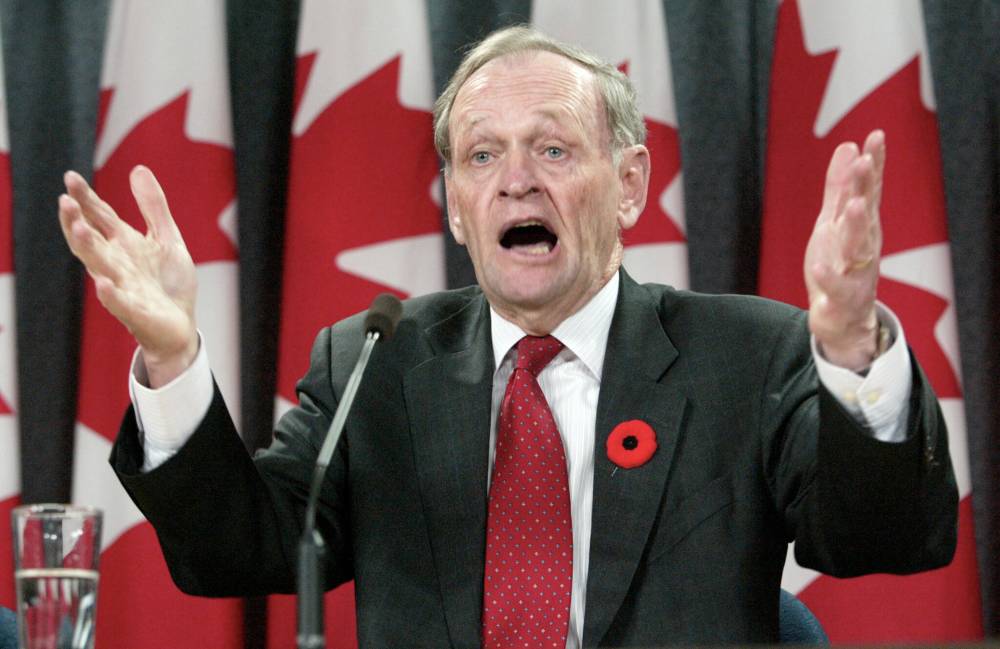
THE CANADIAN PRESS FILES
The 2000 federal Clarity Act is one of the lesser known policy highlights of former Prime Minister Jean Chrétien (pictured above in 2005).
What it is not designed to do is to make it impossible for provincial governments to break-up the country. But it does make it exceedingly difficult for provinces to leave the federation — and impossible for them to do so unilaterally. Indeed, it would most assuredly require a constitutional amendment, Ottawa’s backing and unanimity among the other subnational governments.
As the Clarity Act makes clear, and the August 1998 Quebec secession reference case explained, democratic pluralism means far more than simply majority rule. More significantly, the act reinforces the point “that a clear majority in favour of secession would be required to create an obligation to negotiate secession, and that a qualitative evaluation is required to determine whether a clear majority in favour exists in the circumstances.”
Of course, no one outside of the separatist camp wants a repeat of the 1995 referendum scare, when the Parti Québécois came within 50,000 votes or so of securing a Yes vote. Accordingly, the act refers specifically to the House of Commons, in consultation with a host of stakeholders including Indigenous peoples, provincial legislatures and the Senate, to consider the referendum question and “set out its determination on whether the question is clear.”
Additionally, it goes on to say that the House “shall consider whether the question would result in a clear expression of the will of the population of a province to be part of Canada and become an independent state.”
On the question of approval, and what exactly constitutes a clear expression of will, the Clarity Act is noticeably silent. For ultimate flexibility, and to deny the secessionists a specific target, this determination will also be left to the House, with the assistance of those same interested parties identified above.
What it does state in bold type, though, is that the Canadian government will refuse to negotiate the dismantling of this country if “a referendum question is not clear and, for that reason, would not result in a clear expression of the will of the population of that province on whether the province should cease to be part of Canada.”
There are some who suggest that invoking the Clarity Act will only serve to stiffen the spine of those who support separation (or who are sitting on the fence). But I don’t buy that argument.
Then-Quebec Premier Lucien Bouchard made this point himself and waited for the negative blowback to take place.
But what he saw, to his own astonishment, was the Jean Chrétien government winning a majority government in the November 2000 federal election — including a whopping 36 Liberal seats (only two less than the Bloc Québécois) in the province of Quebec. Besides, Quebecers are just as law-abiding and respectful of Supreme Court of Canada rulings as any other Canadian.
So are the secessionists in Alberta and Quebec willing to roll the referendum dice under these circumstances?
Because they have a weaker hand – especially since the House of Commons and federalist forces will determine precisely what a “clear majority” consists of — they may wish to reconsider.
Moreover, to discourage supporters of breaking up the country, the act states that should Ottawa sit down to negotiate the end of Canada, just about everything will be on the table for discussion.
The last line actually stipulates the terms of secession, “including the division of assets and liabilities, any changes to the borders of the province, the right, interests and territorial claims of Aboriginal peoples of Canada, and the protection of minority rights.”

On its face, the reference to borders does seem to suggest that provincial partition or the possibility of Indigenous/linguistic enclaves are permissible.
As far as the Chrétien Liberals were concerned (backed up by the Supremes), the Clarity Act was tantamount to game, set and match in the great separatist contest.
It effectively boxes in the secessionists, leaves them with very little legal room in which to manoeuvre, and secures a veritable constitutional checkmate over any future referendum move.
Whatever happens going forward, then, the act clearly sets the parameters around which the next separation referendum will be contested. And, at this point, advantage federal government.
Peter McKenna is professor of political science at the University of Prince Edward Island in Charlottetown.