

As school year ends, thank an educator
Advertisement
Read this article for free:
or
Already have an account? Log in here »
To continue reading, please subscribe:

Digital Subscription
One year of digital access for only $205*
- Enjoy unlimited reading on winnipegfreepress.com
- Read the E-Edition, our digital replica newspaper
- Access News Break, our award-winning app
- Play interactive puzzles
*First annual payment billed as $205.00 + GST for one year. This annual subscription will automatically renew at $233.00 + GST every 52 weeks (10% off the regular annual price of $259.35). Offer available to new and qualified returning subscribers only. Cancel any time.
To continue reading, please subscribe:
Add Free Press access to your Brandon Sun subscription for only an additional
$1 for the first 4 weeks*
- Enjoy unlimited reading on winnipegfreepress.com
- Read the E-Edition, our digital replica newspaper
- Access News Break, our award-winning app
- Play interactive puzzles
*Your next Brandon Sun subscription payment will increase by $1.00 and you will be charged $17.95 plus GST for four weeks. After four weeks, your payment will increase to $24.95 plus GST every four weeks.
Read unlimited articles for free today:
or
Already have an account? Log in here »
As the long days of summer approach, many Manitobans are preparing to hit the out-of-office button. But before the school year fades into memory, I’d like you to take a moment to thank the more than 17,000 Manitoba public school educators who have gone above and beyond to support kindergarten to Grade 12 students across our province.
Students are graduating. Thousands more will be moving on to new grades, new schools and new opportunities. There is much to celebrate and much to be proud of. But these celebrations and transitions are also a reminder that none of this happens by accident.
It happens because public school educators show up every day for their students and continue to do so in the face of growing and increasingly complex challenges.
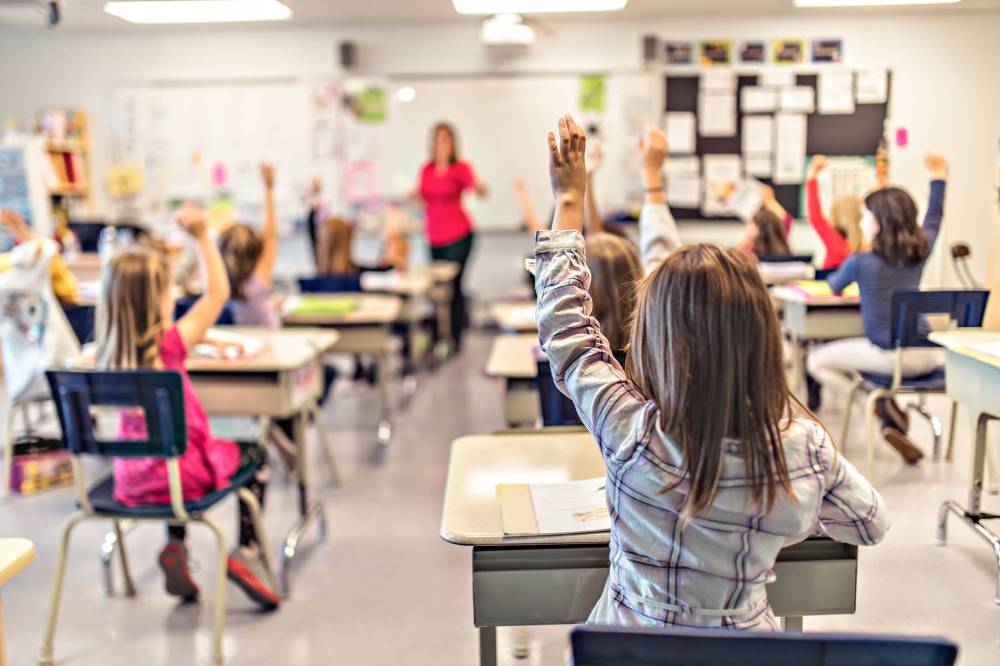
Adobe Stock
Lillian Klausen, president of the Manitoba Teachers’ Society, writes that supporting public education means advocating for conditions that allow students to thrive and educators to succeed.
Educators stay in this profession because they believe deeply in public education and in the potential of every child.
I encourage you to ask any educator why they stay, and they will point to their students.
They will talk about building classrooms where students feel seen, respected and encouraged, and about the joy of watching a struggling student finally understand a concept — the light bulb moment.
These moments are the fuel that sustains educators as the system, neglected and chronically underfunded, crumbles around them.
Across the province, principals and vice-principals describe being relied upon as a first point of contact for supports that reach far beyond education — mental-health care, crisis services, settlement supports and family assistance. Schools were never designed to provide these services alone and the strain is showing.
Four in 10 educators are planning to retire early. Some are leaving the profession after only five years; others are hanging on by a thread.
School clinicians are carrying impossible caseloads, and classroom teachers are managing rising levels of complexity with far too little support.
Classroom complexity is not simply about class size — which is also an issue. It reflects the number and range of student needs teachers are required to support at the same time.
In today’s classrooms, teachers may be supporting students with a wide range of needs and academic skill gaps, shaped by shrinking access to publicly funded resources and broader social and economic pressures.
Our latest member poll says that half of Manitoba classrooms have six or more students with complex needs.
Educators are also reporting rising violence in schools. Seventy per cent of educators say violence has increased over their careers and 61 per cent say the severity has increased.
These incidents are not isolated. In fact, they are connected. They reflect growing pressures inside classrooms, unmet student needs, and insufficient supports to maintain safe learning environments.
At the risk of sounding alarmist, I must tell you that our public schools are in crisis.
If this reality surprises you, it’s because, as educators, we naturally go above and beyond.
Over the years, we have twisted ourselves whichever way necessary to fill the gaps and ensure that our students are given the best opportunities to succeed.
But while well intentioned and admirable, this is not sustainable.
September will arrive before we know it. Whether students and educators are set up for success depends on decisions made now.
Public education can no longer be left off the agenda of government priorities. Admittedly, I am biased, but I believe it belongs at the top of the list. The good news is that Manitobans appear to agree.
Recent polling by Probe Research for the Manitoba Teachers’ Society suggests Manitobans already understand both the value of public education and the strain it is under. Eighty-eight per cent say a strong public school system is important to the health of their community, including people without children in school.
At the same time, confidence in the government’s handling of K–12 education is shaky: 31 per cent say the government is not getting it right, and another 34 per cent are unsure.
The polling also makes clear that Manitobans trust and value educators. Three-quarters say teachers work hard, that the job is harder now than it was five years ago, and that teachers are the most credible voices on public education.
If public education truly matters to us all, then engagement cannot end at appreciation.
It must include participation.

The public has the power to hold governments accountable and to demand better for the students in our province. Collective voices have shaped public education before (remember Bill 64) and they can do so again. When communities speak up about classroom conditions, funding priorities and student supports, decision-makers are more likely to listen.
So, before summer fully takes hold, thank an educator who has made a difference in your life or your child’s life. Then go one step further: stay engaged. Ask elected representatives questions. Vote in the Oct. 28 school trustee election. Pay attention to what is happening in our schools and ask teachers what challenges they face and how you can help.
Supporting public education means more than celebrating the people who work within it. It means advocating for the conditions that allow students to thrive and educators to succeed.
Simply put, public education only works when it is properly supported, and for that, we need your help.
Lillian Klausen is president of the Manitoba Teachers’ Society.