

Colombia: Don’t rock the boat
Advertisement
Read this article for free:
or
Already have an account? Log in here »
To continue reading, please subscribe:

Digital Subscription
One year of digital access for only $205*
- Enjoy unlimited reading on winnipegfreepress.com
- Read the E-Edition, our digital replica newspaper
- Access News Break, our award-winning app
- Play interactive puzzles
*First annual payment billed as $205.00 + GST for one year. This annual subscription will automatically renew at $233.00 + GST every 52 weeks (10% off the regular annual price of $259.35). Offer available to new and qualified returning subscribers only. Cancel any time.
To continue reading, please subscribe:
Add Free Press access to your Brandon Sun subscription for only an additional
$1 for the first 4 weeks*
- Enjoy unlimited reading on winnipegfreepress.com
- Read the E-Edition, our digital replica newspaper
- Access News Break, our award-winning app
- Play interactive puzzles
*Your next Brandon Sun subscription payment will increase by $1.00 and you will be charged $17.95 plus GST for four weeks. After four weeks, your payment will increase to $24.95 plus GST every four weeks.
Read unlimited articles for free today:
or
Already have an account? Log in here »
“He won, BIG!” exulted Donald Trump on Truth Social, welcoming the victory of Abelardo de la Espriella, his preferred candidate for the presidency of Colombia, in last Monday’s election. In fact, de la Espriella won only very small, less than one per cent ahead of his left-wing opponent in the popular vote, but he did win. One per cent is enough.
Meanwhile, in Peru, right-wing candidate Keiko Fujimori is certain to win the vote count in Peru’s presidential election. This leaves only four left-wing democratic governments still standing in all of Latin America and two of them are very small: Uruguay and Guatemala. The ‘pink tide’ of the region’s recent political history has definitely gone out again.
Apart from the two giant hold-outs, Brazil and Mexico, Latin America is now almost wall-to-wall Trump-style populist regimes — and Brazil’s 80-year-old president, Luiz Inácio (Lula) da Silva, could easily lose the presidential election in October. The polls consistently show him tied with right-wing populist Flávio Bolsonaro, son of the imprisoned former president.
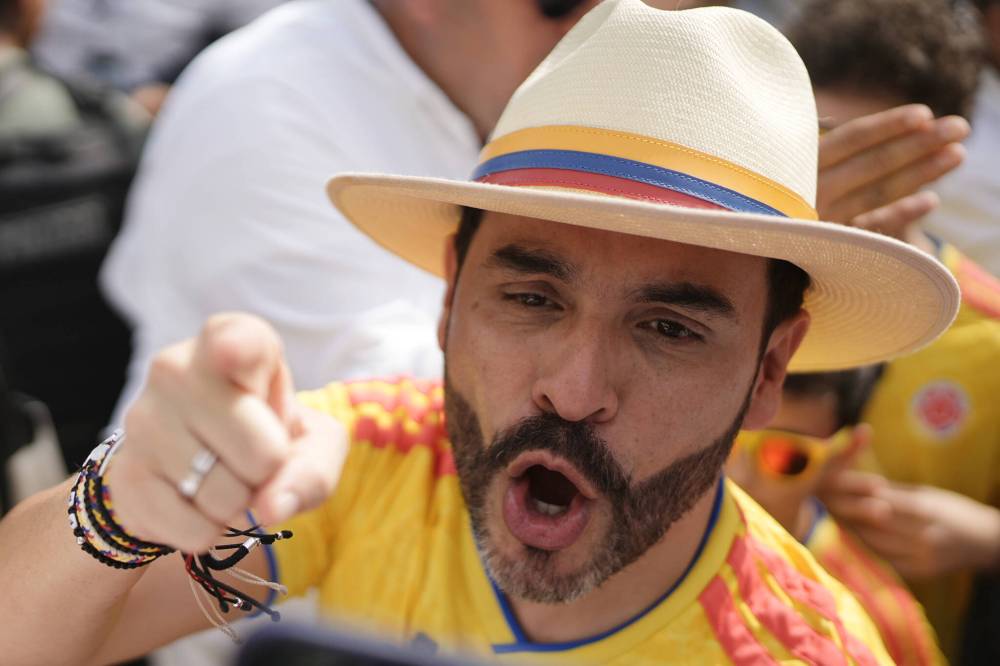
THE ASSOCIATED PRESS
Presidential candidate Abelardo de la Espriella of the opposition Defenders of the Motherland movement gestures after voting during the runoff election in Barranquilla, Colombia on Sunday, June 21, 2026.
In Colombia, de la Espriella, a 47-year old former lawyer who calls himself ‘El Tigre’ (The Tiger), might as well have been designed by a hyper-conservative focus group. He vows to wipe out the country’s drug dealers and will welcome U.S. military help to do so. In fact, he is an American citizen himself and owns property in Miami.
El Tigre has never held public office and belongs to no established political party, but there is clearly a lot of money behind him. He promises to take a ‘chainsaw’ to the Colombian state, like Argentina’s Javier Milei, and will build 10 mega-prisons “in the jungle”, outdoing even El Salvador’s Nayib Bukele — but he also incarnates a much older and more violent tradition.
Colombia often looks like a normal country, but it is not. Maybe it once was normal, but ‘La Violencia,’ the civil war between liberals and conservatives that broke out almost 80 years ago and killed an estimated 200,000 Colombians in its first decade, never really ended.
The ideologies and loyalties have evolved over the years, but there have always been armed groups in the wilder parts of the country that carried on the struggle against the state. Indeed, the death toll from ‘the violence’ probably never fell below 5,000 a year over the intervening seven decades.
Some of the liberals became Communists for a while and some of the conservatives dabbled in fascism, while most people just wanted it to stop. But almost every Colombian knows which side they are on historically, so there is always a lot of dry tinder lying around. The election of Abelardo de la Espriella may set it alight.
Gustavo Petro, a former member of the Marxist guerrilla group M-19, was elected four years ago as the first left-wing president in Colombian history, on the promise that he would make peace with the various insurgent groups that operate in the rural parts of Colombia. He tried hard, but he had no success because they are no longer interested in ‘winning’ or ‘peace’.
These groups once financed themselves by extortion and kidnapping, with the ultimate goal of victory. Now they finance themselves by dominating the drug trade and Colombia produces two-thirds of the world’s cocaine. Victory is not even desirable for this generation of insurgents, because peace would wreck their business model.
So Petro’s promise could not be kept and de la Espriella’s promise to win the war on drugs in alliance with Donald Trump is just a cynical slogan. Fifty-five years after Richard Nixon declared this stupid war, it has become clear to almost everybody (including de la Espriella and maybe even Trump) that you cannot win the war on drugs.

The demand is too high and the profits too attractive. Killing drug lords is a totally futile activity: they are immediately replaced by others and the potential supply is unlimited. But the endless, hopeless struggle to eradicate the drug trade can be exploited politically for the benefit of people with other agendas.
That’s why Trump is now expanding the war on drugs in Latin America. It has already given him an excuse to seize Venezuela and it will give him and de la Espriella excuses to do lots of other things that will bring them both power and profits. (Sorry to sound cynical, but that’s the way this stuff always works.)
With Colombia, however, there is a potential added cost to this that could be very high indeed. There is a sleeping monster in Colombia, and a big enough war in the country, especially if accompanied by American-style air strikes and similar high-tech violence, could wake it up.
That would be a great pity.
Gwynne Dyer’s new book is Intervention Earth: Life-Saving Ideas from the World’s Climate Engineers.