

Fear of retaliation in care homes is a very real thing

Advertisement
Read this article for free:
or
Already have an account? Log in here »
To continue reading, please subscribe:
Digital Subscription
One year of digital access for only $1.44 a week*
- Enjoy unlimited reading on winnipegfreepress.com
- Read the E-Edition, our digital replica newspaper
- Access News Break, our award-winning app
- Play interactive puzzles
*Billed as $5.77 plus GST every four weeks. After 52 weeks, price increases to the regular rate of $19.95 plus GST every four weeks. Offer available to new and qualified returning subscribers only. Cancel any time.
To continue reading, please subscribe:
Add Free Press access to your Brandon Sun subscription for only an additional
$1 for the first 4 weeks*
- Enjoy unlimited reading on winnipegfreepress.com
- Read the E-Edition, our digital replica newspaper
- Access News Break, our award-winning app
- Play interactive puzzles
*Your next Brandon Sun subscription payment will increase by $1.00 and you will be charged $17.95 plus GST for four weeks. After four weeks, your payment will increase to $24.95 plus GST every four weeks.
Read unlimited articles for free today:
or
Already have an account? Log in here »
Here’s something we don’t talk about enough: the fear people have that if they complain about how their loved one in a nursing home is treated, the treatment will only get worse.
My mother lives in a retirement home. Many of my friends also have parents who rely on strangers for some aspect of their care. And in conversations we’ve had, it is quite common to hear someone say, “Of course we don’t want to complain, because it might backfire.”
Human nature is what it is. No one likes criticism. So, if you complain that your father’s meals are never hot or that your aunt’s clothes are always soiled, you are never sure what the reaction will be. One person might take a complaint in stride and try to do better, while another person might feel affronted and lash out in some way — perhaps by deliberately treating your loved one poorly.
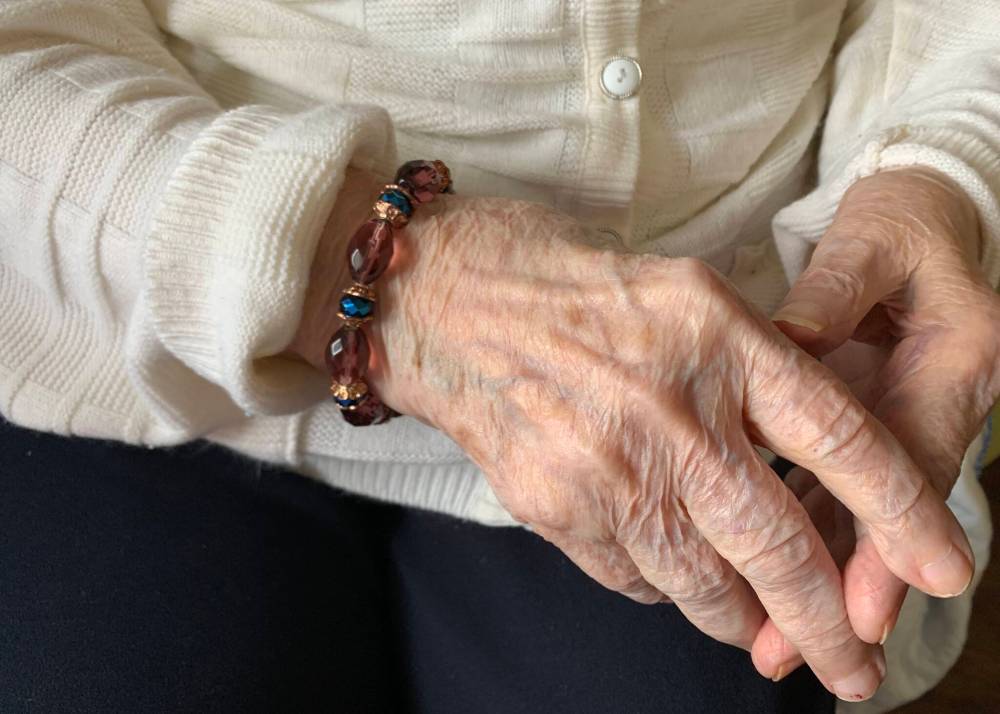
Pam Frampton photo
Vera Frampton, the columnist’s mother, lives in a retirement home in St. John’s, N.L.
It’s a crap shoot for seniors in care and their families, and it’s a troubling one.
In 2023, the Long Term Care Community Coalition in the United States examined this dilemma in a report entitled “‘They Make You Pay’: How Fear of Retaliation Silences Residents in America’s Nursing Homes.”
“Fear of retaliation is a pervasive problem that results in emotional, psychological, and physical harm to vulnerable and frail residents,” the report says. “In far too many U.S. nursing homes, retaliation is a tool to scare and muzzle residents. Unfortunately, this phenomenon has been largely overlooked in policy and in academic literature … We hope that heightening awareness of fear of retaliation can result in real changes in policy, practice, and enforcement actions.”
That fear is a pervasive problem in Canada as well, whether it’s baseless or grounded in reality. You can find discussions about it in Reddit threads and on Facebook pages, and the repercussions have been reported in the news.
In December 2024, for example, CBC reported that there were over 100 cases at that time in Ontario in which family members had been banned from their loved one’s care homes after they had complained about how their relatives were being treated.
I don’t worry about such extreme reactions to complaints where my mother lives, as the management there has always been understanding and responsive to my concerns, but I do worry that some action of mine could result in a negative reaction for my mother on a more personal level, and I think that’s something many adult children with parents in care struggle with.
You imagine your parent’s request for assistance in getting back to their room being ignored; their stained clothing going unchanged; dead hearing aid batteries not being replaced. The mind reels with the many worrying ways their needs could be neglected by someone with an axe to grind, particularly if your parent is totally vulnerable.
This week I was sorting out clothes in my mother’s closet when I heard a member of the care staff in the lobby yelling at her not to sit somewhere. Now, the yelling was understandable, as Mom is hard of hearing, so I did not mistake it for anger, but still I went to see what was happening.
It turns out that Mom had been about to sit in one of the new plush chairs that were part of a recent renovation, but I was told she was not allowed to sit in those — nor was anyone else who “might have an accident.” She was only permitted to sit on the leather sofa.
The incident was very upsetting for me and confusing for my mother. I’m sure she could not understand why she wasn’t allowed to sit in an empty chair, and I’m not sure how someone with advanced Alzheimer’s can be expected to remember which seats are not for their use. I especially did not appreciate hearing my gentle, loving mother being treated like a muddy dog about to soil someone’s couch.
But should I complain about some of the people my mother depends on for her every need?
My husband and I discussed the pros and cons and I decided to sleep on it before making a decision. At 4 a.m. I lay awake with my mind racing, the scenario replaying in a seemingly endless loop.
By 9:30 a.m. I had written an email to senior management at the home and hit send.

I recalled the words of a former administrator at the facility, who was used to my occasional drop-ins at his office to discuss some concern or another.
When I said one day that I wasn’t trying to be a bother, he said, “Don’t ever stop advocating for your mother, because if her family doesn’t, no one else will.”
It was good advice. My mother deserves to be treated with dignity and compassion, not shooed away from furniture like a stray animal. And I will fight for her, just as I know she would have always fought for me.
Pam Frampton lives in St. John’s.
Email: pamelajframpton@gmail.com
Pam Frampton is a columnist for the Free Press. She has worked in print media since 1990 and has been offering up her opinions for more than 20 years. Read more about Pam.
Pam’s columns are built on facts, but offer her personal views through arguments and analysis. Every column Pam produces is reviewed by an editing team before it is posted online or published in print — part of the Free Press‘s tradition, since 1872, of producing reliable independent journalism. Read more about Free Press’s history and mandate, and learn how our newsroom operates.
Our newsroom depends on a growing audience of readers to power our journalism. If you are not a paid reader, please consider becoming a subscriber.
Our newsroom depends on its audience of readers to power our journalism. Thank you for your support.
Pam Frampton is a columnist for the Free Press. She has worked in print media since 1990 and has been offering up her opinions for more than 20 years. Read more about Pam.
Pam’s columns are built on facts, but offer her personal views through arguments and analysis. Every column Pam produces is reviewed by an editing team before it is posted online or published in print — part of the Free Press‘s tradition, since 1872, of producing reliable independent journalism. Read more about Free Press’s history and mandate, and learn how our newsroom operates.
Our newsroom depends on a growing audience of readers to power our journalism. If you are not a paid reader, please consider becoming a subscriber.
Our newsroom depends on its audience of readers to power our journalism. Thank you for your support.
Advertisement Advertise With Us
Advertisement Advertise With Us