

Twelve metres of museum space
Advertisement
Read this article for free:
or
Already have an account? Log in here »
To continue reading, please subscribe:
Digital Subscription
One year of digital access for only $1.44 a week*
- Enjoy unlimited reading on winnipegfreepress.com
- Read the E-Edition, our digital replica newspaper
- Access News Break, our award-winning app
- Play interactive puzzles
*Billed as $5.77 plus GST every four weeks. After 52 weeks, price increases to the regular rate of $19.95 plus GST every four weeks. Offer available to new and qualified returning subscribers only. Cancel any time.
To continue reading, please subscribe:
Add Free Press access to your Brandon Sun subscription for only an additional
$1 for the first 4 weeks*
- Enjoy unlimited reading on winnipegfreepress.com
- Read the E-Edition, our digital replica newspaper
- Access News Break, our award-winning app
- Play interactive puzzles
*Your next Brandon Sun subscription payment will increase by $1.00 and you will be charged $17.95 plus GST for four weeks. After four weeks, your payment will increase to $24.95 plus GST every four weeks.
Read unlimited articles for free today:
or
Already have an account? Log in here »
It is striking that one of the smallest exhibitions at the Canadian Museum for Human Rights in Winnipeg has generated one of the largest public controversies in the museum’s history. Palestine Uprooted: Nakba Past and Present occupies only about 12 metres within an existing gallery.
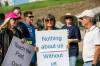
Yet it has prompted protests, political statements, passionate public debate and accusations that the museum has somehow abandoned its mission.
This exhibition matters. But I have come to think that the reaction to it matters just as much. It raises a question that reaches well beyond this particular exhibition.
Why has one small gallery space become such a flashpoint?
Part of the answer is obvious. The events of Oct. 7, 2023, the war in Gaza and rising antisemitism have left many Jewish Canadians feeling vulnerable and afraid. At the same time, many Palestinian Canadians have watched relatives killed, displaced or left homeless while feeling that their own grief has received far less public attention.
Those realities were already present before anyone walked into the museum. What troubled me was something different.
Having served as the Canadian Museum for Human Rights’ first director of research, content and scholarship, I know that museums routinely face disagreement.
People argue about what should be included, what has been left out and how history ought to be interpreted. That is healthy. Museums should never be beyond criticism.
What concerned me was the assumption that telling one community’s story somehow diminishes another’s, and the critique that the exhibition contained untruths.
I visited the exhibition myself because I wanted to understand the criticisms. I found an exhibition built around family keepsakes, photographs, property deeds, traditional tatreez embroidery, poetry and recorded testimony from Palestinian Canadians.
I did not find fabricated artifacts, invented quotations and fictional testimony. Readers may disagree with the exhibition’s focus or interpretation, but that is quite different from claiming it is based on falsehoods.
Expecting one relatively small exhibition to explain every dimension of the Israeli-Palestinian conflict also asks museums to do something they simply cannot do.
Imagine asking a modest exhibition on same-sex marriage to explain the entire history of homophobia, constitutional law, religious freedom, transgender rights, the AIDS epidemic, changing family structures and decades of political activism.
Or asking an exhibition about Terry Fox to tell the whole history of cancer research.
Museums don’t work that way. Individual exhibitions illuminate one part of a much larger human story.
Winnipeg is privileged to be one of Canada’s most diverse cities. We live alongside neighbours whose families carry memories of war, genocide, colonization, forced migration, persecution and survival from many parts of the world.
Their histories, perspectives, interpretations and stories are different. So, too, are the balances of power, the degrees of violence they have experienced, and their understandings of responsibility, justice and what the past requires of us now. Those differences cannot always be reconciled into one shared account.
That is precisely why institutions such as the Canadian Museum for Human Rights matter. They give us opportunities to encounter experiences we may never have lived ourselves.
Not so that we will all reach the same conclusions. Not so that one history replaces another. But so that our understanding of one another becomes a little larger than it was before.
Perhaps that is what this small exhibition has really been asking of us — not whether we agree, but whether we are still willing to listen.
Our neighbours carry histories. We will not always understand them. We will not always agree with them.
But if we lose our willingness to listen to one another with honesty and generosity, we lose something essential about the kind of country, city, community and people we hope to be.
Judith Dueck was the first director of research, content and scholarship at the Canadian Museum for Human Rights. She writes in a personal capacity.
Related Articles
Coalition calls on minister to withdraw criticism of museum's Palestinian exhibit
Advertisement Advertise With Us