

What happened to public service?
Advertisement
Read this article for free:
or
Already have an account? Log in here »
To continue reading, please subscribe:
Digital Subscription
One year of digital access for only $1.44 a week*
- Enjoy unlimited reading on winnipegfreepress.com
- Read the E-Edition, our digital replica newspaper
- Access News Break, our award-winning app
- Play interactive puzzles
*Billed as $5.77 plus GST every four weeks. After 52 weeks, price increases to the regular rate of $19.95 plus GST every four weeks. Offer available to new and qualified returning subscribers only. Cancel any time.
To continue reading, please subscribe:
Add Free Press access to your Brandon Sun subscription for only an additional
$1 for the first 4 weeks*
- Enjoy unlimited reading on winnipegfreepress.com
- Read the E-Edition, our digital replica newspaper
- Access News Break, our award-winning app
- Play interactive puzzles
*Your next Brandon Sun subscription payment will increase by $1.00 and you will be charged $17.95 plus GST for four weeks. After four weeks, your payment will increase to $24.95 plus GST every four weeks.
Read unlimited articles for free today:
or
Already have an account? Log in here »
So, what exactly does the term “public service” mean? Well, I’m not talking about the winsome waitress named Kelly, who introduces herself as your server for the night. Nor am I talking about Gurinder from the garage, who services your car.
What I’m referring to when I talk about public service is that rare and courageous individual who enters public life to do good. The kind of civil servant or politician who chooses public life, not because they lust after power, notoriety or the chance to hobnob with members of the corporate elite, but because they want to make their communities better, safer and more equitable.
In the case of politicians, that would include those who put people and the environment first and other matters second. The kind of leader I would describe as progressive.
Russell Wangersky / Free Press
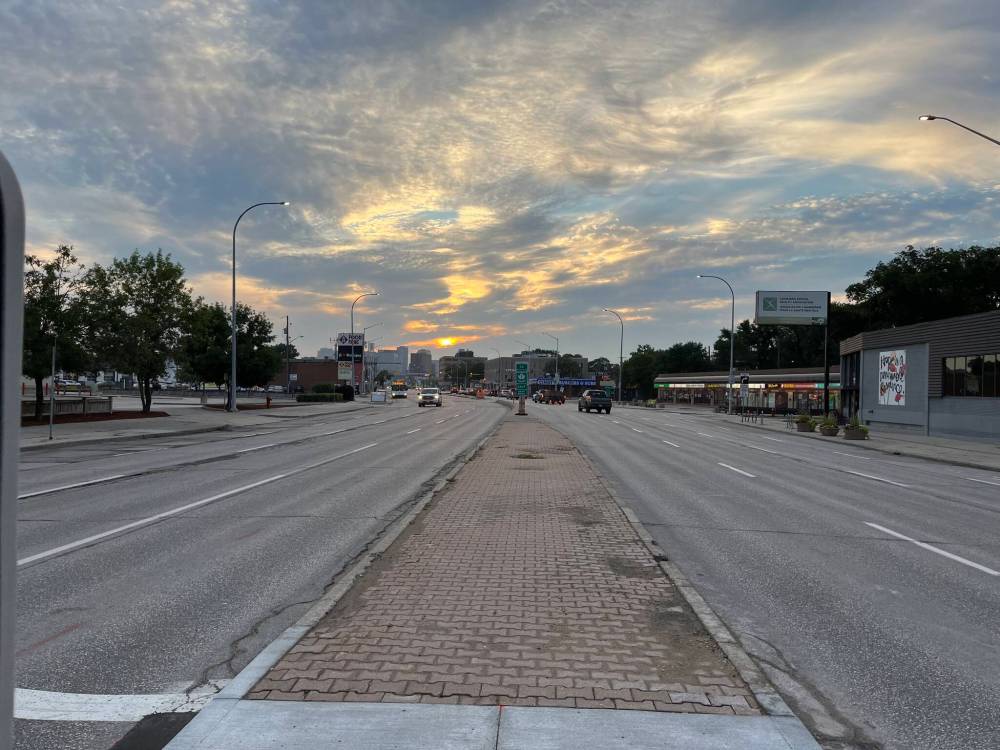
Ask your municipal candidate if they support more suburban sprawl, or if they want to provide more supports and services to the older neighbourhoods we already have.
Progressive politicians see themselves, first and foremost, as public servants elected to serve their constituents, rather than serving money and some deluded notion of infinite growth. The kind of growth that is defined as endless expansion, and measured exclusively in dollars, rather than quality of life.
The kind of growth that benefits some, to the detriment of a majority of citizens and nature.
Growth that neglects older communities in favour of building and catering to new ones.
So how, for example, can you tell if a city council or mayoral candidate is truly progressive?
Well, the best way to judge that is by studying their platforms and asking them questions, such as:
Would you vote for new roads, or would you use that money to ensure that we have clean, healthy rivers and beautiful, biodiverse, natural spaces for our kids to play in?
Would you back building yet another suburb or would you opt to repair the sidewalks, roads and infrastructure we have, including our community pools and libraries in older subdivisions?
Do you think it’s OK to sacrifice trees and greenspace on the altar of development, or do you endorse a private tree bylaw and biodiversity policy that requires developers to preserve as many trees and natural habitats as possible?
Would you spend our taxes on more police or on adequate support and shelter for the homeless and addicted?
And, finally, would you dedicate significant funding to retrofitting public buildings for clean energy and investing more in public transit to reduce emissions?
If your candidate prevaricates on answering any of those questions, you can pretty much assume that they are not progressive and up for sale. And if they start talking to you about the need to make trade-offs to get what they need for their communities, then consider crossing them off your voting list.
Because it’s one thing to create alliances and make compromises. It’s quite another to vote for a new road to a subdivision that doesn’t even exist — a.k.a. the Chief Peguis extension — and the generational debt it represents, in order to get a library upgrade or save a public pool. There’s no equivalency there, and far too often the so-called “deals” made between the mayor and council or between councillors are ridiculously lopsided.
Better to have a councillor who is willing to take a stand against a new road and the long-term debt associated with it, who wants that money assigned, instead, to improve our communities.
Even better, imagine this. Imagine a mayor who, in their first term, sits down with councillors and asks them to make a list of everything that is broken, unsafe or inadequate and needs to be fixed or improved in the communities within their wards.
Then imagine a city budget based on those things — things such as repaving residential streets and back lanes, expanding the tree canopy and greenspaces, fixing broken sidewalks or improving the bike lanes and public transit service.

Not as sexy as a new subdivision, but vitally important to most Winnipeggers.
Wilder still, imagine a mayor and city council that declares a moratorium on new roads and suburban expansion, and instead, puts those hundreds of millions of dollars to work in low-cost housing, lengthening community centre hours for troubled teens, speeding up the modernization of our sewage system and investing enough in public transit to ensure it actually works.
Make no mistake. What I’m describing here isn’t fairytale land. It’s just progressive, pragmatic leadership that serves the public.
So, maybe it’s long past time we demand that our representatives actually serve the people they work for. Maybe it’s time we expect them to act as public servants rather than as the servants to corporate interests and an idea of growth that is not only outdated, but detrimental to most of the citizens they’ve been elected to serve.
Erna Buffie is a writer and environmentalist. Read more at www.ernabuffie.com.