

Who will vote for trees?
Advertisement
Read this article for free:
or
Already have an account? Log in here »
To continue reading, please subscribe:

Digital Subscription
One year of digital access for only $205*
- Enjoy unlimited reading on winnipegfreepress.com
- Read the E-Edition, our digital replica newspaper
- Access News Break, our award-winning app
- Play interactive puzzles
*First annual payment billed as $205.00 + GST for one year. This annual subscription will automatically renew at $233.00 + GST every 52 weeks (10% off the regular annual price of $259.35). Offer available to new and qualified returning subscribers only. Cancel any time.
To continue reading, please subscribe:
Add Free Press access to your Brandon Sun subscription for only an additional
$1 for the first 4 weeks*
- Enjoy unlimited reading on winnipegfreepress.com
- Read the E-Edition, our digital replica newspaper
- Access News Break, our award-winning app
- Play interactive puzzles
*Your next Brandon Sun subscription payment will increase by $1.00 and you will be charged $17.95 plus GST for four weeks. After four weeks, your payment will increase to $24.95 plus GST every four weeks.
Read unlimited articles for free today:
or
Already have an account? Log in here »
In July 2026, Terrasse-Vaudreuil, a small Quebec town, made international headlines.
And no, it wasn’t the result of murder and mayhem or a catastrophic flood. The headlines were about a remarkable resolution passed by its town council, making Terrasse-Vaudreuil the first city in the world to recognize the rights of trees.
The town’s resolution, based on a Universal Declaration of the Rights of Trees crafted in France, recognizes that trees are living beings which have the right to exist, thrive and receive protections under the law.
Russell Wangersky/Free Press
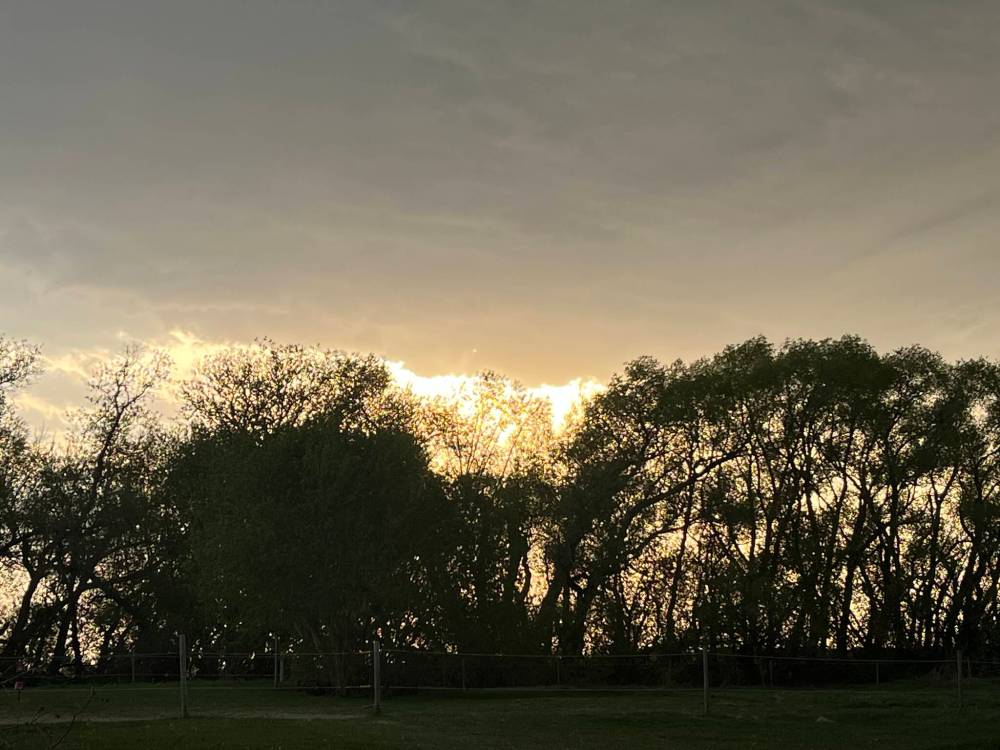
Which municipal candidates will pledge to protect Winnipeg’s trees, Erna Buffie asks.
I was blown away when I heard about it. I was even more impressed when I read the words of the town’s mayor, Michel Bordeau, who affirmed that trees were not merely the backdrop for his community. They were “indispensable allies for our health, our climate resilience and our quality of life.”
In other words, trees not only have an inherent right to exist, but also the right to have their lives protected because of the extraordinary benefits they provide, from storing carbon and providing habitat to offsetting heatwaves and super-storms.
Needless to say, it’s an idea that is anathema to some and music to the ears of many others.
That’s because trees, like all elements of the natural world, have been seen historically and legally as property — a treasure trove of resources just waiting to be cut down, dug up and exploited.
And — surprise, surprise! — those who own land and benefit from “nature as property” don’t want the rules of the game changed.
By contrast, those who support the idea of nature being imbued with inalienable rights maintain that if a corporation is viewed as an individual under the law, with all the rights that implies, then why not trees, a river or an entire rainforest? Especially now in an era of climate chaos and catastrophic nature loss.
The political battle between these two opposing points of view is being waged, in one form or another, at almost every level of government, including the city level.
In fact, here in Winnipeg, it’s playing out right now, during the civic election, as Trees Please Winnipeg — an organization I belong to — challenges candidates for council and mayor to sign what we’re calling the “Save the Shade” Pledge.
We’re not asking the city to recognize the Universal Rights of Trees. But we are asking them to do everything in their power to protect as many of our mature trees and forests as possible, on both public and private land, because of the essential life-sustaining services they provide to everyone.
And believe me when I say that this isn’t our first go-round on the issue. Ever since the city adopted its 20 Year Urban Forestry Strategy in 2023, Trees Please has been pushing council to do what the strategy recommended. That is, enact bylaws governing mature tree removals and the clear cutting of our riparian and aspen/oak forests on both public and private land.
So, what has the city done? Well, to say it’s been stalling for the past two years would be an understatement. Indeed, their most recent reason for doing nothing boils down to council’s belief that it can’t act to protect trees on private land, unless the province changes the city charter.
Really? By my reading, the charter clearly states that council and the mayor are responsible for the health, safety and wellbeing of their citizens. It’s also crystal clear about the city’s responsibility for the environmental impact of all development projects.
So, don’t those two clauses alone give them the power to enact a private tree bylaw?
Well, as it turns out, two similar clauses in Edmonton’s city charter were used to pressure their council into drafting a private tree bylaw, which is now in the works. And guess what? Prior to that, Edmonton had been stalling, using the same charter change excuse that our mayor and council are now using.

This when between 80 per cent to 90 per cent of Winnipeg’s three million trees sit on privately owned land with no protection, while more than 20 other municipalities nationwide already have private tree bylaws in place to protect their canopies.
So, head over to Trees Please Winnipeg’s website and check out which candidates have signed our pledge and those who haven’t. Then take a look at the candidate’s broader platform.
You just might discover that candidates who care about trees are also the ones who care most about you and your neighbourhood.
Then, on Oct. 28, vote for trees and candidates who, like the mayor of Terrasse-Vaudreuil, see them not just as a pretty backdrop, but as indispensable allies that protect our health, safety and environment.
Erna Buffie is the author of Out On A Limb: Saving the Urban Canopy.