

Revealing statements by Trump about courts
Advertisement
Read this article for free:
or
Already have an account? Log in here »
To continue reading, please subscribe:

Digital Subscription
One year of digital access for only $205*
- Enjoy unlimited reading on winnipegfreepress.com
- Read the E-Edition, our digital replica newspaper
- Access News Break, our award-winning app
- Play interactive puzzles
*First annual payment billed as $205.00 + GST for one year. This annual subscription will automatically renew at $233.00 + GST every 52 weeks (10% off the regular annual price of $259.35). Offer available to new and qualified returning subscribers only. Cancel any time.
To continue reading, please subscribe:
Add Free Press access to your Brandon Sun subscription for only an additional
$1 for the first 4 weeks*
- Enjoy unlimited reading on winnipegfreepress.com
- Read the E-Edition, our digital replica newspaper
- Access News Break, our award-winning app
- Play interactive puzzles
*Your next Brandon Sun subscription payment will increase by $1.00 and you will be charged $17.95 plus GST for four weeks. After four weeks, your payment will increase to $24.95 plus GST every four weeks.
Read unlimited articles for free today:
or
Already have an account? Log in here »
Analyzing the utterances of U.S. President Donald Trump may seem like the ultimate sort of mug’s game — they are varied, contradictory, rambling, pugilistic, sometimes wheedling and the list goes on.
But even so, some things occasionally jump right out of the background noise. Not because they are particularly different, but because they sound unwittingly honest.
Last week, the president was reacting to a decision by the U.S. Supreme Court on an executive order regarding the U.S. Postal Service and restricting voting by mail.
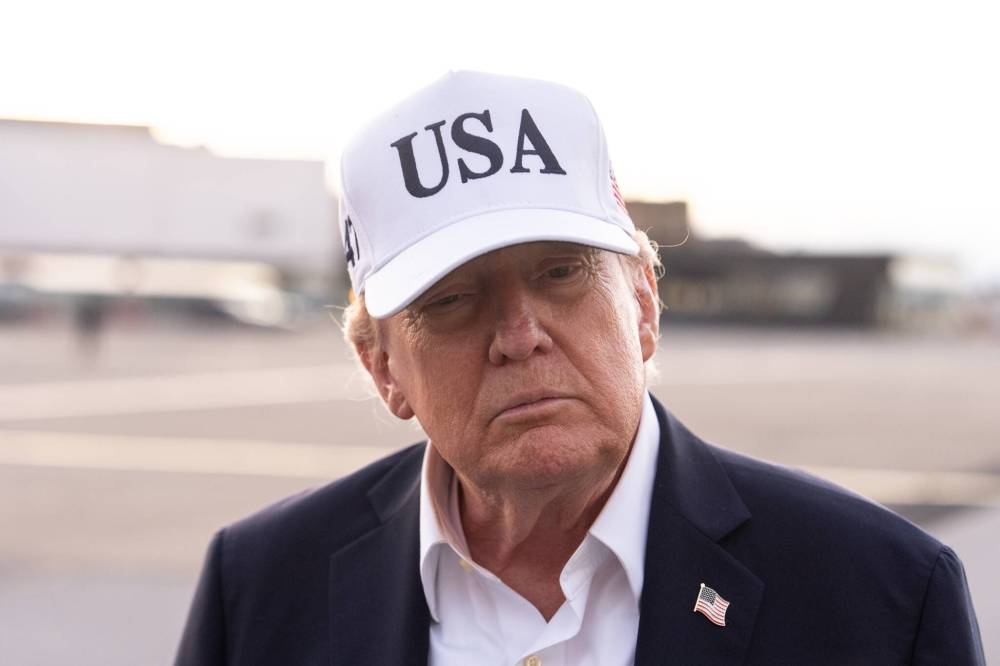
Julia Demaree Nikhinson / The Associated Press
U.S. President Donald Trump
Neil Gorsuch, Amy Coney Barrett and Brett Kavanaugh, all nominated by Trump, were among the judges that opposed the plan.
“These are not the people I interviewed to serve on the United States Supreme Court, they are merely a shell of their original selves,” Trump said in a social media post, adding that the court “is costing the United States Trillions of Dollars with shockingly bad rulings that are of such magnitude that it won’t be easily possible for our Country to recover or heal.”
Now, many Americans could easily make the same complaint about Trump: when he was being interviewed for his current job — when he was campaigning — he told voters that he would cut inflation, that he would end foreign wars fought by American forces at American expense. He promised to cut massive amounts of U.S. federal government spending — while such spending has risen precipitously instead.
Before the election, he said he had no idea about the goals of the Heritage Foundation and its Project 2025, that he had no plan to follow their roadmap — yet has done a very good job of doing exactly that.
For Trump, election promises were acceptable as a means to an end.
And yet, he seems aggrieved that others might treat their interviews with him the same way.
In an odd way, a handful of words is a critical window into his mindset and one that you can see unfolding in his decision-making on everything from tariffs to international relations. It hearkens back to Vice-President JD Vance and Trump hauling Ukrainian President Volodymyr Zelenskyy over the coals in the White House for not dressing appropriately and not being grateful and deferential enough to Trump.
And it’s a clear look into the dangers of Trump’s rule.
Trump is basically saying that he chose to nominate judges for the Supreme Court not to set Republican-directed eyes on their analysis of the law (already a dodgy way to pick someone who is supposed to impartially balance the law above politics, but one familiar to those who watch the U.S. Supreme Court), but instead chose those who would give their fealty, and in the process, legitimacy, to Trump’s decisions, whatever they were.
He didn’t pick jurists for their knowledge of law and their analytical skills — he interviewed them and picked them most of all based on the belief that they would do what they were told to do.
He was picking subordinates and expected them to understand and behave that way. Trump’s comments are starkly revealing.
The U.S. Constitution requires three co-equal branches of government: the executive branch, the legislative branch and the judicial branch. Trump’s clear belief is that his power is superior.

And for much of his rule, especially in his second term, he’s acted that way. That tightwire act will last as long as other branches of government stay in his thrall.
Donald Trump says so many things, so loudly and confidential and brutally. But occasionally, something he says piques your attention and you can see the man inside.
Just a handful of words: “These are not the people I interviewed…”
An impartial observer might point out that neither are you, Mr. President.
Neither are you.